Last March I stood at a Copenhagen tram stop at eight in the morning, shivering in a down jacket; by noon I was carrying it over my arm like a rolled-up duvet while everyone around me had dressed exactly right. A woman passed in a long trench over straight jeans, coat open, white tee underneath, looking like the weather had been arranged for her. It had not — she had dressed in layers that could come apart. That is the whole secret of spring streetstyle here, and it took me embarrassingly long to learn it.
What follows are the ten combinations I actually rotate through March, April and May. My rules are simple: a palette of chalk, oatmeal, slate, washed navy and a little olive so everything mixes; natural fibres that breathe; and one structured piece per outfit so the relaxed half looks chosen. Each idea below carries the mistake I made with it first, because that is usually where the useful part lives.
1. Flowing Gabardine Trench with Straight Indigo Denim
My stone trench over raw indigo — spring is a layering problem, not a shopping one.
This is the outfit I reach for most from March onwards. The trench is unlined cotton gabardine in stone, double-breasted, falling past my calf, worn open with the belt knotted loosely behind my back so the front hangs in one clean line. Underneath: a heavy white tee tucked into rigid high-waisted indigo jeans, a plain black belt, square-toe Chelsea boots. The coat does the architecture; everything under it is deliberately plain. My first trench ended above the knee; it chopped everything into sections and flapped. Length is the whole point. A long coat forgives almost everything underneath it; a short one argues with all of it. The gabardine shrugs off drizzle but not a downpour — I check the forecast before choosing it. Cost honesty: the coat was the splurge, bought second-hand; the jeans and tee were not.
2. Slouchy Tailored Wool Blazer with Washed Chinos
The charcoal blazer doing soft-suit duty over stone chinos — my meeting-to-dinner formula.
When I want to look like I have somewhere to be, this is it: an oversized single-breasted wool blazer in charcoal over a fine grey knit tee, with washed stone chinos below. The blazer is unlined, which matters — a lined one in May feels like a sleeping bag. I fasten only the middle button so a deep V opens over the knit, and the shoulder seam sits about an inch past my own shoulder. That inch is deliberate; my first attempt was a blazer two sizes too big, and the sleeves swallowed my hands. Sleeves end at the wrist bone, always — everything else can slouch, but the sleeve cannot. The chinos get one clean cuff; cream suede derbies on dry days, wiped down the moment I get home. It has carried me from client meetings straight to dinner for years.
3. Oversized Poplin Button-Down with Wide Pleated Trousers
Pale blue poplin and slate pleats — two volumes that only work because the tuck breaks them up.
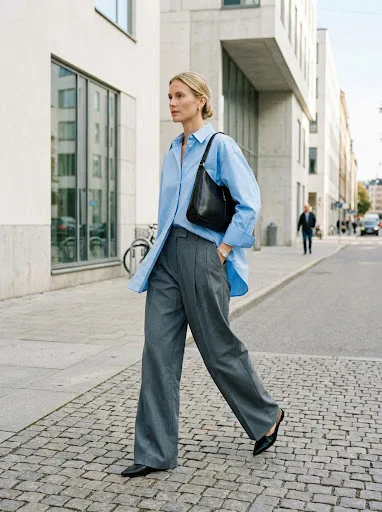
Two big pieces in one outfit is a mistake — unless you break the silhouette in the middle. The shirt is oversized poplin in pale blue, top three buttons open, sleeves rolled twice to mid-forearm. The trousers are high-rise, wide, pleated, in deep slate wool. The move that saves it is the front half-tuck: I push the front placket into the waistband and let the back hem hang loose over my hips. Fully tucked it looks strained; fully loose, a nightshirt. I learned that in a café mirror, horrified. Poplin is a high-maintenance friend — it creases if you look at it — so I steam this shirt the night before and hang it ready. Black loafers underneath; hems skim the shoe tops, never pool. Skip it on windy days — wide trousers become sails.
4. Breton Striped Longsleeve with Relaxed Ecru Denim
Breton stripes and ecru denim — my market-morning uniform from the first mild Saturday onwards.
The Breton is the only pattern I fully trust, because it behaves like a neutral. Mine is heavyweight cotton jersey, navy stripes on white, boat neck lying flat at the collarbones, worn with relaxed straight-leg jeans in unbleached ecru. Ecru is warmer and more forgiving than stark white denim, and it hides market-day marks. I tuck the front hem loosely and use a cognac leather belt to mark the waist. On coastal days I knot a navy merino crewneck over my shoulders; it looks like a styling choice and works as an emergency layer when the wind turns. My honest warning: cheap Breton jersey twists at the side seams by lunchtime and the stripes go crooked. Buy the heavy one once — mine is five seasons old and the stripes are still straight. Canvas sneakers or cognac loafers finish it.
5. Boxy Leather Shacket with Fluid Bias Midi Skirt
The leather shacket I saved for — it makes every soft skirt in my wardrobe behave.
My evening version of the formula: structured on top, fluid below. The shacket is boxy, unlined lambskin in deep chocolate, with dropped shoulders and chest flap pockets, worn open over a ribbed bone-coloured tank. The skirt is bias-cut, mid-calf, in soft olive — it moves when I walk and settles when I stop, which is the test of a good bias cut. If a skirt clings to your legs in the shop, it will cling forever; walk across the changing room and watch it. I leave it open on warm evenings, or fasten only the bottom snap for a slight flare at the waist. Honest cost note: real leather was my most expensive buy that year. A good faux version does the same job — what matters is the matte finish and the boxy cut, not the hide.
6. Monochromatic Light Grey Knitwear and Tailored Bermudas
Head-to-toe heather grey on the first warm day — the bermudas only work because the knit keeps it serious.
Late May brings the day this outfit exists for: warm legs, cold arms. The top is a featherweight merino crewneck in pale heather grey; the bottoms are tailored bermudas in the same grey, pleated and pressed, ending two inches above my knee. One colour top to bottom sounds like a shortcut, and it nearly is — the work is in the textures. Fine knit against crisp suiting wool, matte loafers below, a slim dark belt marking the middle. I French-tuck the sweater and push the sleeves to my elbows. My early mistake was bermudas ending mid-knee: cut-off trousers, not a decision. The hem must land clearly above the knee. Socks are the other trap: sheer black ankle socks with the loafers, or none with white sneakers. Skip it for formal offices; elsewhere it has never felt wrong.
7. Cropped Utility Jacket with Off-White Wide Denim
Sage canvas and off-white denim — the cropped jacket does the waist-defining so nothing tight has to.
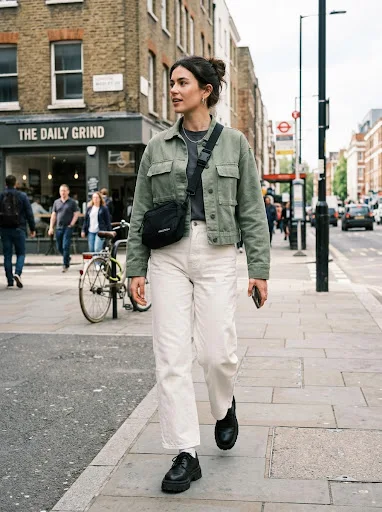
Wide trousers need a short top, and this jacket is the shortest I own. It is a cropped utility style in washed sage canvas — flap pockets, covered placket, hem landing at my natural waist — worn over a charcoal tee tucked into high-rise wide-leg jeans in natural off-white. Because the jacket ends where the jeans begin, the proportions sort themselves out; no tucking tricks needed. I leave the zip open and fasten one snap at the middle so the bottom flares slightly. One practical lesson from wet pavements: wide off-white hems attract puddle splash, so on rainy days I wear the chunky derby shoes that lift the hem an inch off the ground. A black crossbody bag worn across the chest is the one accessory. Skip it if your spring is mostly rain — a dry-day outfit, and I have stopped pretending otherwise.
8. Fine Ribbed Turtleneck Under a Crisp Poplin Shirtdress
The black turtleneck under my white shirtdress buys the dress a whole extra season.
This is how my summer dresses start work six weeks early. The base is a tissue-weight ribbed black turtleneck — merino or modal, thin enough to disappear under other clothes. Over it, an oversized white poplin shirtdress, buttoned from mid-chest down, top buttons open so the black collar stands clean against my neck. The detail people ask about: I fold the dress cuffs back once, so two inches of black ribbed sleeve show at each wrist. Black and white, top and bottom, nothing else needed. Knee-high boots slide under the hem on cold mornings; slingback flats take over in May. My first turtleneck was too thick — the dress sat crooked all day and I fidgeted through a whole gallery visit. The base layer must be genuinely thin. Steam the dress, not the knit.
9. Quilted Collarless Liner with Dark Indigo Flare Denim
The surplus-shop liner over flares — two old soldiers of garments that turned out to be friends.
The liner jacket was made to hide inside a military coat; wearing it as the coat is the trick. Mine is collarless, diamond-quilted, olive drab, bought for less than a pizza at a surplus shop, fastened halfway up over a fine navy merino crewneck. With no collar, I sometimes tuck a small silk scarf into the neckline — the one soft note in a practical outfit. Underneath, dark indigo flares: fitted through the thigh, opening below the knee, hems hovering just above the ground over stacked-heel ankle boots. The flare balances the boxy quilting; straight jeans under it make a rectangle. I know — I tried it twice. One honest limit: quilting stops wind, not weather. A downpour soaks straight through — a dry, cold-day pairing, which in April is most days.
10. Tonal Oatmeal Cashmere Knit with Off-White Linen Trousers
Oatmeal on off-white — my quietest outfit, and the one photographed most.
The last one is the quietest outfit I own: a relaxed oatmeal cashmere crewneck over wide-leg trousers in unbleached linen, one soft tone from shoulder to ankle. It works for the same reason the grey outfit does — texture does the talking. Brushed cashmere against dry, crisp linen; woven leather mules below; cuffs rolled once to show my wrists. I tuck one corner of the front hem in; the rest hangs. Linen creases; I have made my peace with it. A seat crease reads as ease, but I steam the trousers in the morning so they start smooth. The buying check for linen is daylight — hold the trousers up to the shop window, because thin linen goes see-through outdoors and no styling rescues it. Cashmere care is the honest work: aired after wearing, de-pilled every few wears, folded with cedar, never hung. Treated that way, this sweater is on its third spring.
What I’d buy first — and what can wait
If you are building a spring rotation from an ordinary rail, spend first on the three pieces that carry most outfits above: one long gabardine trench, one honest wool blazer, and leather shoes with real soles. All three turn up second-hand — men’s rails especially are full of barely worn blazers in better wool than new ones at twice the price. Tees, tanks and poplin shirts can come from ordinary shops; buy for fabric weight, not branding. What can wait: the leather shacket, the cashmere, a second coat in another colour. Keep two cheap tools in a drawer — a handheld steamer and an electric fabric shaver. Five Sunday-evening minutes with those, outfits hung complete for the week, and spring mornings stop being a weather negotiation.
Questions I get asked
How do I wear oversized pieces without looking like I borrowed them?
Look for deliberate oversizing, not bigger sizes: dropped shoulders and a boxy chest are designed in; sleeves swallowing your hands and hems pooling are just the wrong size. Sleeves end at the wrist bone, trousers skim the shoe, and one anchor — a tuck, a belt, a cropped jacket — shows where your body is.
Which colours should I stick to for spring?
Four or five neutrals that all know each other: chalk white, oatmeal, slate grey, washed navy, and one earthy note like olive or sage. With a palette that quiet, texture does the decorating — ribbed knit against smooth leather, crisp poplin against brushed wool. Pattern stays minimal; my one exception is Breton stripes.
How do I dress for days that start cold and end warm?
Build outfits that come apart gracefully: a turtleneck under a shirtdress, a liner under a trench, a sweater knotted over your shoulders. Every layer should look finished alone, so the piece you remove at noon leaves a complete outfit, not a base layer you would hide.
How do I keep knitwear and poplin looking crisp all season?
Fold knits flat — hangers stretch shoulders within weeks — and run an electric fabric shaver over them every few wears. Store wool with cedar blocks. Poplin and linen get two steamer minutes the night before, never a morning iron battle. Wide wooden hangers for coats and blazers; everything else folded.
Can I do this on a small budget?
Mostly, yes. Put the money into the trench, blazer and shoes, sourced second-hand where the wool and gabardine are often better than new. Denim, tees and stripes come from anywhere honest. Add one or two planned pieces each spring instead of impulse-buying, and plan the week’s outfits on Sunday — that habit saves more than any sale.
That is my spring rotation — ten outfits, one quiet rail, and layers that come apart gracefully. If one of these combinations earns a place in your week, save it to your spring outfits board on Pinterest for the next changeable morning. — Elias