For years I owned exactly one blazer, and I treated it like church clothes — too good for a Tuesday, too stiff for real life. Then, on a work trip to Copenhagen in my mid-forties, I watched women my age wear blazers the way I wear cardigans: over jeans, over dresses, sleeves pushed up. One woman in a grey wool blazer sat across from me on the train, eating a pastry, looking like the most put-together person in the carriage. Nothing about her outfit was precious. That was the lesson.
Since then I’ve built a small rail of blazers and I wear them more than anything else I own. A good one does three jobs: it warms you, gives a soft outfit a backbone, and makes jeans look like a decision. Below are the eleven combinations I rotate through, fitting checks and all.
1. The relaxed wool blazer with straight-leg jeans
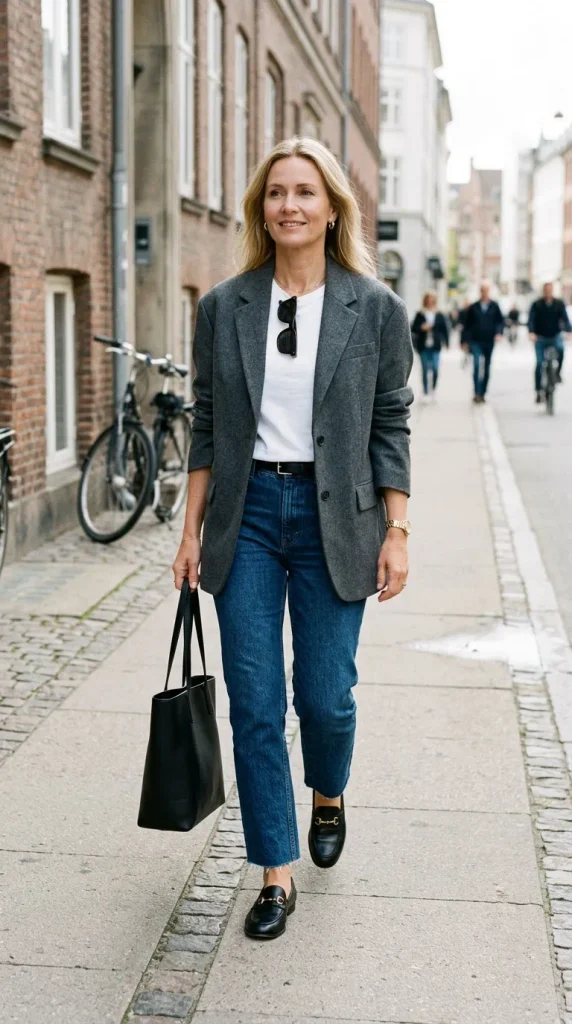
The one I started with. Wool blazer, plain tee, honest jeans — it has carried me through more weekdays than I can count.
This is where I’d tell anyone to begin: a soft-shouldered wool blazer in grey, navy or charcoal, worn open over a plain heavy-cotton t-shirt and straight-leg jeans in a clean, dark wash. No distressing, no whiskering — worn-looking denim drags the blazer down with it. The blazer should skim, not grip: button it in the fitting room and sit down. If it pulls across your middle seated, it will annoy you daily by ten o’clock.
My check for the wool is a fist test. Scrunch a sleeve for five seconds and let go. Good wool springs back almost flat; a cheap blend keeps the crease like a grudge. Cost honesty: it was the most expensive thing I bought that year, and per wear it’s now one of the cheapest. Skip it only if your life involves floor-sitting with grandchildren all day — a cardigan forgives more.
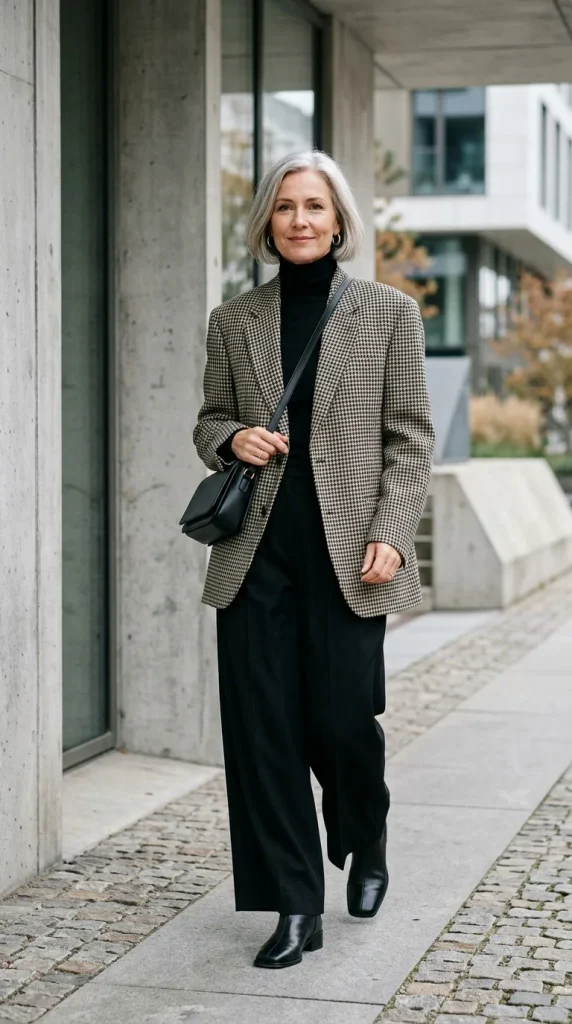
2. The oversized houndstooth blazer with wide-leg trousers
Pattern up top, plain sailing below. The houndstooth does all the talking, so everything else stays quiet.
Houndstooth is the one pattern I allow near my tailoring; at a small scale it reads as texture, not print. I wear this blazer slightly oversized — one size up — over a thin black or ivory turtleneck and high-waisted wide-leg trousers with a pleat. The rule that makes it work is length below: the trousers should brush the top of your shoe and no more. Wide legs that puddle turn the whole outfit sloppy by the second hour.
Two checks before you pay. The shoulder seam should still sit roughly on your shoulder bone, even in the oversized cut — dropped an inch is relaxed, dropped three inches is borrowed-from-a-linebacker. And hold the pattern up in daylight: some houndstooth has a warm brown cast that fights with black trousers, while the black-and-white version goes with everything. Mine came from a January sale and I nearly passed it over for being “too much.” It is now the blazer strangers ask about.
3. The cream linen blazer over a silk slip skirt
Summer’s answer to tailoring. Everything pale, everything loose, nothing sticking to anybody.
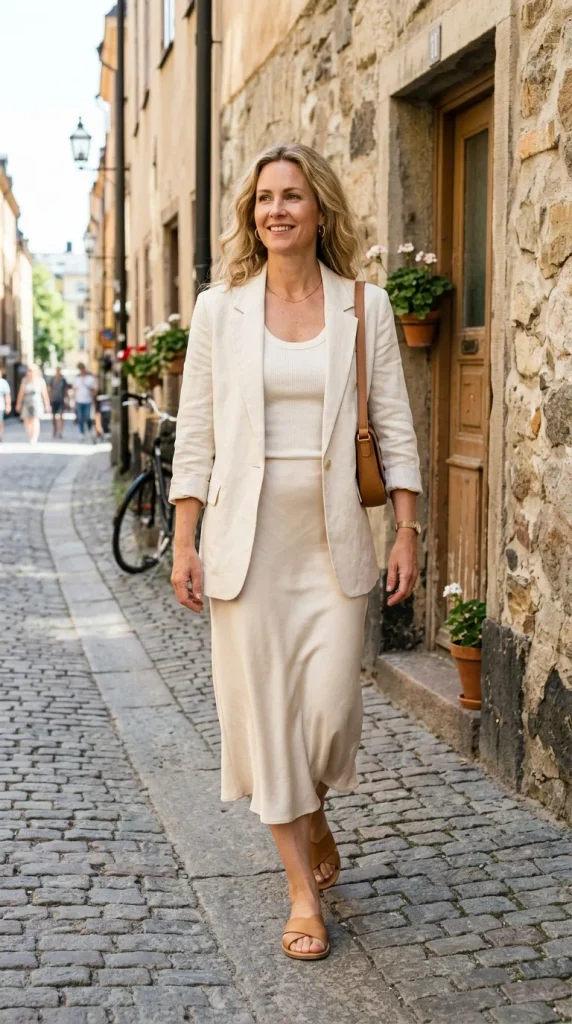
Warm weather used to mean giving up on structure, until I tried this: an unlined cream linen blazer over a bias-cut silk slip skirt in champagne or soft gold, all one pale family of colour. The linen gives the outfit its shape; the silk gives it movement. Together they look considered without anything tight or formal anywhere. A plain camisole underneath and flat leather sandals, and I’m done.
The fitting checks are about the skirt, mostly. A true bias cut falls in a soft ripple and skims the hips; cheap straight-cut satin grabs at every point and shows every seam underneath, so watch how the skirt hangs before you buy. Steam it the night before — silk needs time to settle. And the honest warning: cream linen plus coffee on a train is a combination I have tested for you. The blazer washes. The memory lingers.
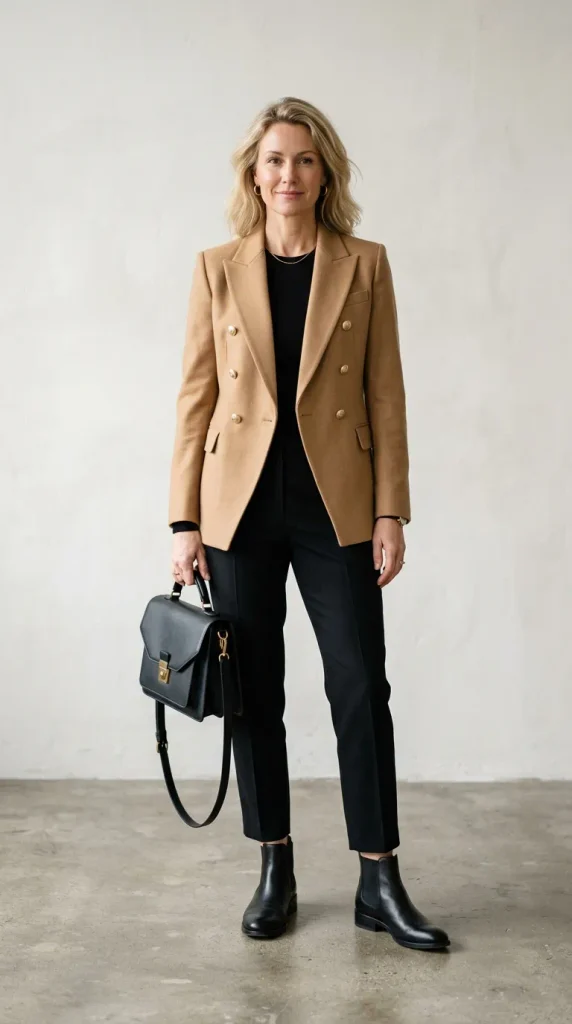
4. The double-breasted camel blazer over an all-black column
My borrowed-from-the-city outfit. Camel over black has never once let me down when I needed to look like I had a plan.
When I need to look like a person with a plan — a meeting, a lunch somewhere with cloth napkins — this is the formula: black ankle trousers, a black fine-knit crewneck, and a structured double-breasted camel blazer over the top. The black underneath is one unbroken column, so the blazer becomes the whole event. There’s nothing to match and nothing to get wrong.
The blazer needs real structure here — a firm shoulder and a cloth with weight, brushed wool or a blend that holds the lapel flat. A soft, floppy double-breasted blazer looks like a dressing gown with ambitions. Fit check: with both buttons done up you should be able to slide a flat hand inside at the waist, no more, no less. This is the priciest outfit on my rail, and the one photographed most — usually by friends saying “you look well” and not knowing why.
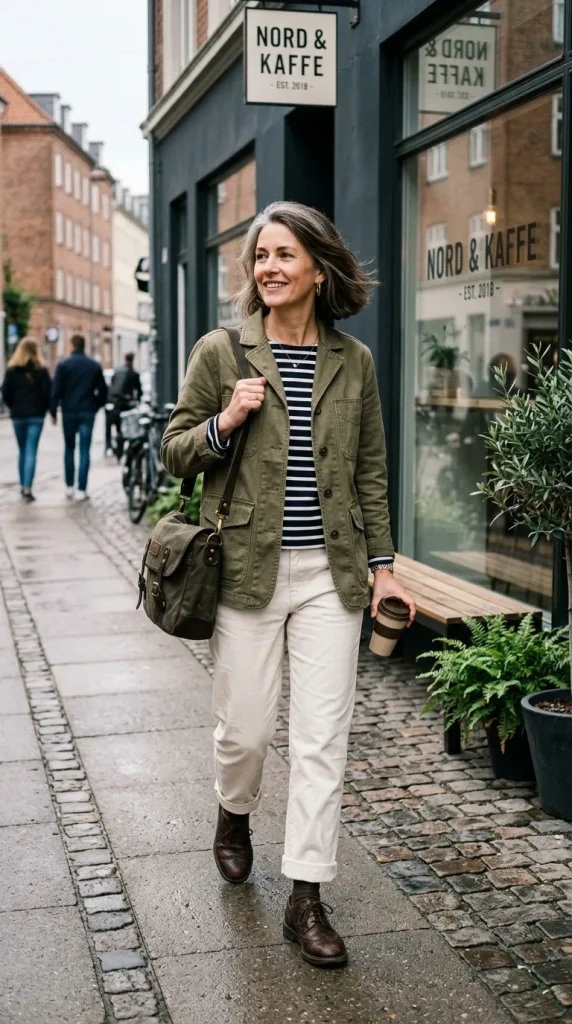
5. The olive utility blazer over a striped Breton top
Weekend tailoring. The stripes stop the olive looking like I borrowed it from a gamekeeper.
This is my market-day, long-walk, pub-lunch blazer: olive or sage, with patch pockets, worn over a navy-and-white Breton stripe top and ecru chinos with the hems rolled twice. The stripe does important work — it keeps the olive from reading as outdoor gear and turns the whole thing into an outfit rather than a layer you grabbed.
Press the chinos’ leg seams before you roll them; a cuff on a creased leg looks accidental, on a pressed leg deliberate. The Breton top should be proper heavy cotton that holds a boat neckline — thin jersey sags at the neck by lunchtime and takes the polish with it. Skip this one for anything with a dress code; it’s the most casual blazer I own and it knows it. Within its lane — Saturdays, travel days, grandchildren’s football — nothing beats it for comfort with dignity intact.
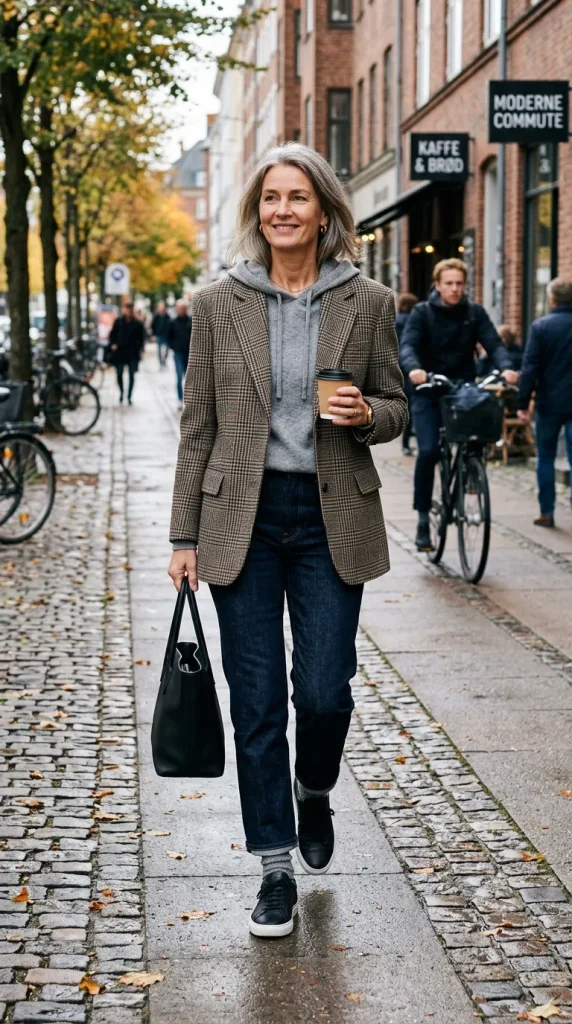
6. The checked heritage blazer with a hooded cashmere layer
The hood under the blazer sounds like a mistake until you try it. Soft underneath, proper on top.
I resisted this for a year — it sounded like a styling trick — then wore it once on a cold, drizzly weekend and understood. A fine-gauge hooded layer — cashmere if the budget stretches, a good merino knit if it doesn’t — goes under a traditional checked wool blazer, the hood resting flat over the back collar. Underneath: charcoal flannel trousers or dark indigo jeans with no fading. The soft hood takes all the stiffness out of the heritage check.
The layer underneath must be genuinely fine. A thick hooded sweatshirt bunches at the neck and pushes the blazer’s collar up around your ears; my first attempt used exactly that, and I looked like I was wearing both by accident. Thin knit, hood lying flat, drawstrings tucked away. And the blazer needs to button over the extra layer in the shop, or it never will at home.
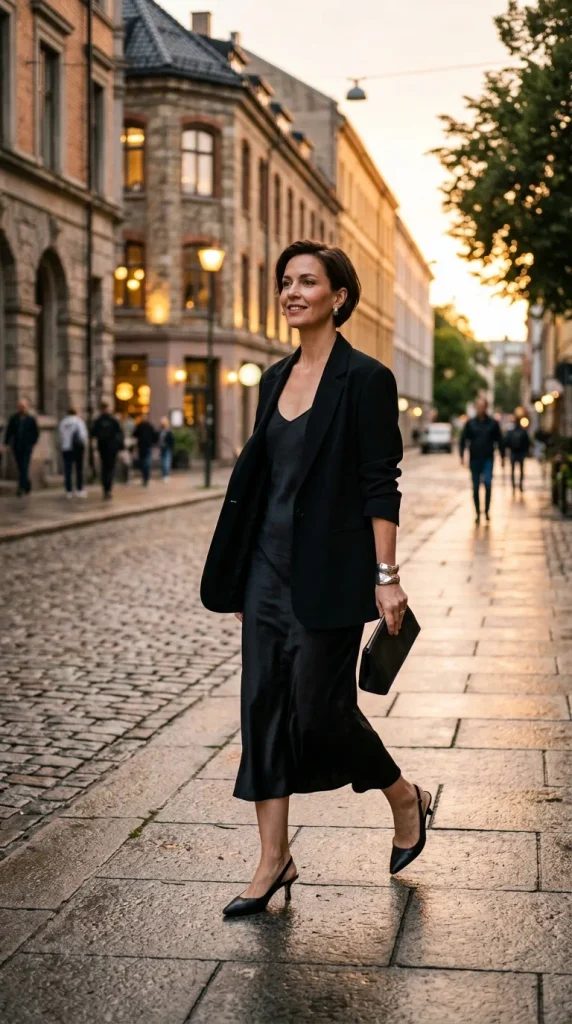
7. The unstructured black blazer over a silk slip dress
Evening, the Scandinavian way — no sequins were harmed. The blazer keeps it grown-up and keeps me warm.
Evening dressing in the north runs quiet, and this is my version: a black silk slip dress with an unstructured black blazer over it — no shoulder pads, no stiff canvas, just soft tailoring that moves like a cardigan and reads like a jacket. It solves the two problems of a slip dress after forty: bare shoulders in a cold room, and feeling slightly underdressed at a nice dinner.
Steam the dress and let it hang an hour before wearing, so the silk falls in a clean line instead of clinging with static. Adjust the straps so the neckline stays put — test it by sitting down and reaching for an imaginary glass; if it shifts, shorten the straps a notch. The blazer should end around the hip; longer and it fights the dress’s line. Honest note: this is a restaurant outfit, not a dancing outfit. I have tried both.
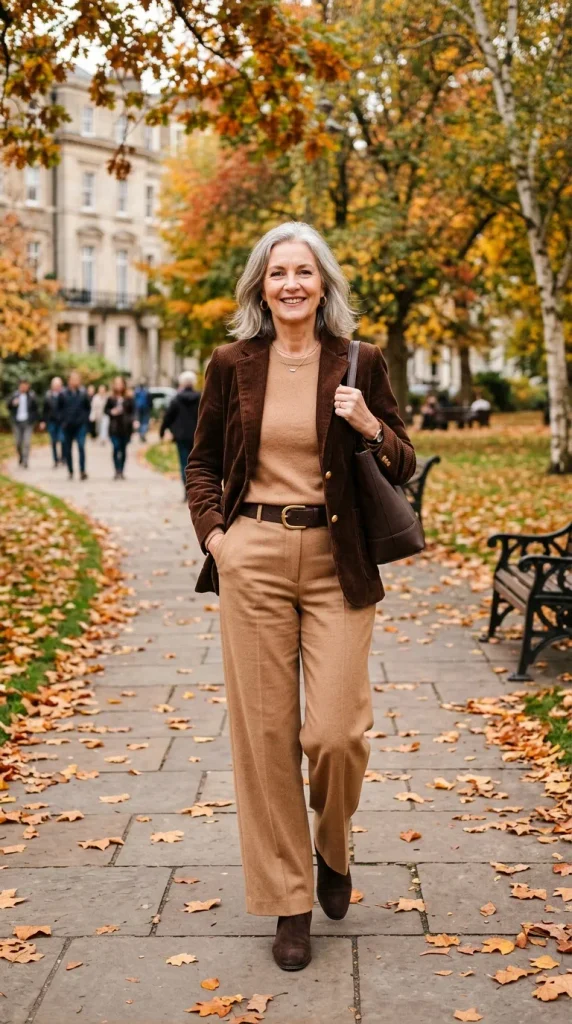
8. The corduroy blazer over head-to-toe knitwear
Corduroy season is my favourite season. It sits between jacket and coat and does the work of both.
Between a jacket and a coat lives the wide-wale corduroy blazer, and in the in-between months it does more work than either. Mine is chocolate brown, worn over a fine cream crewneck and camel wide-leg wool trousers, everything warm-toned and matte. The corduroy’s ridges catch the light in a way flat cloth can’t, so a plain outfit underneath still looks rich.
Wale width is the decision here. Wide wale — thick, obvious ridges — reads relaxed and autumnal; fine needlecord reads more like a shirt and loses the point. Feel the cloth weight too: a good corduroy blazer needs heft and a proper lining, or it twists at the front buttons by November. The trousers’ waistband should sit comfortably high, because this outfit is built for long lunches and longer walks. Cost note: corduroy is one of the few blazer fabrics where the mid-priced version is genuinely fine. Save your money for the wool ones.
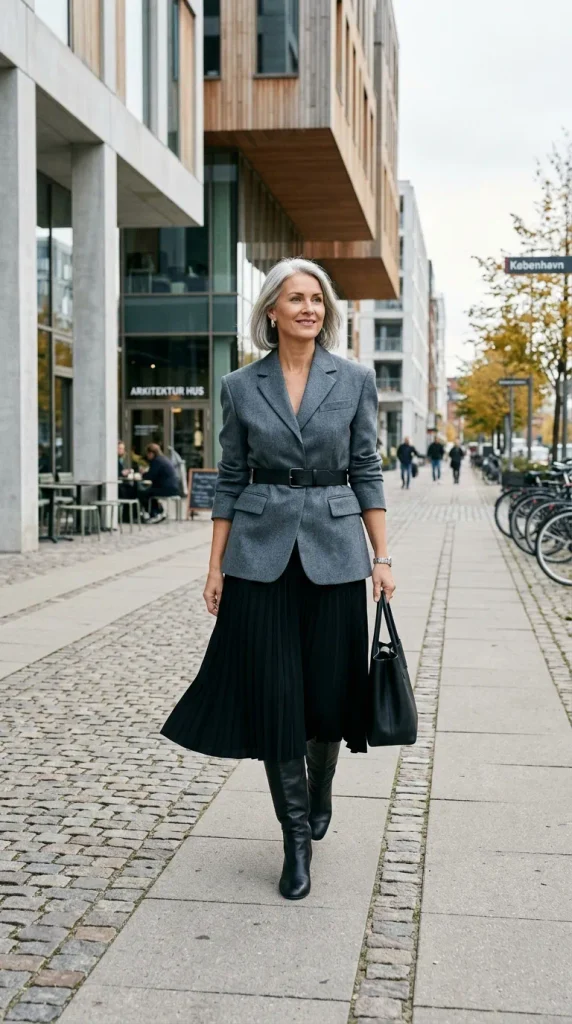
9. The belted blazer over a pleated skirt
The belt goes at my actual waist, not where fashion wants it. The pleats do the swishing; I just walk.
Most days I wear my blazers open, but this one earns its belt. A mid-weight wool blazer in slate blue or deep grey, cinched at the natural waist over an accordion-pleated midi skirt, with just a thin tank underneath. The belt gives the relaxed blazer a shape; the skirt gives the whole thing movement. It’s the most deliberate-looking outfit on this list, and takes about four minutes to put on.
The checks are unglamorous and they matter. The skirt’s waistband must sit squarely at your narrowest point and stay there — if it rides down, the pleats wander and the belt ends up in the wrong postcode. A hidden zip beats an elastic waistband here, every time. And the belt should be plain, medium-width leather: a statement buckle turns the outfit into a costume. Who should skip it: anyone whose day involves a lot of low sofas. Pleats remember a deep crease, and you’ll spend the evening steaming them back into good behaviour.
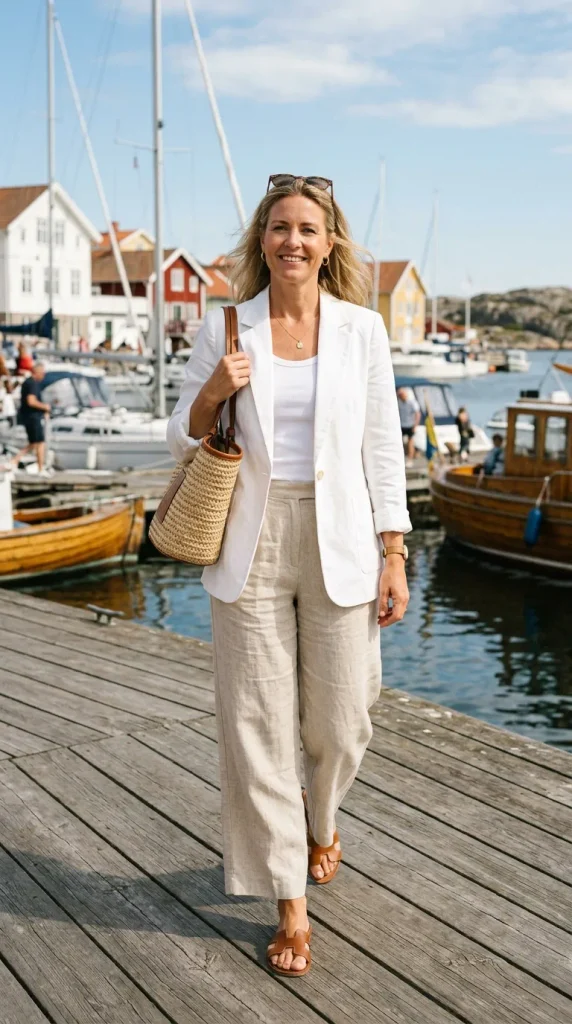
10. The white summer blazer with linen trousers
White blazer, oatmeal linen, northern summer light. I accept the dry-cleaning bill as the price of admission.
Northern summers have light like nowhere else, and pale tailoring is built for it. A crisp white or ivory blazer — cotton or a linen blend, lightly structured — over oatmeal wide-leg linen trousers and a plain top in a neighbouring tone. Nothing matches exactly; the whole outfit is shades of the same pale idea. Press the trousers lightly and then stop worrying. Linen still freshly ironed at four in the afternoon looks like it hasn’t lived; a soft crease or two is the fabric being honest.
Two practical things. Check the blazer against the light before you buy: unlined white tailoring can go see-through in bright sun, and you want to discover that in the shop, not in a photograph. A half-lining solves it. And the confession: white blazers and real life — coffee, grandchildren, dogs — are in permanent negotiation. I keep a stain pen in the pocket and a realistic attitude. If that sounds like too much administration, the cream version from idea three forgives far more.
11. Two pieces of tailoring at once: waistcoat under blazer
The extra credit round. A waistcoat under the blazer sounds like a lot; on the body it’s just one more quiet layer.
Once the single blazer feels easy, this is the next step: two pieces of tailoring worn together. A fitted waistcoat — same cloth family as the blazer, or one shade deeper — buttoned over a fine top, with the blazer open on top. On the body it reads as one long, deliberate line, and the waistcoat does the shaping so the blazer can stay relaxed. I wear it with straight trousers and feel like the most organised version of myself.
The waistcoat must genuinely fit, which is where people go wrong. Buttoned, it should lie flat with no gaping and no riding up when you sit — try both in the shop. If the two pieces are different fabrics, keep the textures matte and the colours neighbours; shiny against matte looks like a uniform from two different jobs. I’d reach for this when I want my clothes to say I thought about it — because for once, I had.
What I’d buy first — and what can wait
If your rail is empty, start with the relaxed wool blazer from idea one, in grey or navy, and wear it into the ground. It goes over jeans, knitwear, dresses and half the skirts you already own. Second comes the structured camel, when the budget allows and not before. Everything else is seasoning — the corduroy, the houndstooth, the utility blazer: lovely, none of them urgent. Buy one blazer a season, buy it well, brush it down after wearing and hang it on a wide wooden hanger, not a wire one. Blazers die at the shoulders first, usually because of how they were stored, not how they were worn.
Questions I get asked
How many blazers does a person actually need?
Honestly? Three covers nearly everything: one relaxed wool, one structured, one seasonal — linen for summer or corduroy for autumn. I own more now, but the extras are pleasure, not necessity.
Can I wear a blazer if I’m petite?
Yes, with two adjustments: the hem should end at or above the hip bone, and the sleeves need shortening so your hands show. A small alteration bill makes an off-the-rack blazer look made for you.
Does pushing the sleeves up wreck the lining?
On soft, unstructured blazers it’s fine. On a structured one with a buttoned cuff, roll the whole sleeve back once instead — kinder to the lining and it stays put.
What do I wear under a blazer in real cold?
A fine-gauge knit, never a chunky one — bulk under tailoring makes the shoulders sit wrong. Then put the warmth outside: a proper coat over the blazer, not a bigger jumper underneath.
Is it worth paying for alterations?
On a wool blazer, yes. Sleeves shortened and a waist nipped in cost little and change how the whole garment sits. It’s the difference between wearing a blazer and being dressed by one.
That’s my rail, in the order I reach for it. If one of these ends a what-to-wear argument at your house, save it on Pinterest for the next time you’re standing in front of the wardrobe with no ideas. — Elias