Last January I stood on a Copenhagen tram platform at minus six, wind coming straight off the harbour, watching a woman in a long camel coat and lug-soled…
Last January I stood on a Copenhagen tram platform at minus six, wind coming straight off the harbour, watching a woman in a long camel coat and lug-soled boots look completely unbothered while I shivered in a jacket I had bought for looks. That was the morning I stopped dressing for the photograph and started dressing for the pavement. I went home, sold two thin coats, and put the money toward one heavy wool maxi coat I found second-hand. It changed every winter outfit I own.
What follows is my real cold-weather rotation: natural fibres that actually insulate, a quiet palette of charcoal, oat, cream and ink navy so everything layers without arguing, and big shapes always balanced by something straighter underneath. I keep a cashmere comb and a tin of beeswax balm by the door, because in a Nordic winter, garment care is not fussiness. It is how the clothes survive.
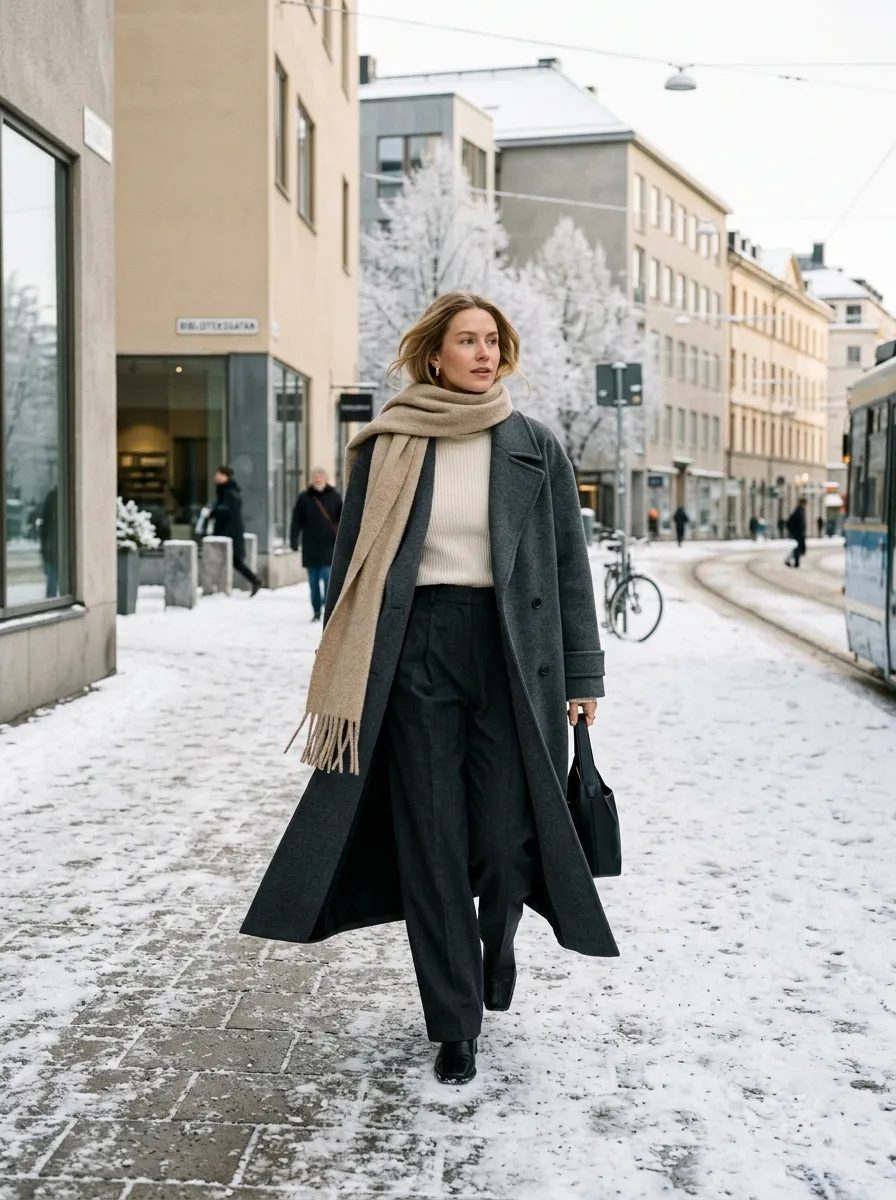
1. Architectural Wool Maxi Coat Over Ribbed Knitwear and Fluid Trousers
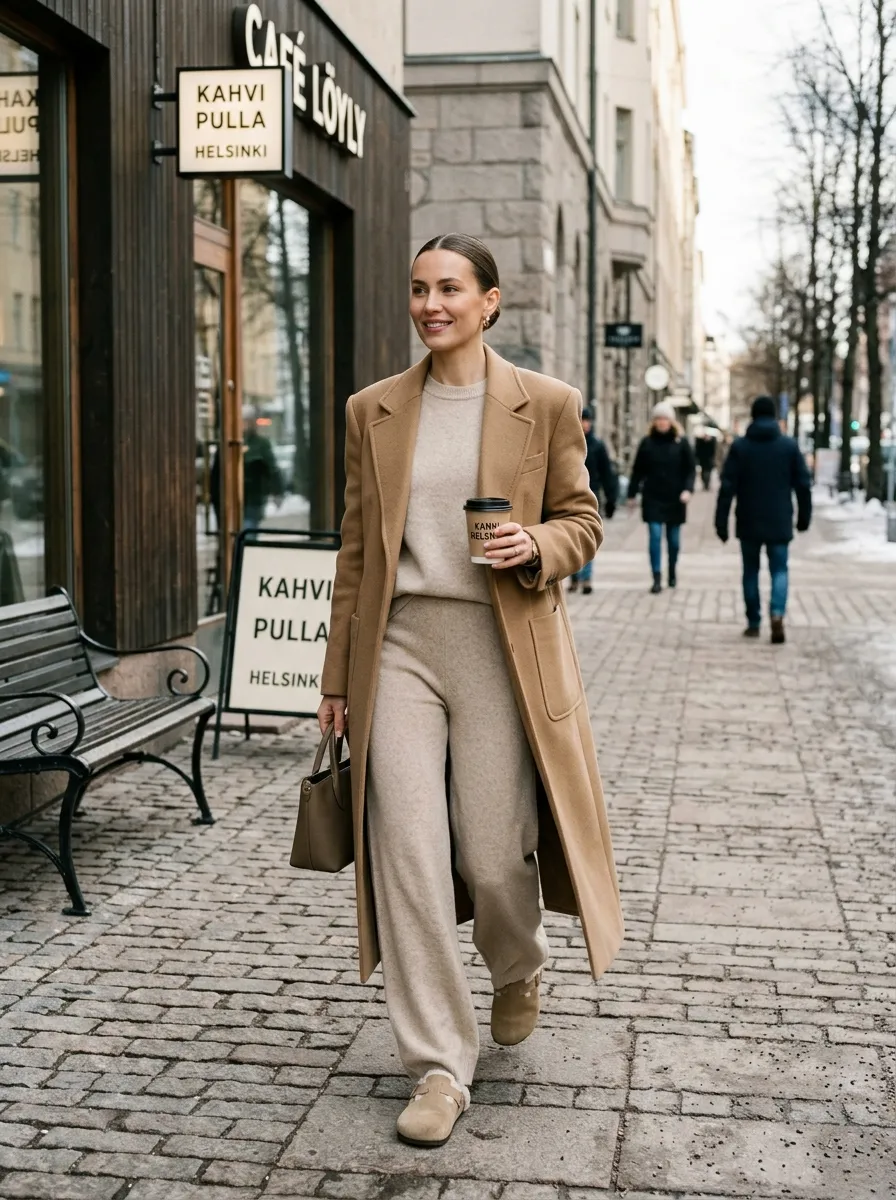
My second-hand camel maxi coat, four winters in and still the best money I have spent.
This is my cornerstone outfit: the long coat does the talking, everything underneath stays calm. I wear a dense ribbed merino turtleneck in cream, tucked smoothly into high-waisted wide-leg wool trousers, and leave the coat unbuttoned so the whole column shows. My practical test when buying a coat like this: it must have dropped shoulders and wide armholes, or chunky knitwear bunches at the armpit and you spend the day tugging. I push the coat sleeves back a fraction so the knit cuffs show, which keeps the volume looking intentional. Square-toed leather ankle boots with thick rubber soles finish it, because icy pavements are not negotiable. Honest cost note: the coat was second-hand but still not cheap, and dry cleaning runs twice a season. Worth it. Skip the ankle length if you cycle everywhere.
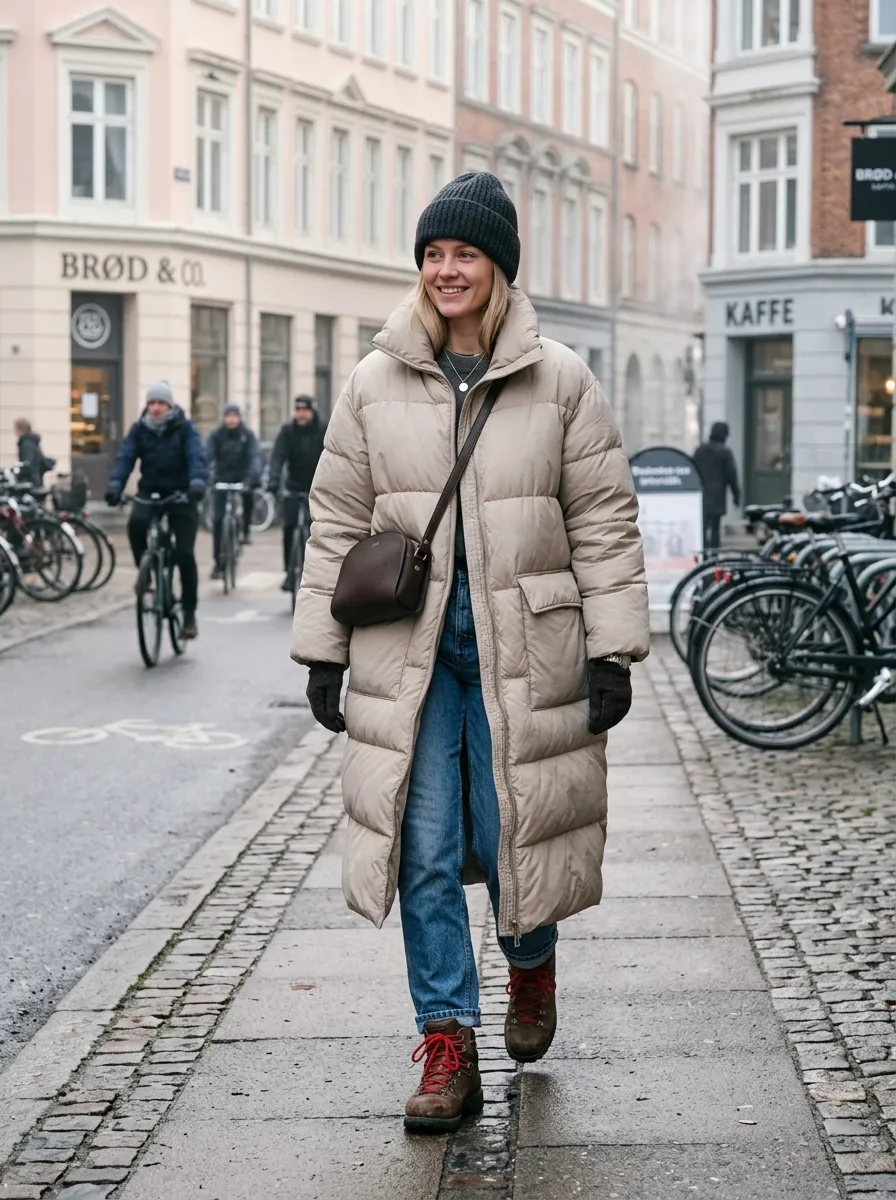
2. Voluminous Down Duvet Coat Grounded by Tapered Denim and Hiking Boots
The duvet coat on the coldest school-run mornings, balanced by slim denim and serious boots.
A giant puffer only works if the bottom half refuses to join in. I pair mine with rigid, non-stretch straight-leg jeans, hems turned up once, and a plain crewneck sweatshirt tucked firmly into the waistband. The denim’s stiffness is the point: soft leggings under this much down turn the whole outfit into bedding. I fasten only the middle two snaps of the coat, leaving the top and bottom open so I can actually stride; the side slits help more than you’d expect on station stairs. The boots are Goodyear-welted leather hikers with lug soles, bought three winters ago and resoled once. My mistake the first year was wearing this coat with wide trousers to match. Two volumes together, and I looked like weather, not a person. One volume per outfit, always.
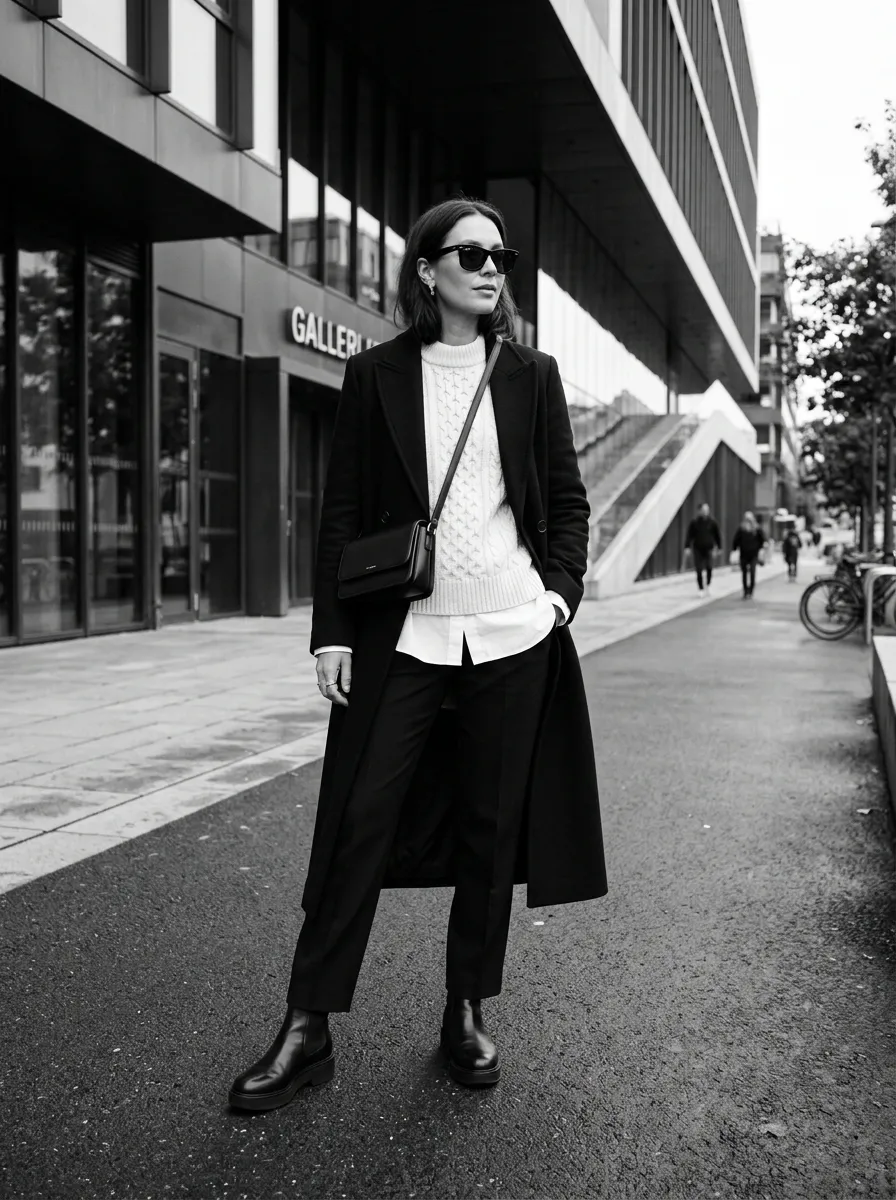
3. High-Contrast Monochrome Layering With Tailored Outerwear
Black coat, ivory layers: the combination that brightens my face on the greyest days.
On the flat grey days, this graphic contrast is what I reach for. Under my oversized black wool coat I layer a chunky cream cable-knit over a crisp white poplin shirt, letting the shirt’s tails and cuffs peek out a good two inches below the sweater. That flash of white at the wrist and hem is deliberate; it stops the knit looking like a lump. The light layers sit close to my face, which genuinely helps in low winter light, and the black tailored trousers with a centre crease keep the bottom half sharp. Practical tip: alternate your finishes. Smooth poplin, nubbly cable knit, matte coat wool. All one texture and the outfit goes flat, however good the colours are. I wear narrow black sunglasses with it, and yes, people tease me about sunglasses in January. On bright snow days, they are not an affectation.
4. Tonal Cashmere Loungewear Under Sharp Structured Tailoring
Yes, it is a lounge set under there. The structured coat is the whole disguise.
Here is my favourite cheat: a two-piece cashmere lounge set, oat crewneck and wide-leg knit trousers, worn under a structured chocolate wool coat with real shoulders. The set is the most comfortable thing I own; the coat is what makes it presentable at a client meeting. I half-tuck the sweater’s front hem into the waistband so the drape looks chosen rather than accidental, and I smooth the trousers flat over the hips. One practical warning: check the knit trouser hems before you leave. If they puddle, they will drink slush within a block, so I keep mine hemmed to break just over the shoe. Cost honesty: a good two-ply cashmere set is a splurge, and mine took two January sales to assemble, sweater one year, trousers the next. Nobody has ever guessed. That is rather the point.
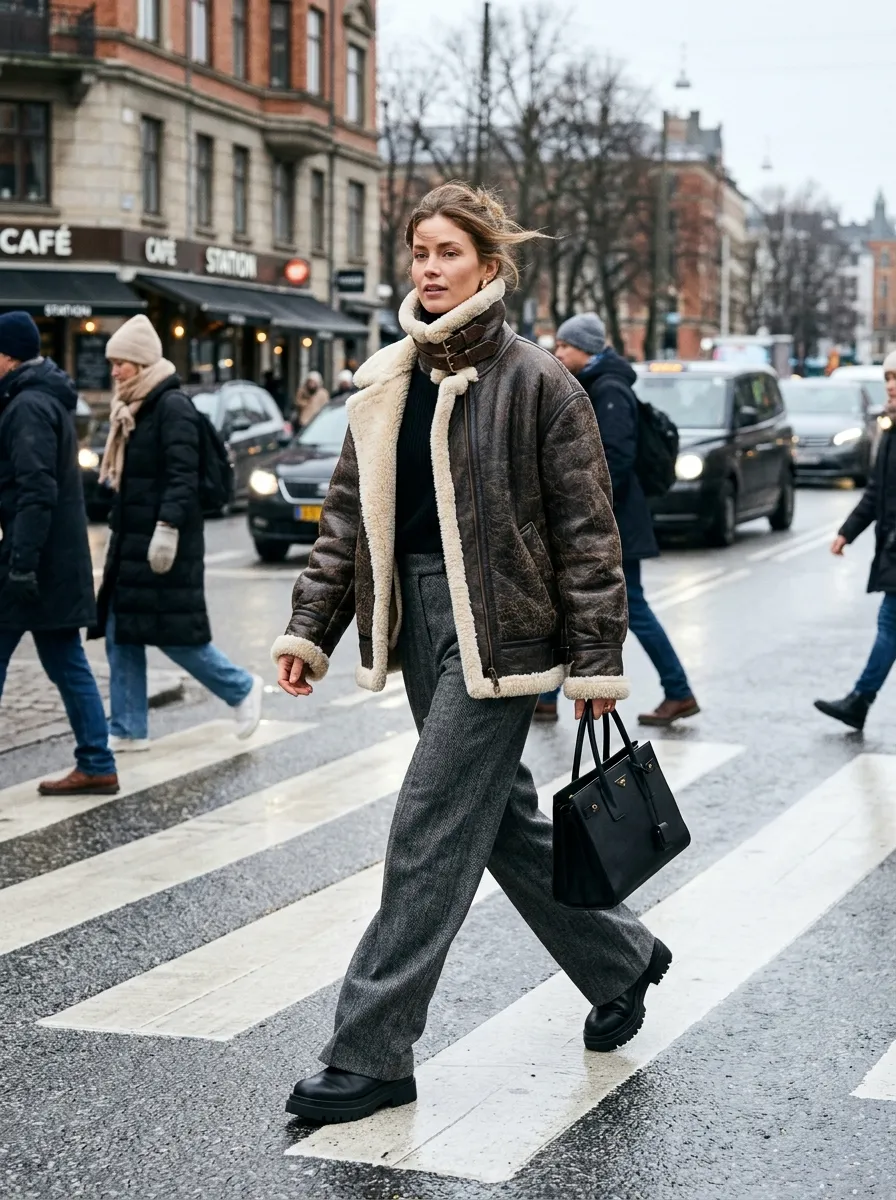
5. Cozy Shearling Biker Jacket Paired With Wide-Leg Wool Trousers
The shearling collar buckled up is my whole scarf strategy on coastal wind days.
For blustery days when wind finds every gap in a wool coat, I wear my shearling biker. The wide collar buckles up around my throat with the leather throat latches, so it does the scarf’s job and frames my face in fleece. Underneath, the rule is thin: a tissue-weight merino mock-neck, smoothed flat, because anything bulky under a fitted jacket rides up by noon. The trousers go the other way, high-waisted pleated wide-legs in navy flannel that sweep over lug-soled combat boots, which balances the cropped jacket and lengthens the leg. Honest weight note: a real shearling jacket is heavy, and after a full day of carrying it on my shoulders I feel it. It is a short-distances, cold-wind jacket, not a sightseeing one. Unlined leather gloves, structured tote, done.
6. The Blanket Scarf Anchor Over Minimalist Wool Separates
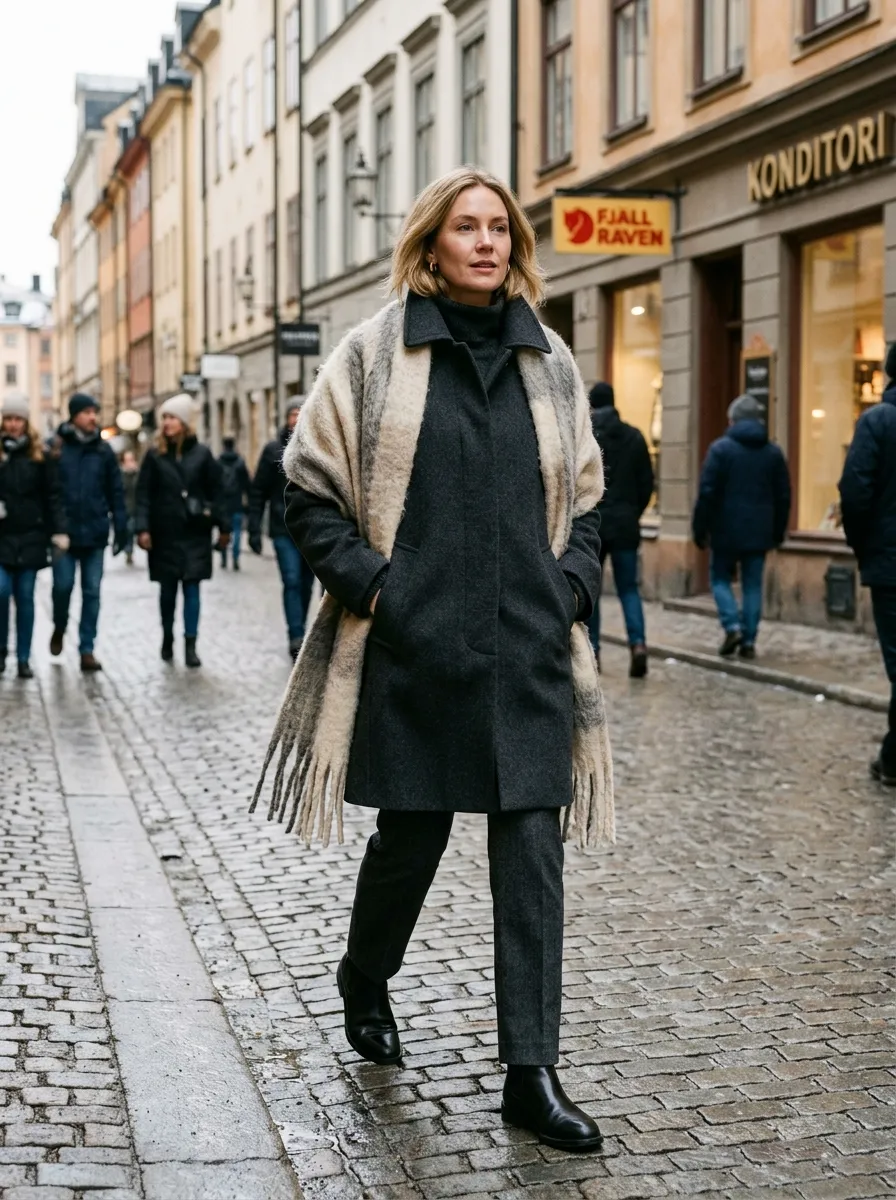
My blanket scarf worn like a cape over the quietest outfit I own.
Some days the scarf is the outfit and everything else is just the frame. I start with the plainest base I have: a fitted charcoal crewneck tucked into matching straight-leg wool trousers, car coat open over the top. Then the blanket scarf, at least eighty inches of brushed wool, draped around my neck with one side to mid-thigh and the long end wrapped across my throat and thrown over the opposite shoulder. It sits high against my chin like a soft collar. The size is non-negotiable; a standard scarf arranged this way just looks like a scarf having ideas. Practical bonus indoors: it unwraps into an actual blanket over my knees in cold cafés. The confession: I once caught the fringe in a car door and drove half a mile before noticing. Check the tails before you shut anything.
7. Sporty Technical Balaclava Layered Under Classic Tailored Suiting
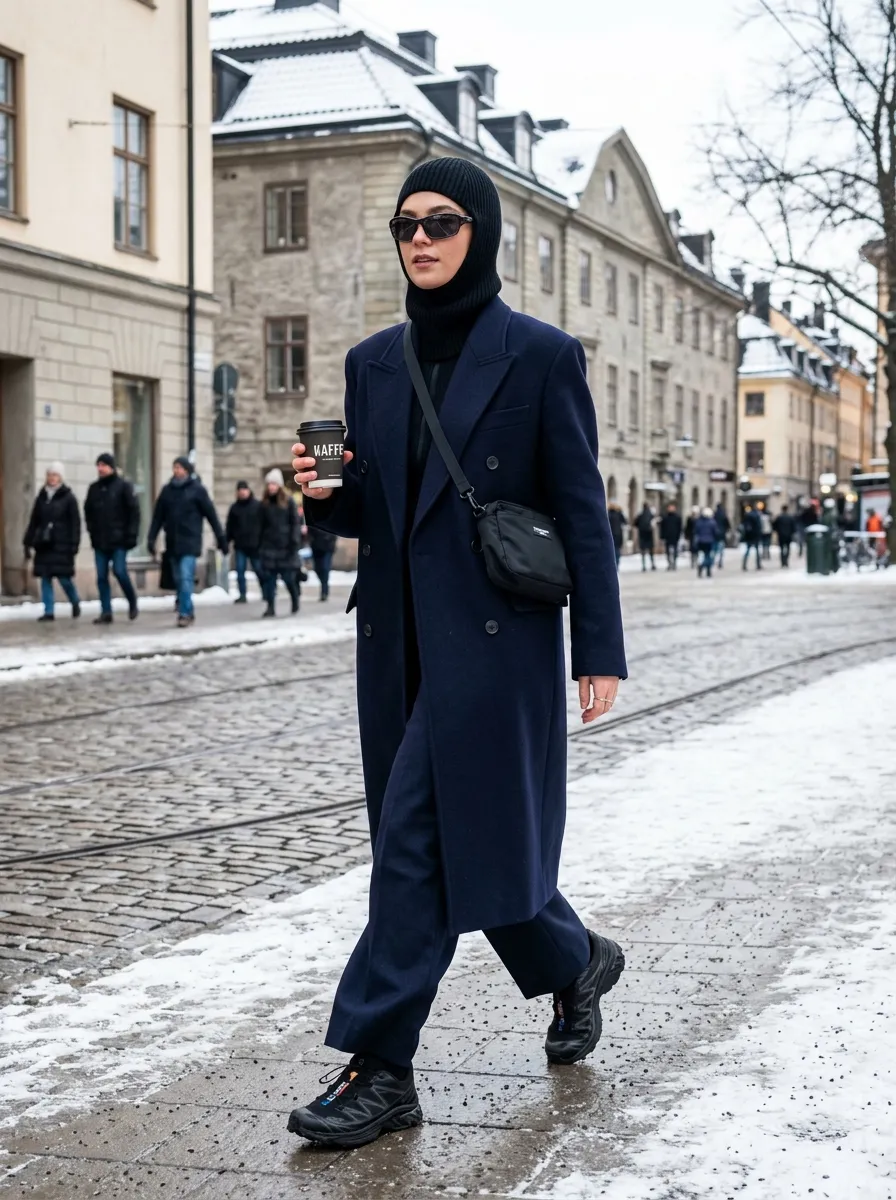
The balaclava looks severe, I know. On a bicycle at minus four, it feels like genius.
This one divides people, but every winter cyclist I know understands it. A fine-gauge merino balaclava seals the neck and ears completely, no gaps, no scarf ends flapping into traffic, and its bib tucks flat under the lapels of my double-breasted wool coat so all you see is a clean knit frame around the face. I smooth the bib over my collarbones before the coat goes on; if it bunches, the lapels sit crooked all day. Underneath, a thermal base top and straight tailored trousers, finished with chunky leather derbies. The honest downside: my mother says it makes me look like I am about to rob a bank, and entering a warm shop means peeling it off fast or overheating. For a blustery twenty-minute ride across the city, though, nothing warmer exists. Skip it for conservative offices.
8. Heavyweight Leather Trench Shield Over a Chunky Turtleneck
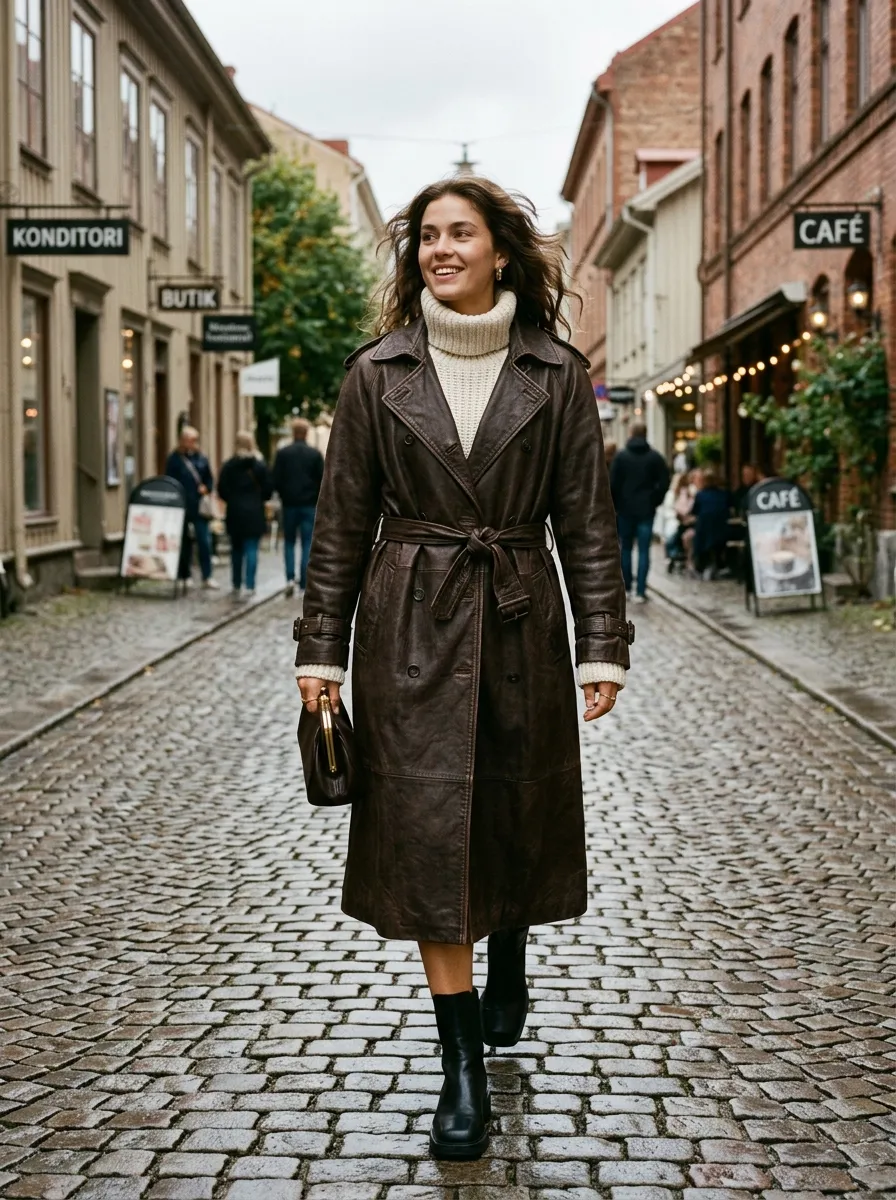
The leather trench with the belt knotted, never buckled. Rain simply gives up on it.
Rain, sleet, that sideways snow that soaks wool in minutes: this is the coat I trust. Full-length leather is a genuine shield, and under it I wear my chunkiest fisherman turtleneck, collar rolled twice into a firm ring. The contrast is the whole look, smooth hide against lofty ribbing. Two practical things I have learned. First, check the lining before buying: satin-lined sleeves let the thick knit slide instead of bunching at the shoulder, and it makes a real difference. Second, knot the belt loosely at the centre instead of buckling it. It looks softer and lets the front drape. I pull the cuffs back so a little cream knit shows at the wrists. Mine came from a vintage shop and cost less than a mid-range wool coat, though it weighs noticeably more by evening. Gallery nights and wet Fridays, it earns it.
9. Oversized Quilted Liner Jacket Layered Beneath a Roomy Topcoat
The army-surplus liner doing invisible work under my camel topcoat.
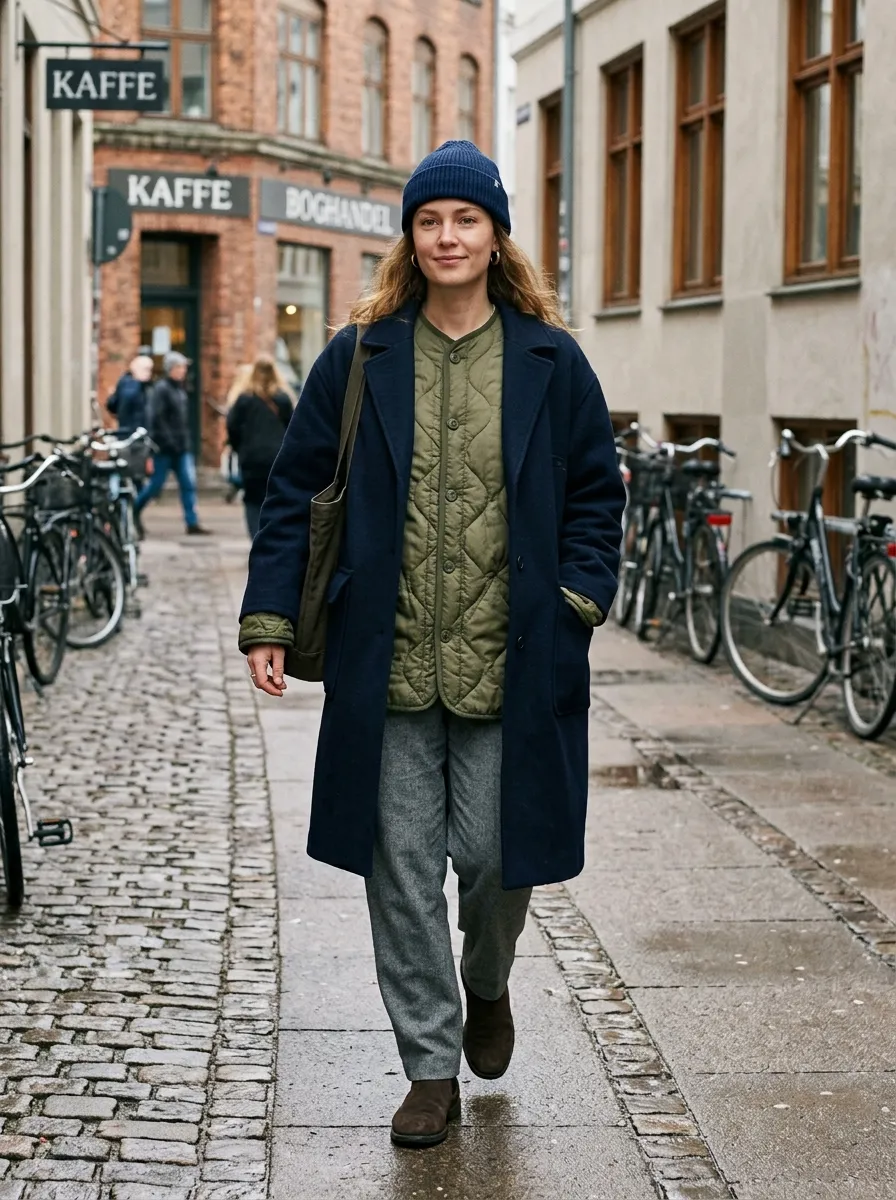
This is the system I recommend to anyone whose days swing between freezing streets and overheated shops. A collarless diamond-quilted liner, the kind made to button inside military coats, worn fastened over a fine merino crewneck, with my roomy camel topcoat left open on top so the quilting shows down the centre. In a warm shop I shed the wool coat and keep the liner, which still looks deliberate. The one rule: keep both layers in the same earthy family, olive under camel, slate under navy. Mismatched, it reads as laundry day. My liner cost twenty-five euros at an army surplus shop and weighs almost nothing, which also makes it my travel layer on trains. Straight charcoal flannel trousers and oiled-leather desert boots underneath. A ribbed watch cap worn high finishes it, maritime style, above the ears.
10. The Slouchy Slit-Hem Knit Over a Pleated Wool Midi Skirt
The skirt outfit I wear when I am tired of trousers: long knit, pleats moving underneath.
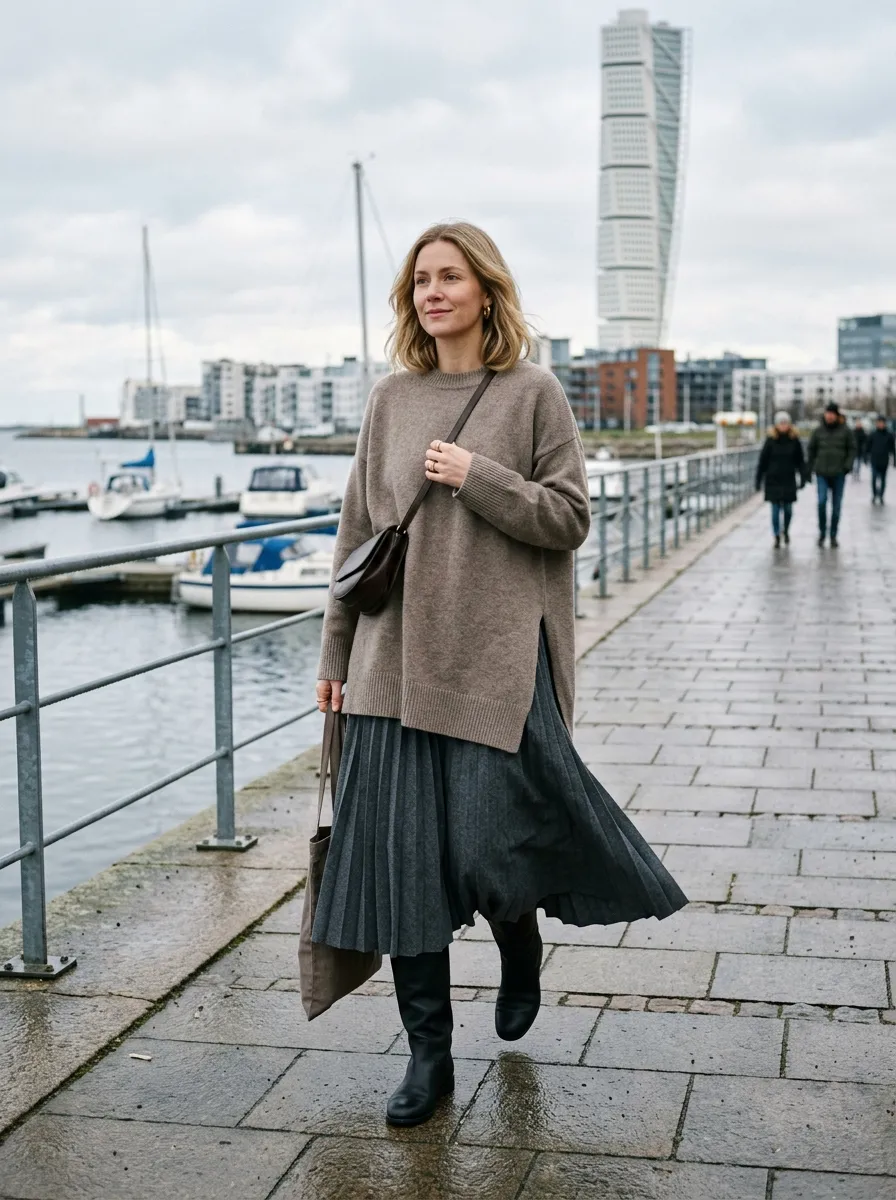
When I am tired of trousers, this is my alternative: a longline lambswool tunic with deep side slits, draped loose over a sunray-pleated wool midi skirt. Nothing is tucked and there is no waistline to speak of, just one long vertical fall of fabric, and the slits open as I walk so the pleats sway out. It is the most comfortable formal-looking thing I own. The practical detail is the boots: tall knee-high leather ones that disappear under the skirt hem, because a gap of cold leg between boot top and hem ruins both the warmth and the line. Check in the mirror that the slits actually open over the pleats rather than catching on them; a slit that sticks reads as a tear. Who should skip it: cyclists, obviously, and anyone whose winter involves chasing small children. Pleats and wind are also a negotiation. I accept it.
What I’d buy first — and what can wait
If you are building this wardrobe from a mixed rail, spend first on the long wool coat and on Goodyear-welted boots with real lug soles. Those two pieces face the weather daily and carry half the outfits here. Buy them second-hand if you can; heavy wool coats and fisherman knits turn up in vintage shops barely worn, at a third of the new price. Add one foundation piece a year rather than a whole season’s haul. What can wait: the leather trench, the cashmere set, the shearling. All lovely, none of them your first winter’s business. Base layers, cotton tops and thermal tees, buy plainly and cheaply. And give the whole rail fifteen minutes on a Sunday: brush the coats, steam the creases back in, check the boots. It is the cheapest styling I know.
Questions I get asked
Won’t an oversized coat and wide trousers together swamp me?
They can. My rule is one volume at a time: a wide coat over straight trousers, or wide trousers under a cropped jacket. A two-inch French tuck, tucking just the front of a sweater hem into the waistband, also gives a big knit a waist without fighting it.
Are synthetic winter fabrics really so bad?
In my experience, yes for anything worn all day. Acrylic fleece and cheap nylon trap moisture against the skin, so you sweat indoors and chill outside. Wool, alpaca, cashmere and certified down breathe while they insulate. Check labels; fibre content matters more than the brand name.
How do I keep leather boots alive through a salty winter?
Wipe slush and road salt off the same evening, and work in a beeswax balm roughly every two weeks. Salt left overnight is what cracks leather, not the snow itself. My hikers are on their third winter and one resole.
Can I add any colour to all these neutrals?
Yes, in small doses. A butter-yellow beanie, an icy blue scarf, a sour-green bag. The neutral base stays calm and the accent does the talking. Whole garments in bright colour are what fight with winter light, not accessories.
How should I store heavy coats and knits between wears?
Coats go on wide wooden hangers so the shoulders keep their shape. Knitwear is folded in breathable canvas or linen bins, never hung. Boots live on a tray by the door. My whole winter rail is sorted light to dark, ecru to charcoal, so five-minute dressing actually works.
Winter dressing stopped being a daily defeat for me the day I bought for the weather I actually have. Start with one honest coat, and the rest follows. If a combination here joins your rotation, save it to your winter board on Pinterest for the next cold snap. — Elias