10 Scandinavian Shoe Styling Ideas for Women Over 40
Three winters ago I slipped on wet leaves outside the bakery, wearing thin-soled ballet flats I had chosen because they were pretty. I did not fall, quite, but…
Three winters ago I slipped on wet leaves outside the bakery, wearing thin-soled ballet flats I had chosen because they were pretty. I did not fall, quite, but I grabbed a lamppost hard enough to bruise my palm, and I stood there thinking: I am forty-eight years old and I am still dressing my feet like a student. That evening I put the flats in the donation bag and started again, properly.
What I learned is that after forty, shoes stop being an accessory and become the foundation. The Scandinavian women I watch build an outfit from the ground up: grounded soles, honest leather, nothing that pinches by lunchtime. These are the ten pairings I actually rotate, with the fitting-room checks I do, the mistakes I have paid for, and the care habits that keep good leather good.
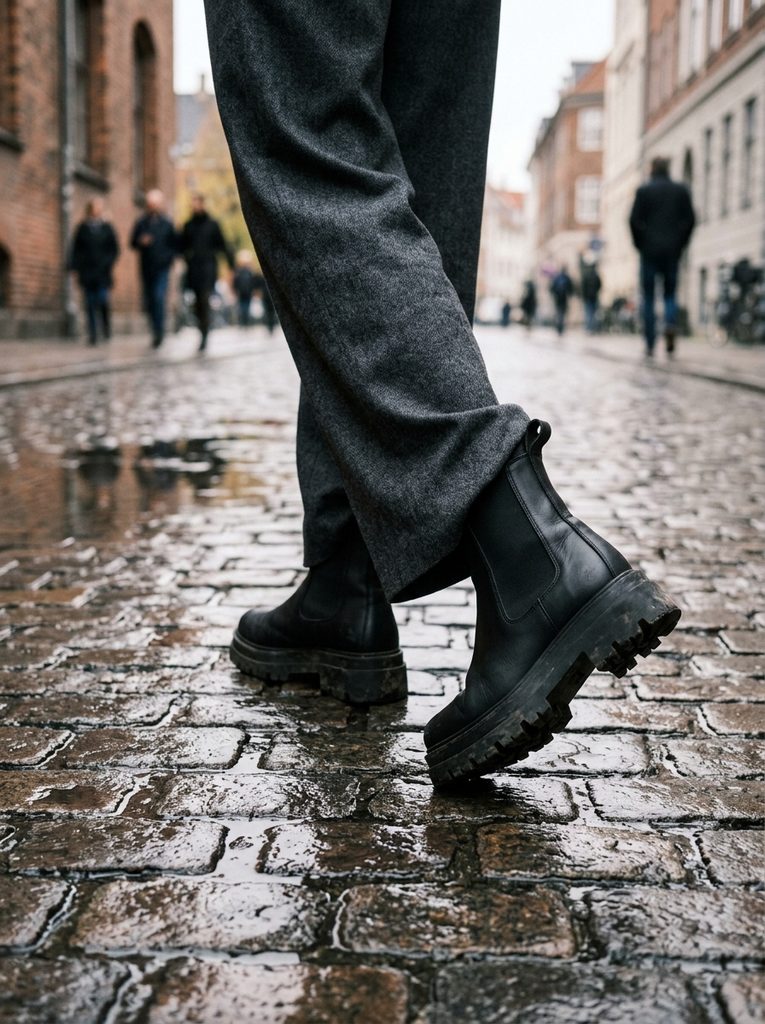
1. Chunky lug-sole Chelsea boots with wide-leg wool trousers
The boots that ended my slipping era. The hem floats just above the floor, even in rain.
This is my wet-weather uniform: Chelsea boots with a proper two-inch lug sole, worn under wide-leg wool trousers so the hem falls clean over the boot shaft and hovers about three-quarters of an inch above the ground. The checks happen at the tailor, not at home. Take the exact boots with you when trousers are hemmed — an inch too long and the wool drags through puddles; an inch too short and the whole thing looks apologetic. Never cuff wide-leg trousers over boots; the unbroken line is the point. The elastic gussets must be snug at the ankle or the boot slops as you walk. Mine are smooth black calfskin, polished enough for the office, and the lug sole has carried me across icy platforms without a single grab at furniture since.
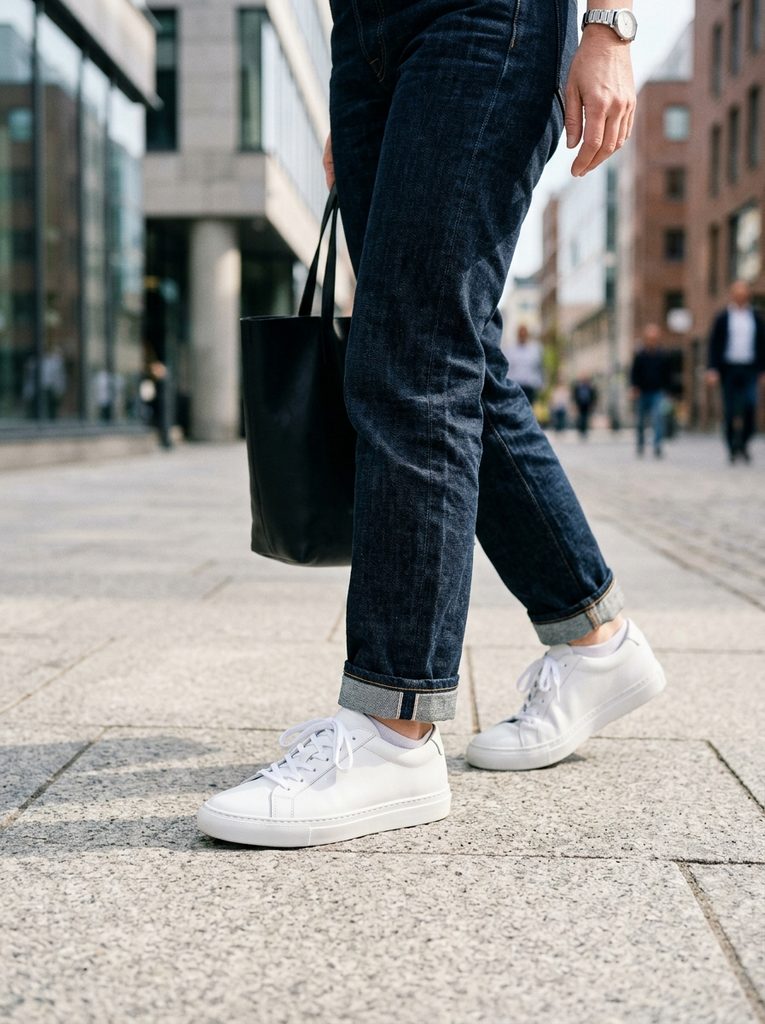
2. Minimalist white leather sneakers with straight tailored denim
No logos, no neon, no fuss. These have walked more city miles than all my other shoes combined.
The sneaker has to be boring to work: smooth white leather, stitched cupsole, no logos, no coloured panels. Anything louder and it stops being a wardrobe piece and becomes gym kit. I wear mine with rigid straight-leg jeans in dark indigo, the hem ending right at the shoe collar or folded once to show the ankle bone. My mistake was the first pair I bought — cheap coated leather that cracked across the toes within a season and squeaked on every floor. Full-grain leather costs more and simply does not do that. Care is non-negotiable here: wipe the leather and soles with a damp cloth after wearing, and spray them with stain repellent before the first outing. Scuffed white sneakers undo an otherwise careful outfit faster than anything I own. No-show socks with a silicone heel grip keep the line clean and the blisters away.
3. Pointed square-toe leather loafers with ribbed knit midi skirts
The sharp toe does the dressing up. My feet think I am wearing slippers; everyone else sees tailoring.
A square-off chisel toe gives a loafer enough architecture to hold its own under a soft knit skirt, where a round, flimsy flat would disappear. I wear espresso loafers with a low stacked heel — about an inch — under a dense ribbed merino midi that ends mid-calf, leaving a clean stretch of leg above the shoe. In cold months I add opaque tights in the same tone so the column runs unbroken from waist to toe. The fitting check is the vamp: walk across the shop and bend your foot properly. A loafer that slips at the heel on carpet will carve you up on pavement. Break new loafers in at home first, twenty minutes at a time in thick socks, with a little leather-stretch spray if the toes pinch. Cedar shoe trees go in the moment they come off my feet — that one habit has kept the toes from curling and the vamp creases from setting.
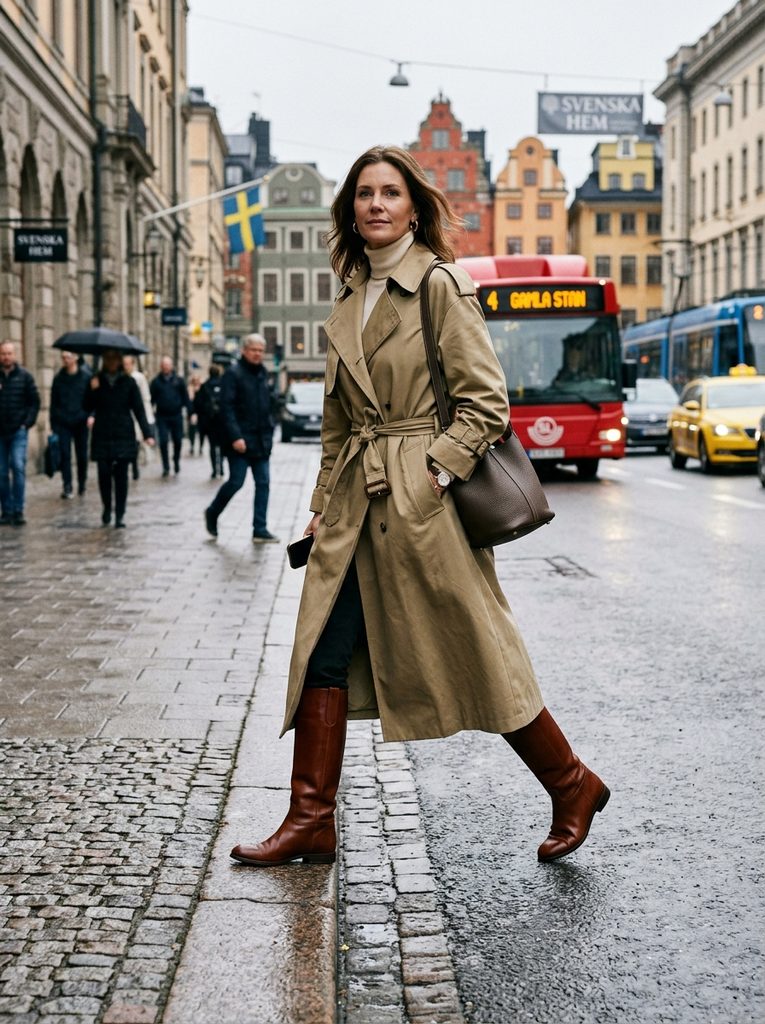
Bought fifteen years ago, resoled once. The trench changes; these boots are a permanent fixture.
Knee-high riding boots are the most expensive shoes I own and the cheapest I have ever bought, divided by wearings. A flat, rigid shaft, an almond toe, almost no hardware — mine are cognac, and they go under an oversized trench with slim trousers tucked smoothly into the tops. The check nobody mentions is the calf: the shaft must close without strangling, because a boot that grips at noon will be agony by four. Try them on in the afternoon, when your legs are at their widest, not first thing in a quiet morning shop. Store them standing with inserts inside; a tall boot left flopped over a rail creases across the ankle and never recovers. I condition the leather before the season starts and buff the shafts with a flannel cloth. Under a midi dress, the hem should fall a couple of inches past the boot top — a gap of cold leg in between looks like an accident.
5. Matte leather clogs with cropped raw-hem chinos
Market mornings, studio days, garden. The wide toe box is a kindness I did not know I needed.
Clogs are the shoes my feet vote for: a wide, rounded toe box that lets toes spread, a sculpted wooden footbed, oiled leather that shrugs off weather. I wear mine with straight chinos cropped two inches above the ankle bone, because that flash of ankle is what stops a substantial shoe looking like farm equipment. If the chinos are long, one neat double cuff solves it. The honest warning: buy clogs at the end of the day and walk in them properly. My first pair felt dreamy in the shop and bruised the tops of my feet on the first long market morning — the leather strap needed a week of short wears to soften. Skip clogs entirely if you walk fast on cobbles; the rigid sole does not forgive a hurried stride. A rub of mink oil once a season keeps the matte leather supple and rain-resistant, and marled wool socks bridge the gap beautifully when the mornings turn cold.
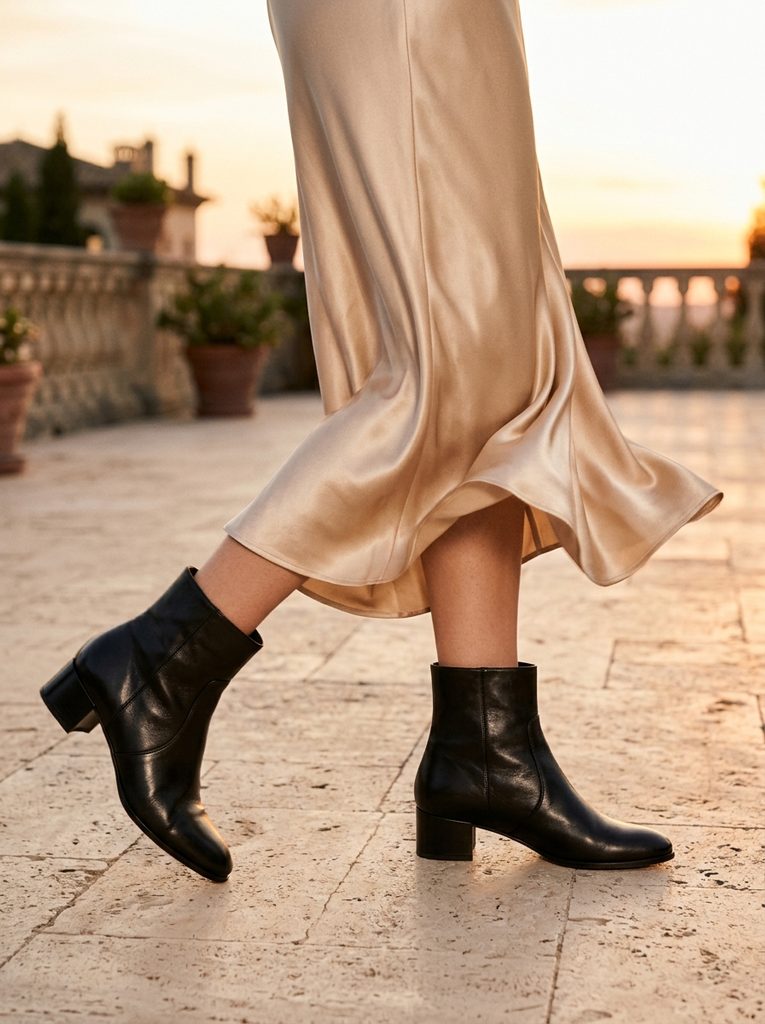
6. Low block-heel ankle boots with fluid silk column slips
Silk needs an anchor or it floats away into evening. Two inches of block heel is the anchor.
A silk slip skirt on its own reads as evening, whatever the clock says. A two-inch block-heel ankle boot is what brings it back into daylight — sturdy leather under liquid fabric, and a heel wide enough to cross cobbles without that wobbling forefoot ache stilettos used to give me. The boot shaft must hug the lower calf closely; a gaping shaft chops the leg at its widest point and ruins the column. Let the skirt hem fall over the top few inches of the boot so the silk moves around the leather as you walk. I match black silk to black boots for one long unbroken line, then throw an oversized cashmere crewneck over the top. The check is the heel itself: two inches, stacked and broad. Higher or narrower and you are back in the lamppost years. Steam the skirt hem before wearing — silk clinging to boot leather looks like static, not style.
The outfit that gets me taken seriously in rooms where I used to overdress. Weight at the bottom, authority at the top.
This pairing sounds like a dare and works like a formula: polished combat boots under serious tailoring. The heavy boot balances the padded shoulder of a double-breasted blazer, so neither end of the outfit shouts. The boots must be clean-lined — blind eyelets, no contrast stitching, no hardware party — or the look tips from architectural to fancy dress. I swapped the standard laces for flat waxed cotton ones; they stay tied, lie flat, and look twice the price. Trousers should land exactly at the boot collar, never pooled over the laces. Fit check: lace them fully in the shop and walk downstairs if you can — ankle support is the selling point, so a boot that rolls on a step fails its one job. Mine are box-calf, kept at a real shine with black wax, because a scuffed combat boot under a good blazer reads as carelessness, not edge. Skip these if your workplace is genuinely formal; no styling survives a strict dress code.
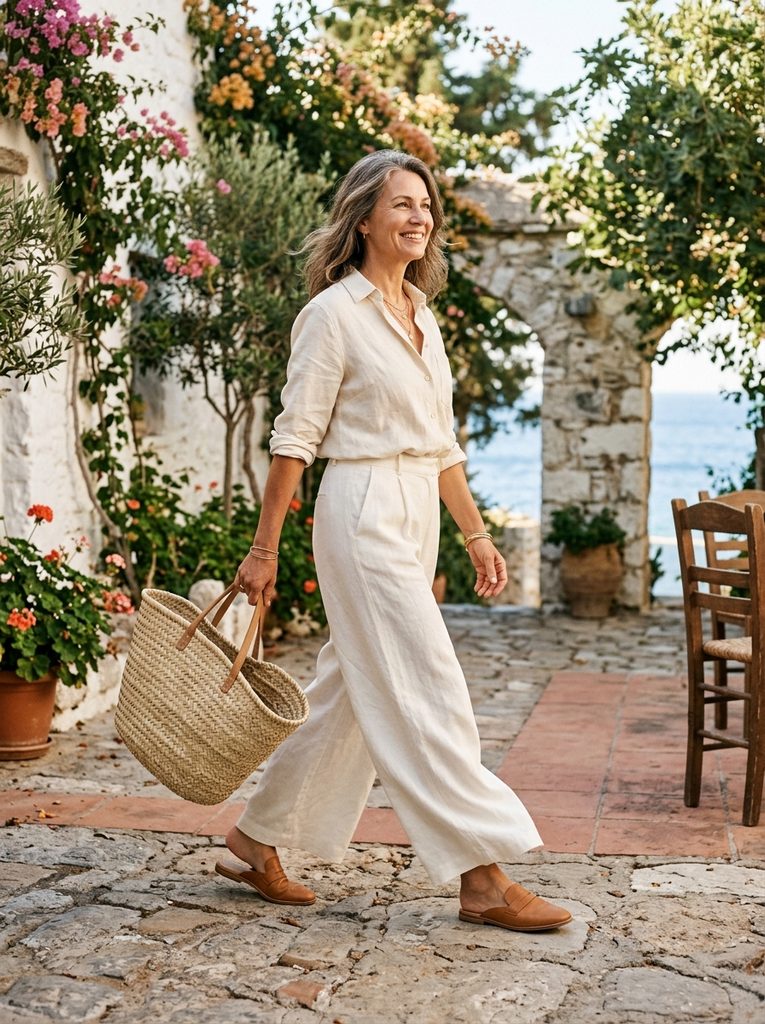
8. Minimalist leather mule slides with relaxed tonal linen suiting
Summer’s whole strategy: bare heel, long trousers, everything one calm colour.
In high summer I live in flat leather mules and a loose linen suit in one tone. The exposed heel sounds like a small thing, but it lengthens the leg and stops wide linen trousers from pooling into pyjama territory. The trousers must be hemmed to hover just above the ground — and hemmed while wearing the mules, because a flat backless shoe sits lower than anything with a heel counter. Vegetable-tanned leather in saddle tan is my choice; it darkens with wear into something personal rather than shabby. Two honest warnings. Mules offer zero grip on wet stone — I learned this on a rainy holiday staircase and now check the forecast before I check the outfit. And the wide strap must hold the foot without toe-gripping; if your toes are working to keep the shoe on, the fit is wrong and your feet will ache by evening. A woven tote and tortoiseshell sunglasses finish it.
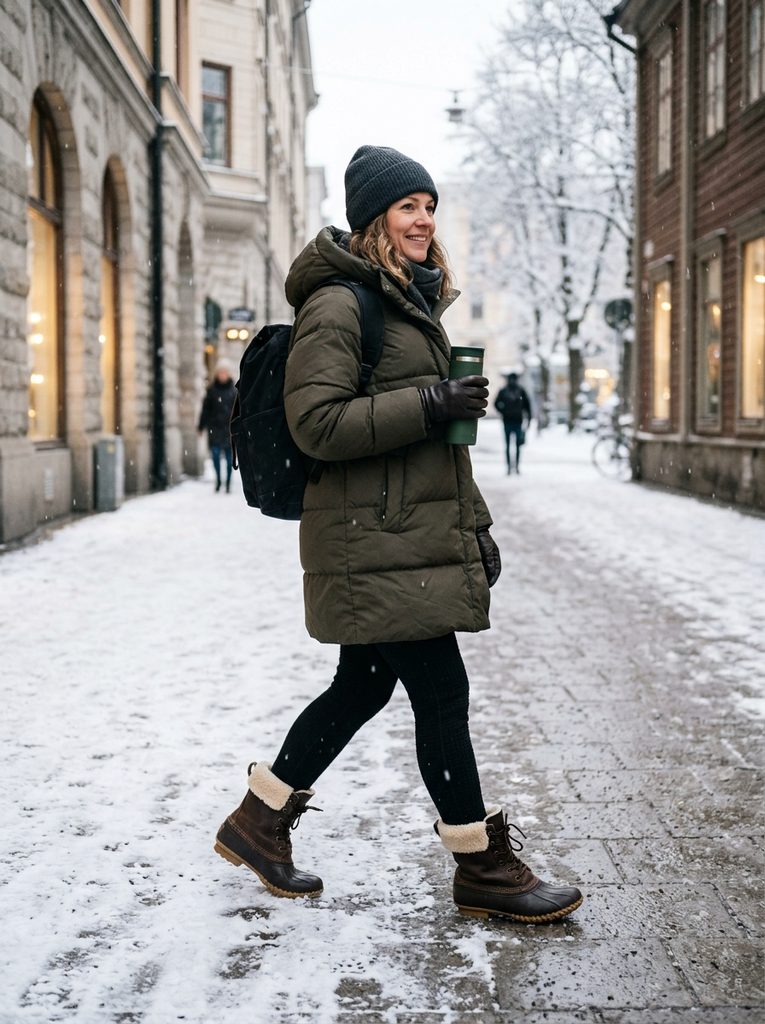
9. Shearling-lined winter duck boots with structured cocoon parkas
Minus ten, salted pavements, school run. The shearling spilling over the collar is not an accident — it is the outfit.
Real winter gets real boots: a vulcanized rubber shell below, oiled leather above, genuine shearling inside. I tuck fleece-lined leggings into them and let a little of the fleece spill over the collar, then put a big cocoon parka on top. The heavy boot is what keeps the parka’s volume from looking top-heavy — proportion again, working in the cold. The care rule is absolute and I learned it the stained way: salt destroys leather quietly. Wipe the shells and shafts with a damp cloth the moment you come in from salted pavements, and dry the boots away from radiators, because direct heat hardens shearling into cardboard. The check before buying is the lining itself — run your hand inside. Genuine shearling is dense and springs back; the synthetic kind feels thin, mats within a month, and insulates like a rumour. Who should skip them: anyone whose winters are merely damp. For wet cold, the Chelsea boots in idea one are enough.
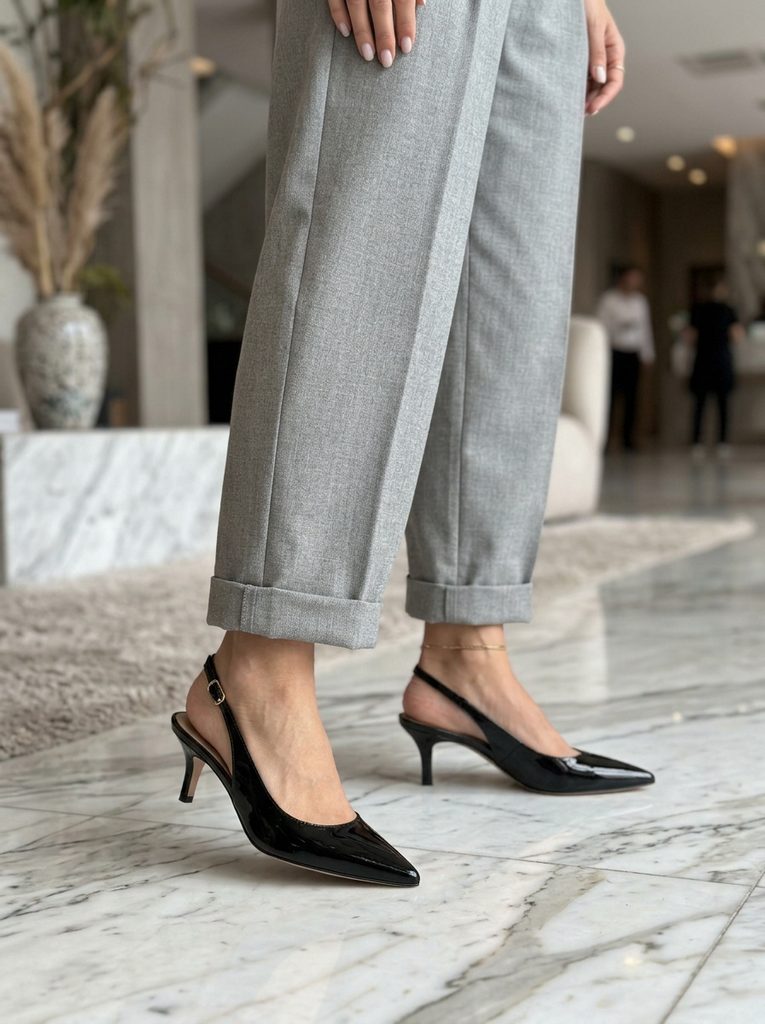
10. Pointed-toe slingback kitten heels with cuffed boyfriend trousers
The one heel I kept. An inch and a half of lift, a sharp toe, and trousers doing the relaxing.
This is the heel that survived my clear-out, and it earned its place: a pointed slingback on a kitten heel under two inches, worn with loose pleated trousers cuffed twice so the hem rests a couple of inches above the ankle strap. The contrast is the whole idea — sharp shoe, slouchy trouser — and the exposed ankle keeps the generous trouser cut from swallowing you. Practical checks, because delicate shoes punish optimism: press a thumbnail into the strap’s elastic; if it does not snap back firmly, the strap will be around your heel’s bottom by dessert. And have a cobbler add thin non-slip pads to the leather soles before the first evening out — marble floors and smooth leather soles are a combination I have tested so you do not have to. Store them with tissue in the toe boxes so the point keeps its shape. Skip them for standing receptions; they are sitting-and-short-walks shoes, honestly labelled.
What I’d buy first — and what can wait
If I were starting from bare shelves, my money goes in this order. First, the lug-sole Chelsea boots — they carry autumn, winter, and half of spring, and they are the pair that changed my daily comfort most. Second, the loafers, for everything the boots are too heavy for. Buy those two anchors well: welted or stitched soles a cobbler can replace, full-grain leather, heritage makers if the budget allows, consignment if it does not — premium boots turn up barely worn for a fraction of retail. Twenty minutes a month is my whole care routine: brush, condition, check the heels. What can wait: the kitten heels, the mules, the duck boots. They are specialists. The mistake is buying the specialists first because they are pretty, then having nothing grounded to stand on all winter.
Questions I get asked
How do I stop wide-leg trousers swallowing my feet?
Match the weight of the shoe to the weight of the hem. Wide wool trousers need a lug sole, a chisel-toe loafer, or a clog — something with presence. A slim ballet flat disappears under all that fabric and leaves the outfit unanchored. It is the proportion error I see most often, and it is the easiest to fix.
Do I really need to rotate shoes daily?
Leather does, yes. A day off lets the lining dry out completely, and worn-in-rotation pairs last years longer. My Chelsea boots are on their fourth winter partly because they rest every other day with cedar trees inside them.
How can I make leather soles less treacherous?
Ask a cobbler for thin rubber half-soles. It is one of the cheapest jobs they do, it grips on wet pavement, and it protects the leather so the shoes last. I have it done on loafers and the kitten heels before I wear either pair outside.
Are comfort insoles worth adding to good boots?
In my experience, yes — a quality shearling or memory-foam insole turns a well-made boot into an all-day boot. Size the boot with the insole in it, though. Adding one to a boot that already fits snugly just manufactures a blister.
Can I ever wear colour on my feet again?
Of course — the deep, quiet kind. Oxblood loafers, olive suede ankle boots, bitter-chocolate boots all sit happily with black and charcoal clothes and add depth without breaking the calm. What I avoid is bright colour plus hardware plus logos all at once.
My feet at forty-eight are not the feet I had at twenty-five, and I have stopped treating that as a defeat. Good shoes, honestly fitted and properly kept, are the most Scandinavian thing I own. Save this to your shoe board on Pinterest if the lamppost story sounded familiar. — Elias