10 Scandinavian Jewelry Styling Ideas for Women Over 40
On my forty-fifth birthday I emptied my jewellery box onto the kitchen table and counted what forty-five years of birthdays and impulse buys had left me: tangled chains,…
On my forty-fifth birthday I emptied my jewellery box onto the kitchen table and counted what forty-five years of birthdays and impulse buys had left me: tangled chains, one earring of three different pairs, a charm bracelet that jingled like a cat collar, and a drawer of plated metal already flaking at the edges. Almost none of it was solid, or me anymore. I kept my grandmother’s silver band, sold the rest at a flea market, and started again with the rule Scandinavian women seem to be born knowing — one good piece beats five cheap ones fighting each other.
Ten years on, my whole collection fits in one shallow wooden tray. Silver, a little brushed gold, one pearl, one lump of amber. Each piece works with heavy knits, crisp shirts and wool coats, and each gets worn weekly. These are the ten combinations I actually use, with the checks I do before I buy and the mistakes I have already paid for.
1. The wide silver cuff over a ribbed knit
The cuff that started my second collection. It has outlasted four jumpers and one marriage proposal — long story.
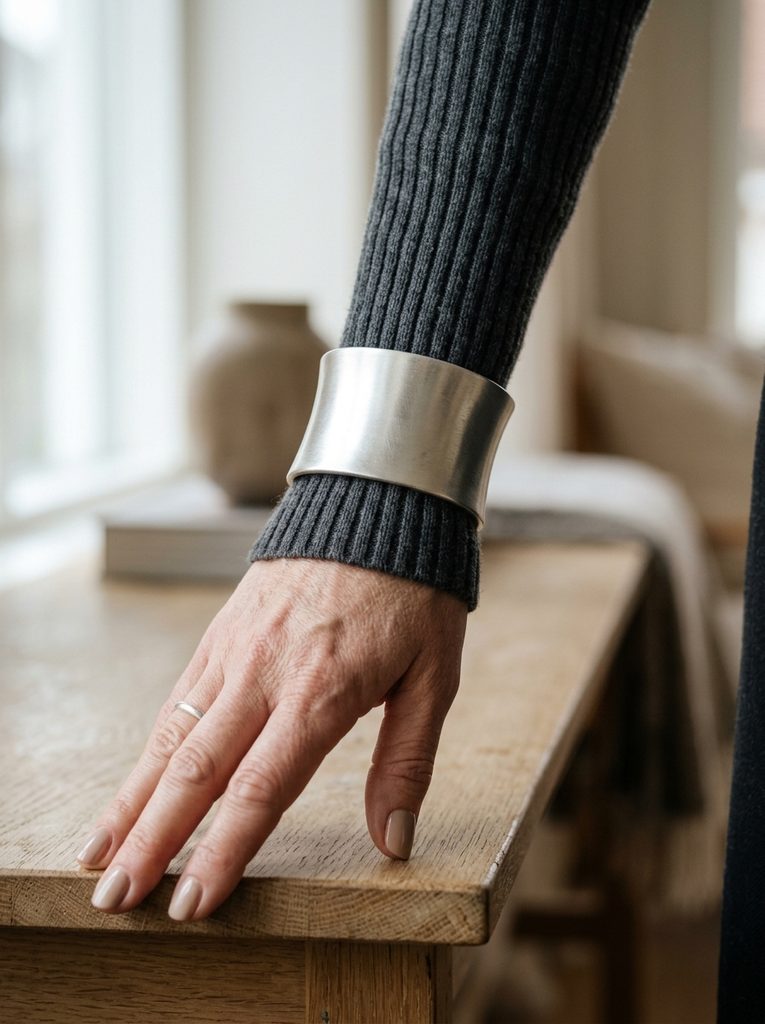
This was my first serious purchase and still my most-worn: a plain sterling silver cuff, about an inch and a half wide, slid over the sleeve of a ribbed knit so the metal sits roughly an inch above the wrist bone. The checks matter because a cuff is unforgiving. The edges must be rounded — run a thumb along the rim, because a sharp edge will chew a merino sleeve to fuzz within a month. And it should sit flush without pinching; squeeze it gently with both hands to adjust, never pry it open from one side or the curve warps. My first attempt used a thin plated cuff that turned my wrist green by lunch. Solid 925 silver costs more once and then behaves for decades. Keep the other wrist bare and wear small studs. One statement per outfit is the whole discipline.
2. The lopsided baroque pearl on a heavy chain
My pearl looks like a small potato and I love it for exactly that reason.
Baroque pearls are the ones that failed the roundness test — ridged, uneven, all elbows — and against the straight lines of Scandinavian dressing that wobble is the whole charm. Mine hangs from a chunky silver cable chain and lands just below the hollow of my throat, over an open-collar shirt. Two checks before you commit. First, size: under fifteen millimetres a baroque pearl looks like a mistake rather than a decision, so go bigger than your instinct says. Second, the bail — the loop on top — must be wide enough for the chain to pass through without forcing; I once bought a beautiful pearl whose bail fitted nothing I owned and it sat in the tray for a year. Wear it alone — I once spent a gallery opening untangling it from a second chain. Skip this if matching, symmetrical sets calm you — this one is deliberately off-balance.
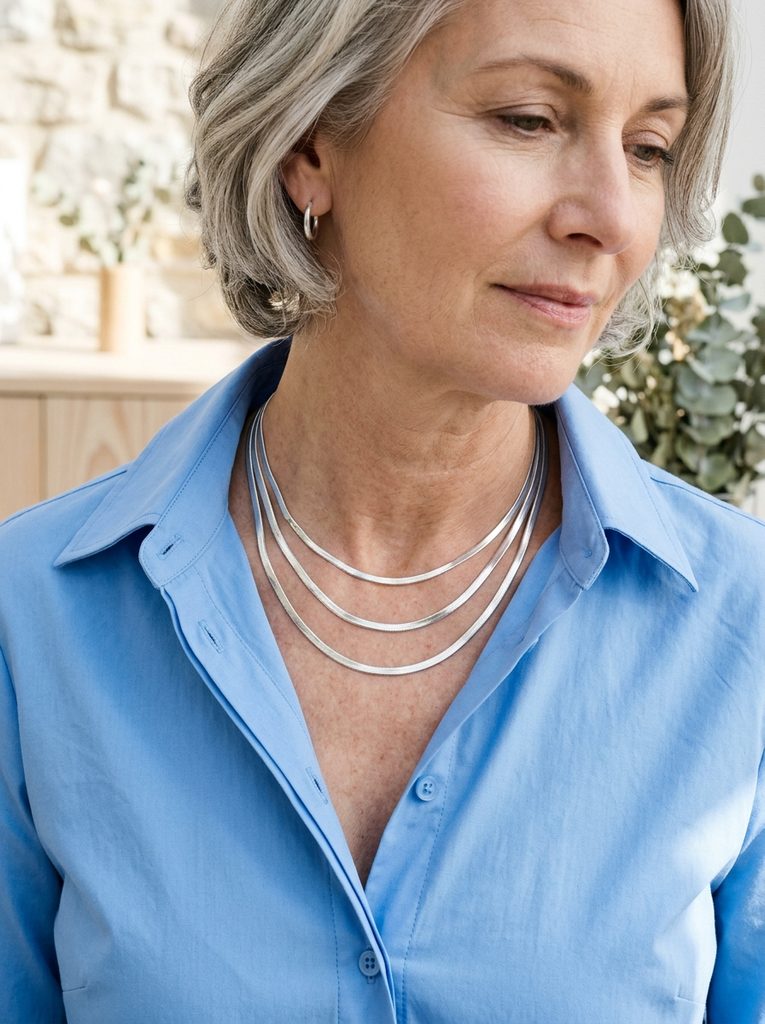
3. Three snake chains, tiered over a crisp shirt
Three ribbons of light and not a pendant in sight. My board-meeting neckline when I still had board meetings.
Snake chains are flat, fluid and catch light in one unbroken ribbon, which is why three of them in graduated lengths — sixteen, eighteen and twenty inches — look so calm against a plain poplin shirt. The checks are about spacing and honesty of material. Each chain should drop an inch to an inch and a half below the one above; closer than that and they clump into one thick band. And buy solid metal if you possibly can. A plated snake chain that kinks — they all kink eventually — cannot be repaired, because the links are hollow sleeves. Mine are silver, bought a year apart, all in the same finish; mixing a bright polish with a brushed finish makes the set look accidental. One practical purchase worth every penny: a magnetic multi-strand clasp at the nape. It keeps the tiers separated instead of knotting by coffee time.
4. Brushed gold pebble studs with my hair up
These cover a multitude of sins, including earlobes that remember 1987.
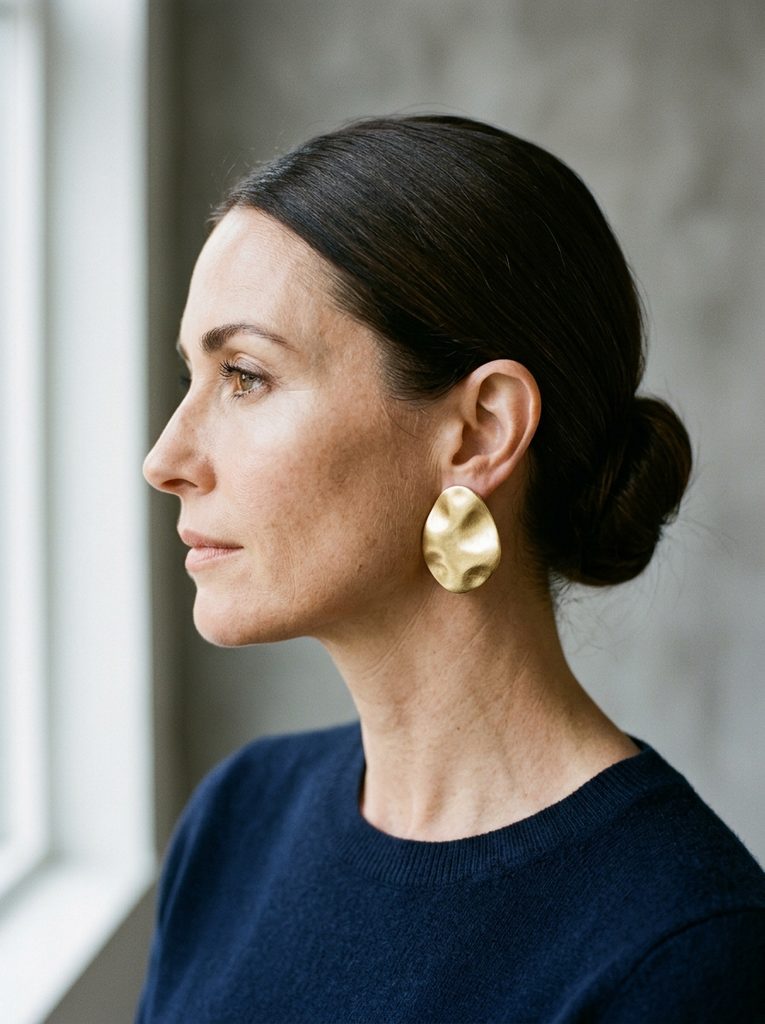
These are the earrings I reach for when my face needs warmth: irregular gold studs shaped like river pebbles, brushed matte so they glow rather than glitter, worn with my hair in a low bun. Size is the first check — somewhere between twelve and eighteen millimetres covers the whole lobe, which at our age is often the point; heavy earrings in my twenties stretched my piercings and these wide, flat studs sit over the evidence. The second check is the backing. A standard butterfly back lets a stud this size tip forward and droop. Insist on wide disc backs and feel the difference immediately — the stud sits flat and stays flat. Brushed gold vermeil over silver keeps the cost sane; solid gold in this size would have required a small loan. Skip them if you always wear your hair down — half their effect is the clean line from ear to jaw.
5. The angular signet, worn on my index finger
It looks like it should have a family crest. It doesn’t. It has opinions instead.
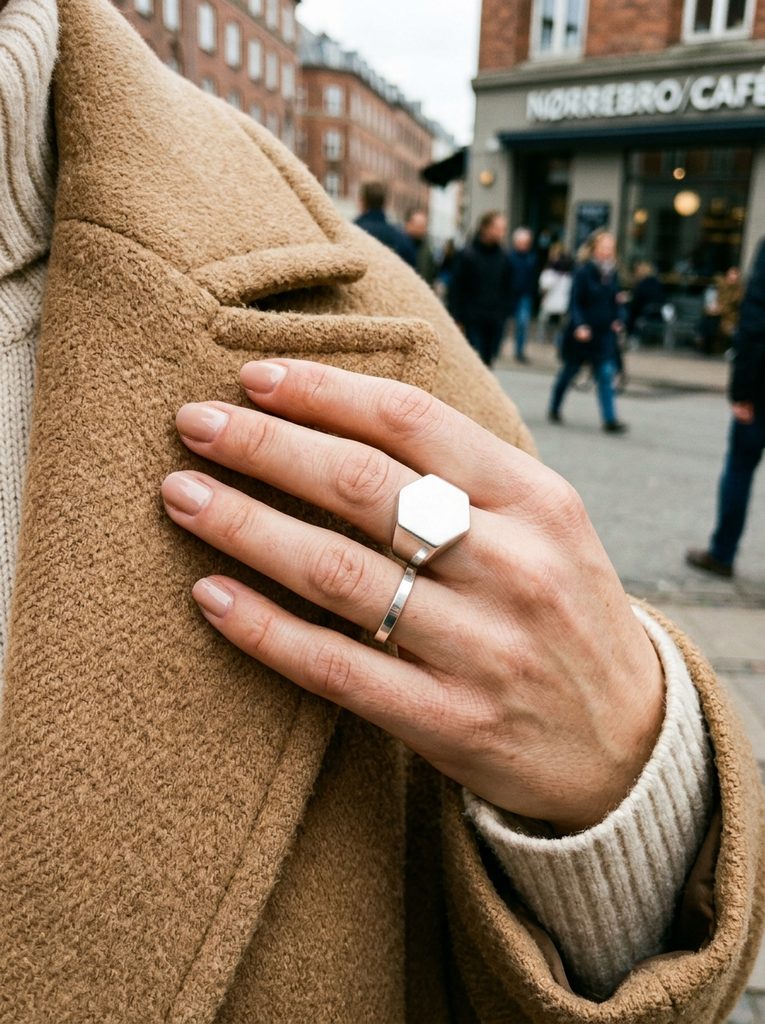
Forget the pinky finger — in Scandinavian styling the signet goes on the index finger, where it works every time you gesture or pick up a coffee cup. Mine is plain, satin-finished, with a flat rectangular face about thirteen millimetres across and not a monogram in sight. The fitting check people forget: your index finger is not your ring finger, and it changes size through the day. Try signets on in the afternoon, when hands are at their warmest, and make sure you can still make a full fist — the band should taper underneath so it doesn’t fight the knuckle. I bought my first one sized like a ring-finger ring and it spun like a weather vane. Vintage Danish silver signets turn up at estate sales for a fraction of new prices, because dealers undervalue plain geometry. Wear it with one slim band on the middle finger at most, and leave the rest of the hand alone.
6. Hollow torus hoops with a big coat
An inch across and hollow as a secret. My ears thank me every single time.
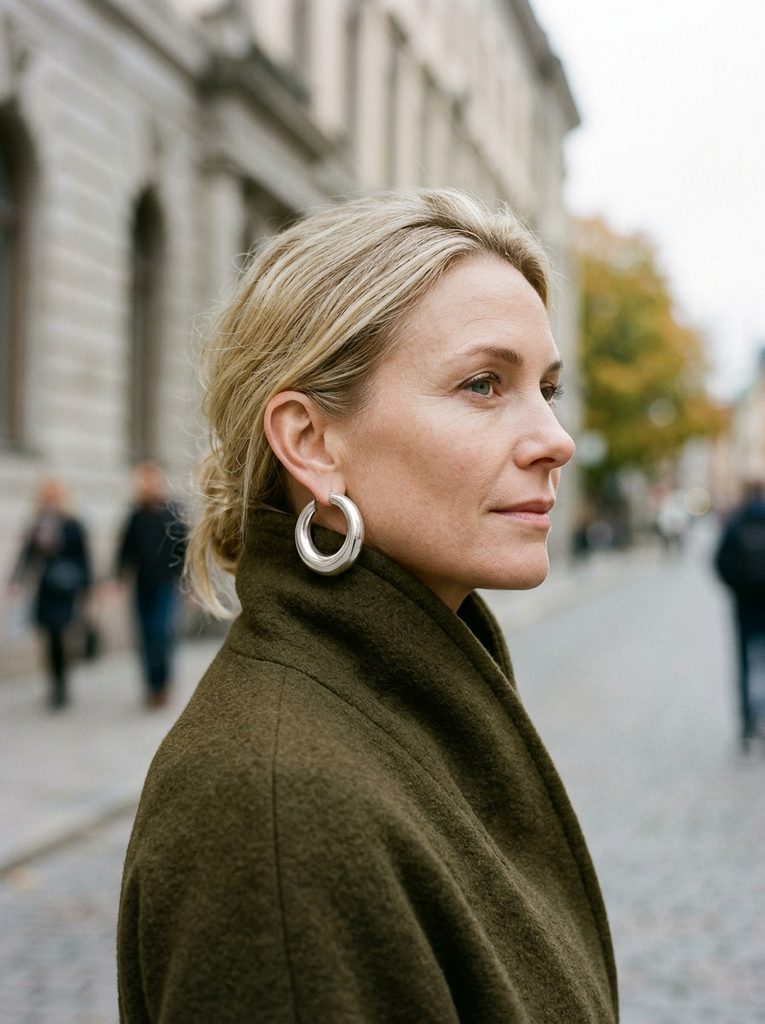
A torus hoop is a fat tube bent into a ring — an inch across, five or six millimetres thick — and the secret is that it is hollow. All that presence, almost no weight, which is why I can wear mine all day under the collar of a boiled-wool coat. The weight check is non-negotiable: pick them up in the shop. If a hoop this size is solid, it will drag your lobe down by lunchtime — I did that damage through my thirties. The other check is the closure — a hidden click-top wire that disappears into the tube, so the ring looks unbroken. Give it a firm shake beside your ear before buying; a loose click is a lost earring. I wear nothing at my neck with these. Coat collar, turtleneck, hoops, done. On bitter days they are the only jewellery that survives under a scarf — they sit close and catch on nothing.
7. Silver and gold bands, spread across the fingers
My grandmother’s silver, my wedding gold. Mixing metals let me stop choosing between them.
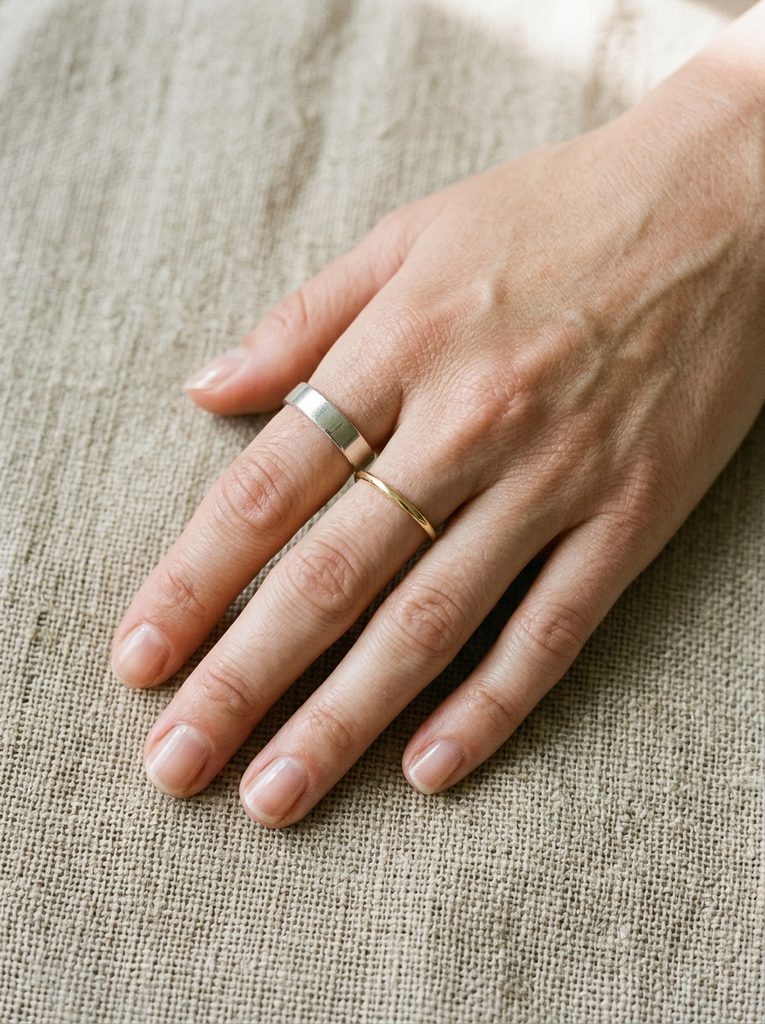
The old rule said never mix metals. The Scandinavian answer is to mix them on purpose — but spread across the fingers rather than stacked up one digit. I wear a wide flat silver band on one index finger, a slim gold band beside it on the middle finger, and invert the pairing on the other hand. The ratio check keeps it looking deliberate: roughly seventy percent of one metal to thirty of the other. Fifty-fifty reads as indecision. Fit matters more than people expect, because bands on neighbouring fingers rub; choose comfort-fit edges and check you can spread your fingers wide without the rings pinching the webbing. This arrangement solved a real problem for me — my wedding band is gold, my grandmother’s band is silver, and for years I wore only one and felt guilty either way. Keep nails plain and short; the metal is the decoration here.
8. Long linear drops with a structured collar
Two straight lines of silver doing the work of a whole evening outfit.
For evenings, these are my drama: single straight bars of silver, about sixty millimetres long, hanging perfectly still against a stand collar or a funnel neck. A vertical line lengthens everything it sits beside, neck included, and there is nothing to swing, glitter or catch. Two checks from hard experience. First, the backs: a long bar on a flimsy butterfly back tilts forward until it points at the floor, so use silicone-lined backs that grip the post and hold the bar upright. Second, measure the drop against your collar before the evening, not during it — the bar should clear the collar’s edge, because one that taps fabric with every head turn will drive you mad by dessert. I learned that at a long dinner in Gothenburg. Wear your hair back, leave your neck bare, and add nothing else except perhaps one wide ring. If your neck is short, try fifty millimetres first; proportion beats bravado.
9. The sculptural brooch on my winter coat
My aunt’s brooch, 1963. The coat changes every few years. The brooch is permanent.
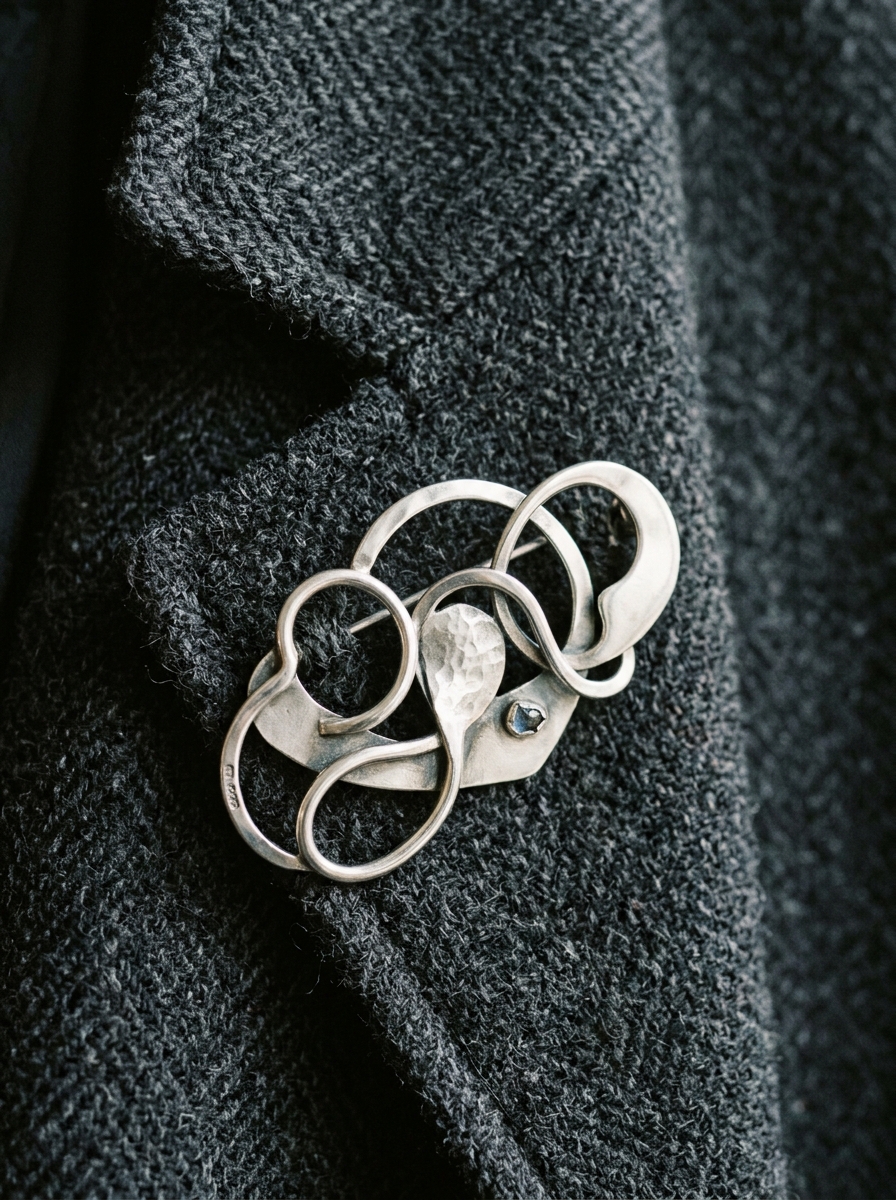
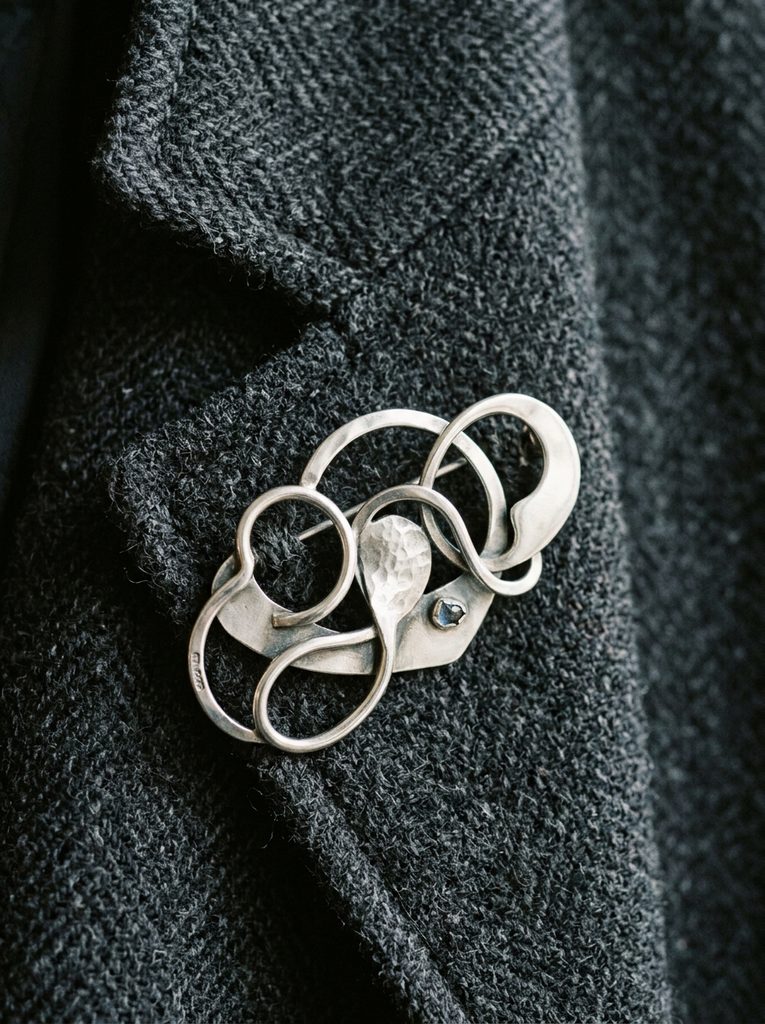
The brooch is where Scandinavian jewellery stops being accessory and becomes small sculpture — a folded, abstract shape of silver pinned to a heavy wool coat’s lapel, three inches below the shoulder seam. Mine was my aunt’s, bought in Copenhagen in the sixties, and it has now outlived four coats. The checks are structural. Weight first: a solid brooch of two or three inches needs a sturdy pin with a proper safety catch, and fabric with the body to hold it. Gather about an inch of lapel in the pin so the weight is distributed. I once pinned mine through a thin blazer and watched the fabric tear across one long afternoon — wool coat lapels only. Pin it horizontally, check it sits flat, and wear nothing else that competes: small huggies, gloves, coat, brooch. It does a necklace’s work without touching your neck, which on scarf days is a mercy.
10. Raw amber on a plain black cord
Fifty million years old and still the warmest colour I own.
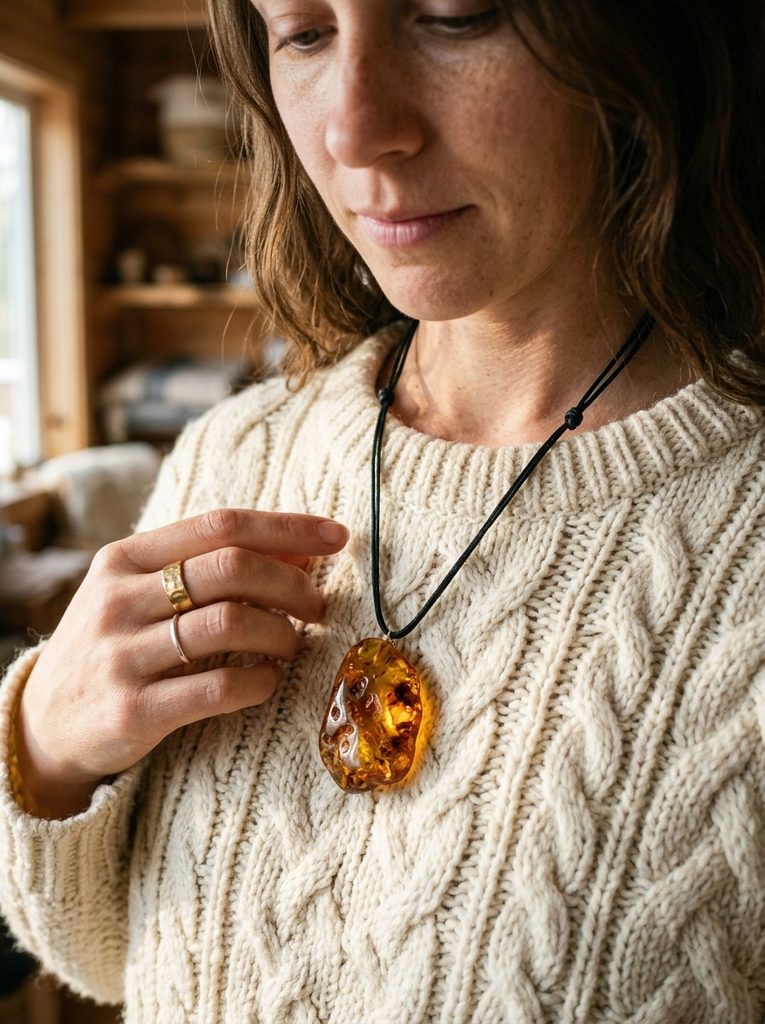
The last piece is the cheapest and, on grey days, the one I love most: a rough lump of Baltic amber, honey-coloured and full of cloudy inclusions, on a plain waxed-cotton cord worn long over a cream fisherman sweater. The authenticity check is pleasingly primitive — real amber feels warm to the touch and oddly light for its size, while plastic feels cold and glass feels heavy. Rub it briskly: it should smell faintly of pine resin, and Baltic market stallholders respect you for testing. My cord has sliding knots so I can adjust where the amber lands — mid-chest, over the breastbone. Raw amber costs a fraction of polished cabochons because nobody has paid for the labour of making it perfect — against undyed natural fibres, that roughness is the entire aesthetic. Skip it for formal evenings; this is countryside, studio and weekend jewellery. It asks for linen, raw wool and muddy boots, and it gets them.
What I’d buy first — and what can wait
If your tray looks like my old one did, spend in this order: the hollow hoops first, because they go with everything you own, then the wide silver cuff, then the signet. Those three cover work, weekends and evenings. Two or three solid pieces a year is my pace — estate sales are where the value hides, and a ten-minute Sunday polish keeps the week’s pieces ready. What can wait: the amber, the brooch, the second set of chains — finishing pieces, and mine arrived as finds and gifts rather than purchases. What cannot wait is throwing out the plated and the flaking. Jewellery quietly disintegrating on your skin makes the whole outfit look tired, however good the coat is.
Questions I get asked
Can I really wear silver and gold together?
Yes, if it looks chosen. Keep the ratio uneven — about seventy-thirty either way — repeat the mix in at least two places, and match the finishes. If it looks accidental, it is; if it looks like a system, people start asking where you shop.
How do I stop my silver going black in the drawer?
Wear it — silver on skin tarnishes slower than silver in a box. Wipe pieces with a soft cloth after wearing, store them separately in anti-tarnish pouches, and never keep jewellery in the bathroom steam.
My ears can’t take heavy earrings anymore. Am I done with statement earrings?
No — you are done with solid ones. Hollow construction, wide disc backs and titanium posts changed everything. My torus hoops look substantial and weigh almost nothing. If a jeweller can’t say what a pair weighs, weigh them yourself.
Isn’t solid silver and gold a serious amount of money?
Bought all at once, yes. Bought at two or three pieces a year, mostly second-hand, it has cost me less than replacing plated jewellery every season. Divide the price by a decade of wear and the cuff is the cheapest thing I own.
What is the mistake you see most often?
Matching sets and too much at once — necklace, earrings, bracelet and rings all shouting together, or the opposite error, tiny pieces that simply vanish against a chunky knit. Choose one focal zone, give it enough scale to hold its own against the fabric, and let bare skin do the framing.
That is my tray: ten pieces, no tangles, nothing flaking. If yours needs the same clear-out, start with the hoops and the honest audit. Save this to your jewellery board on Pinterest if you are planning your own tray. — Elias