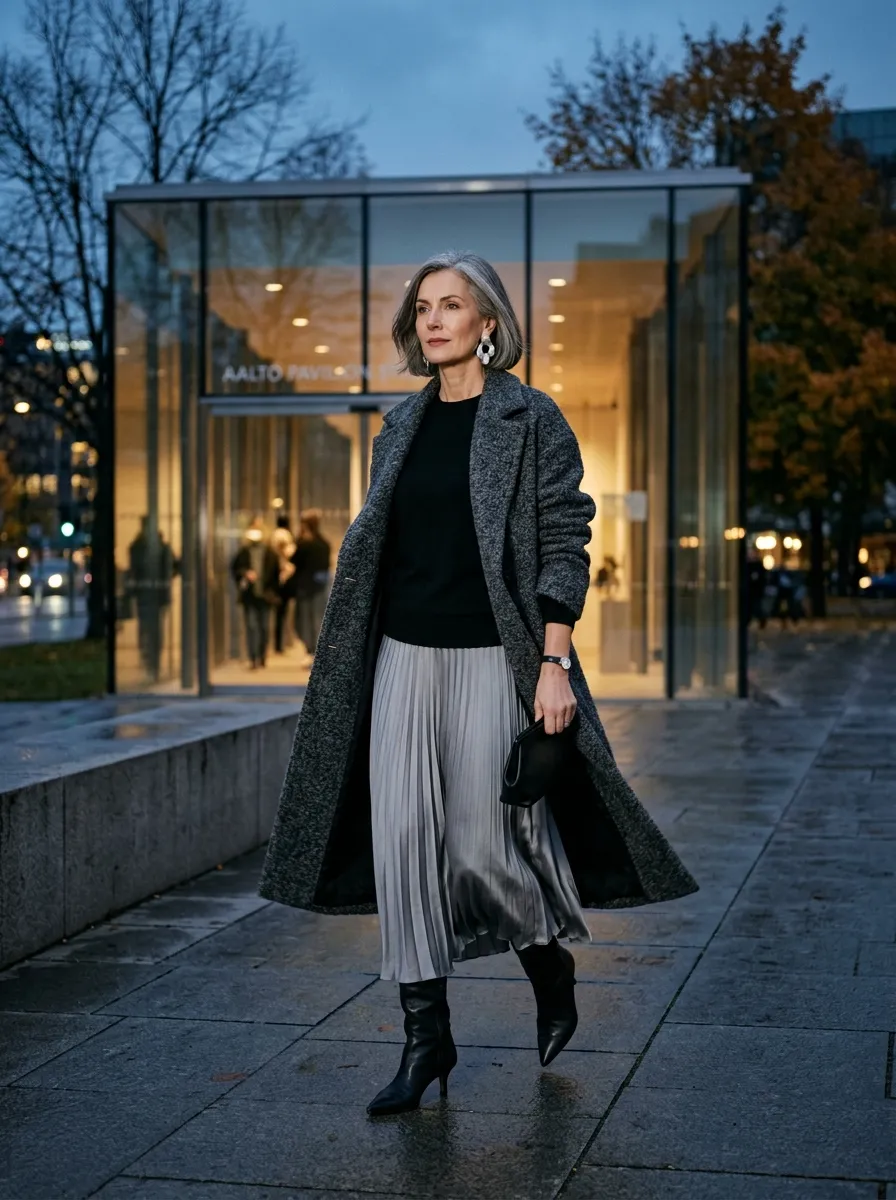
Four years ago I stood in a school hall at my niece’s recital, tugging at a fitted dress that had fitted somebody else — the woman I was at thirty-five. I spent the whole evening thinking about my waistband instead of the music. On the drive home I promised myself: no more clothes that need me to hold my stomach in. Confidence, I decided, would have to come from comfort that still looks deliberate.
That is what Scandinavian dressing gave me. Loose where I want ease, structured where I want shape, and nothing that apologises. These are the ten outfits I reach for when I need to walk into a room feeling like myself — with the fitting-room checks I actually do, the mistakes I have already paid for, and the pieces I would skip if money were tight.
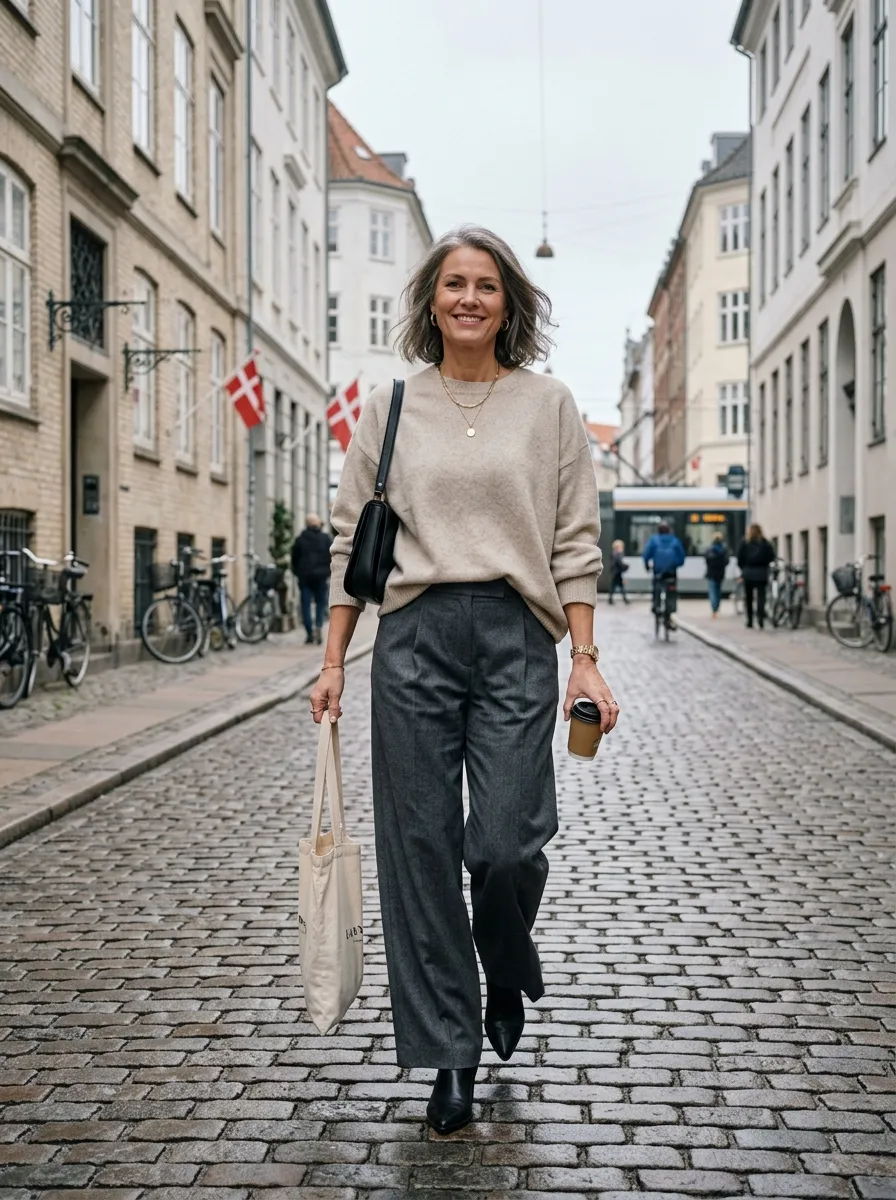
1. Oversized cashmere crewneck with fluid wide-leg trousers
The sweater I live in from October to March. Soft on top, all clean lines below.
This is my cornerstone outfit: a generous cashmere crewneck, French-tucked two inches at the front, over high-waisted double-pleated trousers that fall in one clean line. The tuck is not decoration — without it, volume on volume reads as hiding, and I am done hiding. The cashmere check is the scrunch test: ball it in your fist for five seconds. Good knit springs open; thin knit keeps the crease and will pill by Christmas. I learned that with a bargain sweater that fuzzed at the underarms in six weeks. Keep the colours close — oat with ivory, charcoal with black — and the whole thing lengthens you. A slim leather belt at the tuck line, pointed ankle boots under the hem, small hoops. Skip it if you will not tuck: untucked, this outfit only works on the very tall.
2. Structured trench coat over monochromatic poplin
All white underneath, trench over the top. The outfit that makes me stand up straighter.
An all-white or all-cream base — oversized poplin shirt, straight-leg trousers in the exact same shade — with a long trench worn open over it. The pale column does the work; the coat just frames it. Two checks matter. First, the shirt fabric: hold it to the light. Proper poplin is dense and almost papery; if you can see your fingers clearly through it, it will wilt and show every seam by lunchtime. Second, the shades must truly match — a warm cream trouser against a blue-white shirt looks like a laundry accident. I tie the trench belt in a loose knot at the back so the front hangs clean, leave the top two shirt buttons open, and wear black square-toe mules for one grounded note. My trench was second-hand, barely worn. Coats are where the vintage rails pay you back.
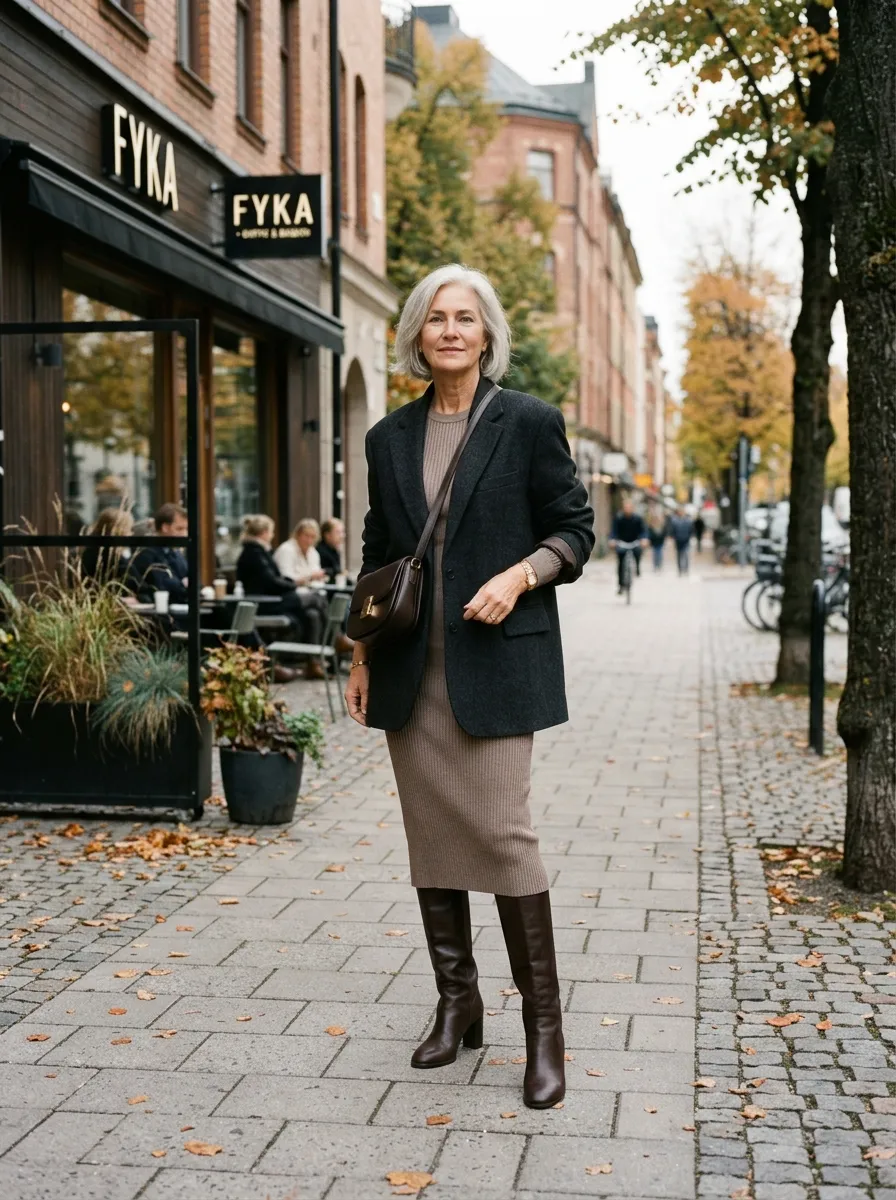
3. Ribbed knit midi dress with a tailored wool blazer
The dress is soft, the blazer is the spine. My gallery-and-lunch formula.
A ribbed knit midi dress is the most comfortable thing I own, and on its own it can look like very elegant loungewear. The oversized wool blazer over it is what takes it out of the house — soft core, architectural frame. The knit check: pull the fabric sideways at the hip and let go. Dense cotton-modal or wool-blend snaps back; poor knit stays stretched, and a dress has nowhere to hide baggy knees by the third wear. The blazer hem must clear the widest part of your hip, and I push the sleeves to mid-forearm — showing the wrist is what stops a big jacket swallowing you. Knee-high boots disappearing under the hem keep the line unbroken. Honest note: if the dress clings rather than skims when you sit, size up. Confidence is not available in a dress you are adjusting all day.
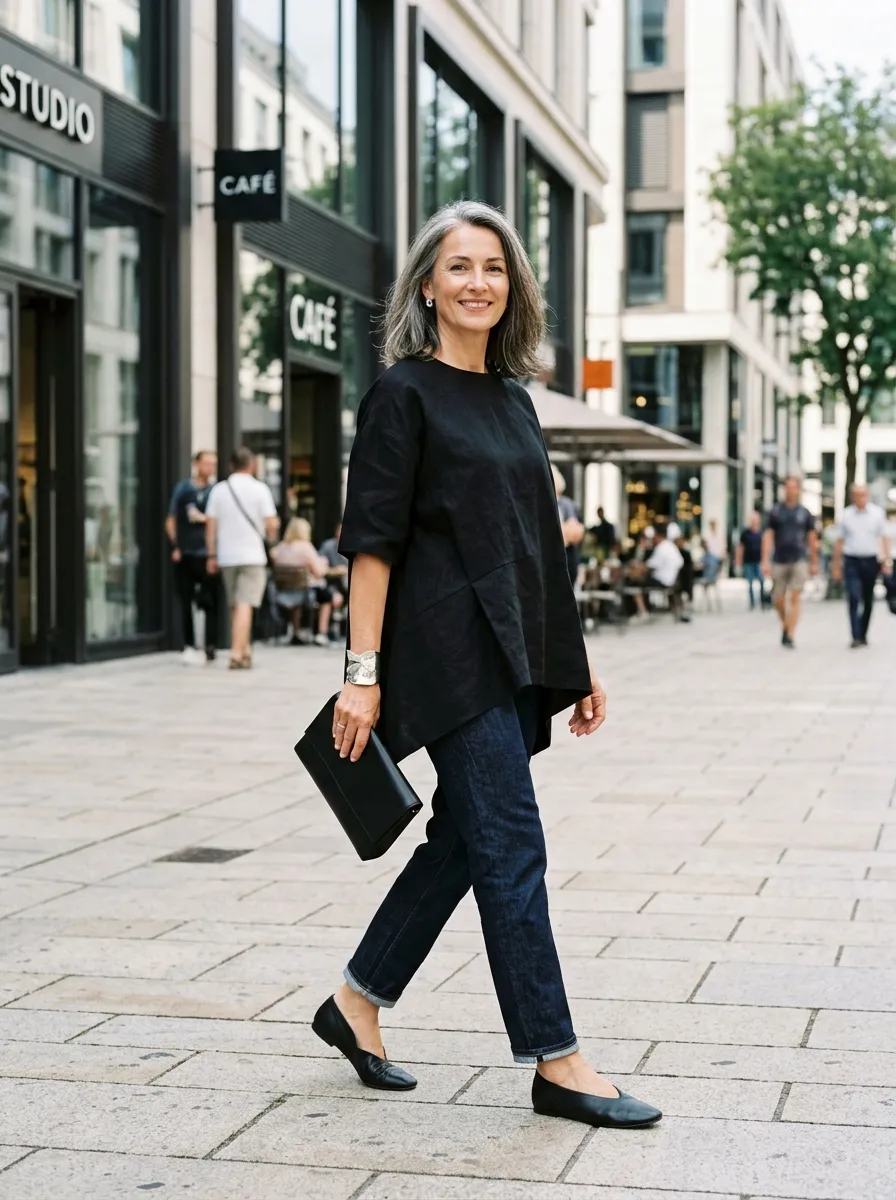
4. Architectural black tunic over straight-leg raw denim
Black on deep indigo, nothing faded, nothing fussy. My studio-day uniform.
This is my answer to jeans-and-a-top: a long, asymmetrical black tunic — heavy linen or bonded jersey, hem to the upper thigh — over stiff, unwashed indigo jeans that end exactly at the ankle bone. Raw denim is the point. No fading, no whiskers, no rips; treated that plainly, denim behaves like a tailored trouser. The check is the denim’s stiffness: new raw jeans should almost stand up on their own and will feel dreadful for the first three wears. Mine took a fortnight to soften, and I nearly returned them twice. Worth it — two years on they have moulded to me and still look sharp. Leave the tunic untucked so the split hem moves against the rigid leg. One silver cuff over the sleeve, black Chelsea boots, done. Skip the tunic if it ends mid-thigh at the widest point; that hemline argues with everyone.
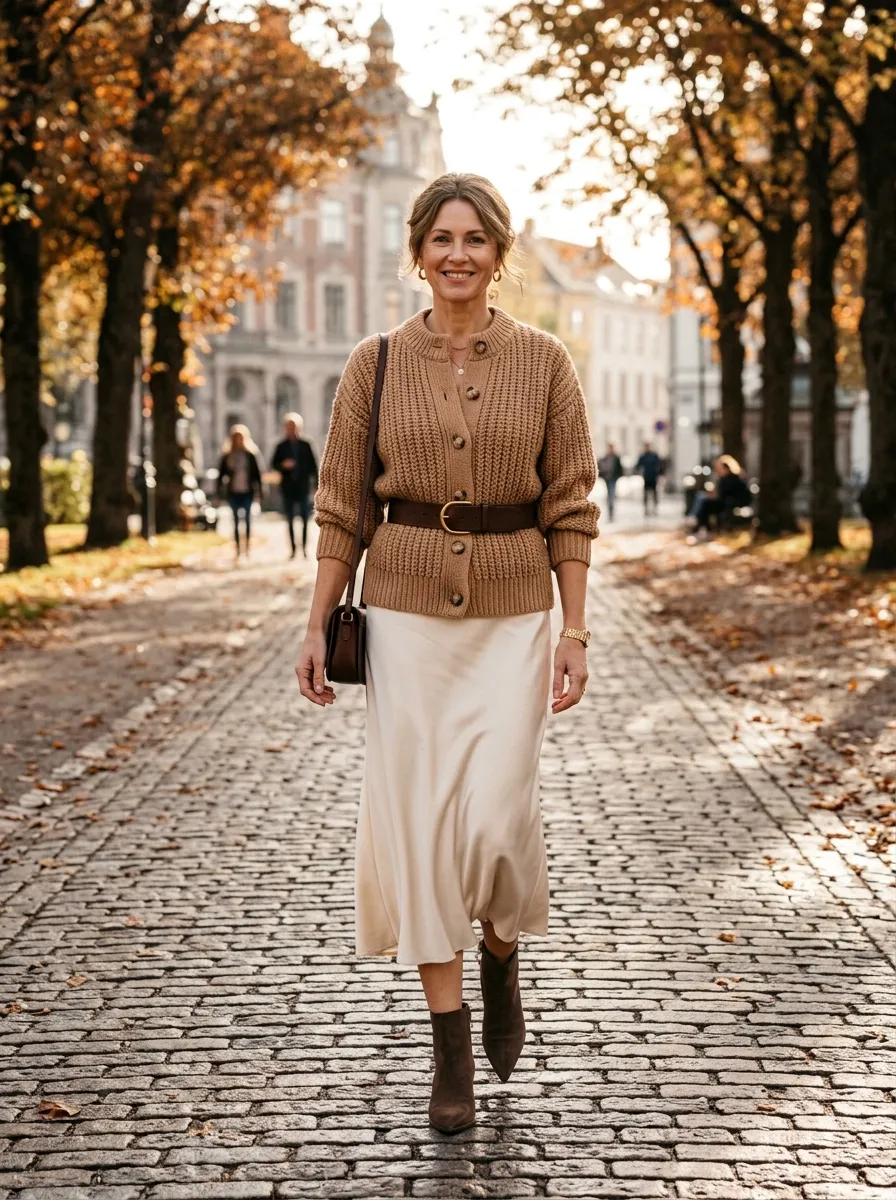
5. Slouchy cardigan capped with a wide leather belt
The cardigan is a hug; the belt is the decision. Together they pass as outerwear.
A heavy fisherman-rib cardigan, buttoned all the way up, with a wide leather belt buckled over it at my natural waist — this turns a lounging layer into something I wear to dinner. The belt does not need to be tight; it needs to gather the knit into soft, even folds so the shape reads as chosen. My check in the shop is the sit test, belt on: if the cardigan pulls open between buttons when you sit, go up a size, because belting punishes optimism. I wear it over black cigarette pants or a bias-cut satin skirt, with kitten-heel boots. The honest cost note: a real lambswool or alpaca cardigan is not cheap, but my acrylic one from years ago stretched at the hem, pilled under the arms, and made this whole outfit look tired. This is a buy-once piece. Hair in a low chignon balances the bulk at the shoulders.
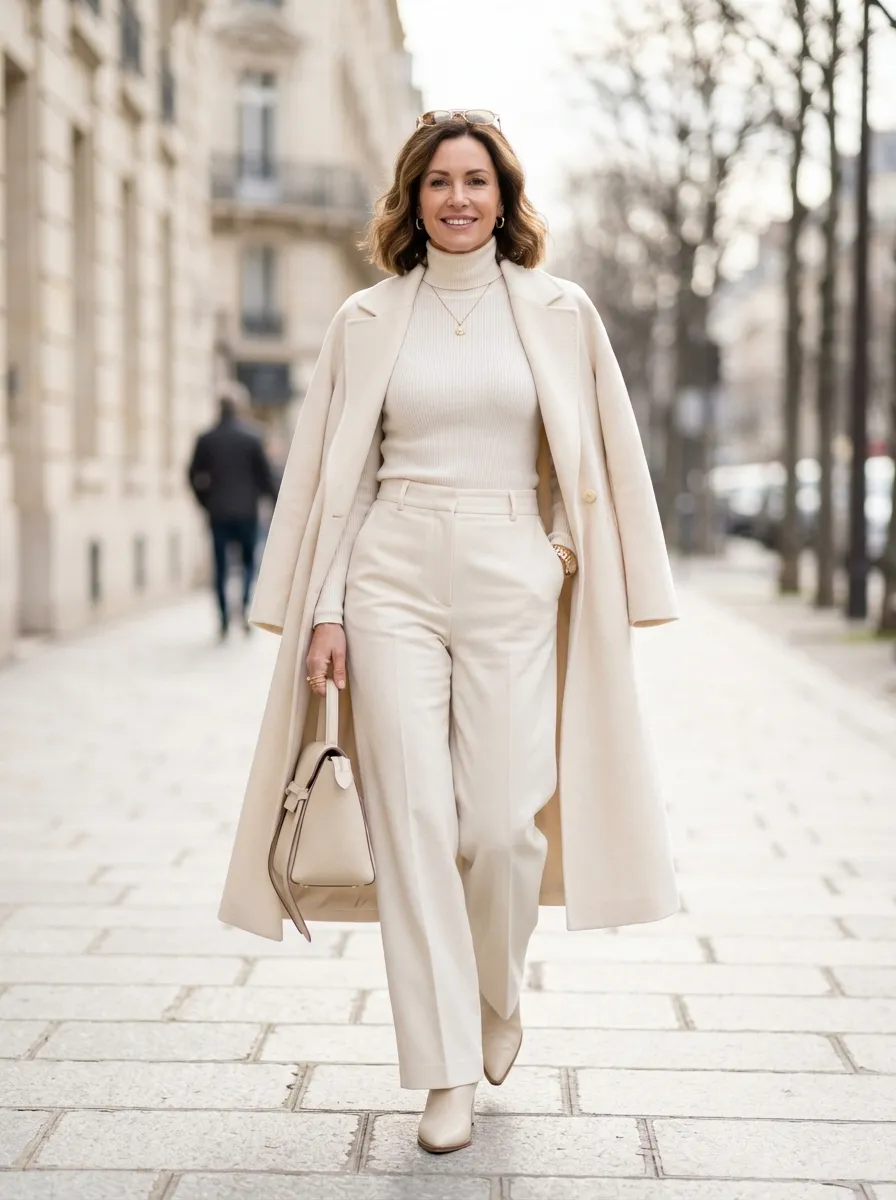
6. Monochromatic winter white coat and turtleneck column
Head-to-toe winter white in the darkest month. It feels like carrying your own light.
Wearing white in deep winter is the most confident thing I do all year: a fine ivory turtleneck tucked into ecru wide-leg trousers, a long cream overcoat open over the top, bone-white ankle boots. The whole outfit is texture, not colour — ribbed knit against smooth flannel against brushed coat felt — because flat white on flat white reads as a uniform, not an outfit. Two practical checks. The turtleneck neck must sit smooth without slouching; a sagging roll spoils the column. And be honest about your life: I carry a small stain pen and I do not order tomato soup. My one dark note is an espresso leather bag, which grounds the paleness and hides a multitude of travel sins. Skip this if your winter involves muddy dogs and unpaved paths — cream wool and slush are not friends, and no amount of confidence fixes a splashed hem.
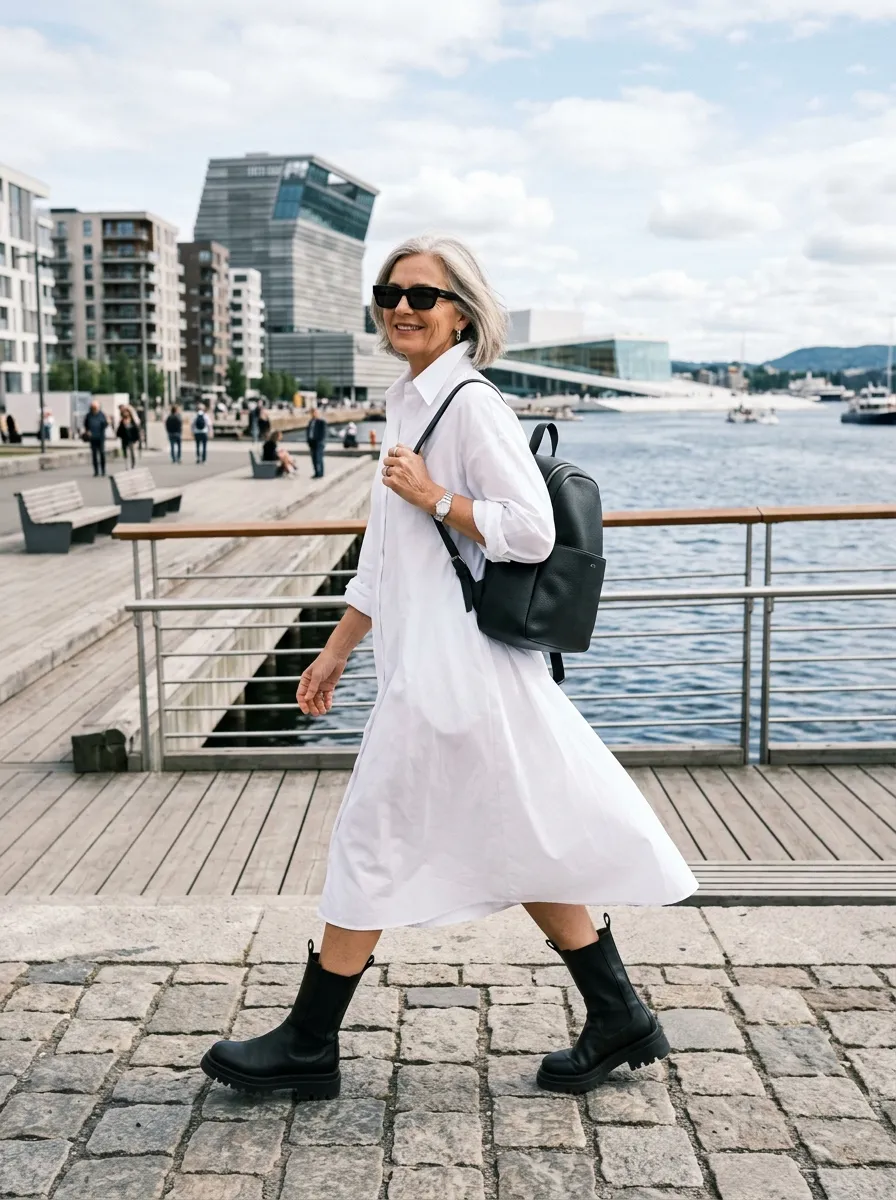
7. Relaxed poplin shirtdress with chunky lug-sole boots
A floaty dress with boots that mean business. Copenhagen girls taught me this one.
An oversized poplin shirtdress — mine is slate blue, mid-calf, with deep pockets — worn unbelted over chunky lug-sole Chelsea boots. The dress brings the volume, the boots bring the ground. Without that weight at the bottom, a big cotton dress tips into nightdress territory; I know, because I wore it with ballet flats once and caught my reflection in a shop window looking ready for bed. The fitting checks: sleeves rolled past the elbow to show the forearm, collar open into a soft V, and the boot shaft ending a hand’s width below the dress hem — a modest gap of leg or black tights. It is my most-worn transitional outfit: market, studio, long lunch, bicycle if I am feeling brave. Skip the trapeze shape if you are petite and under five foot three; the volume will wear you. A shorter shirtdress keeps the idea intact.
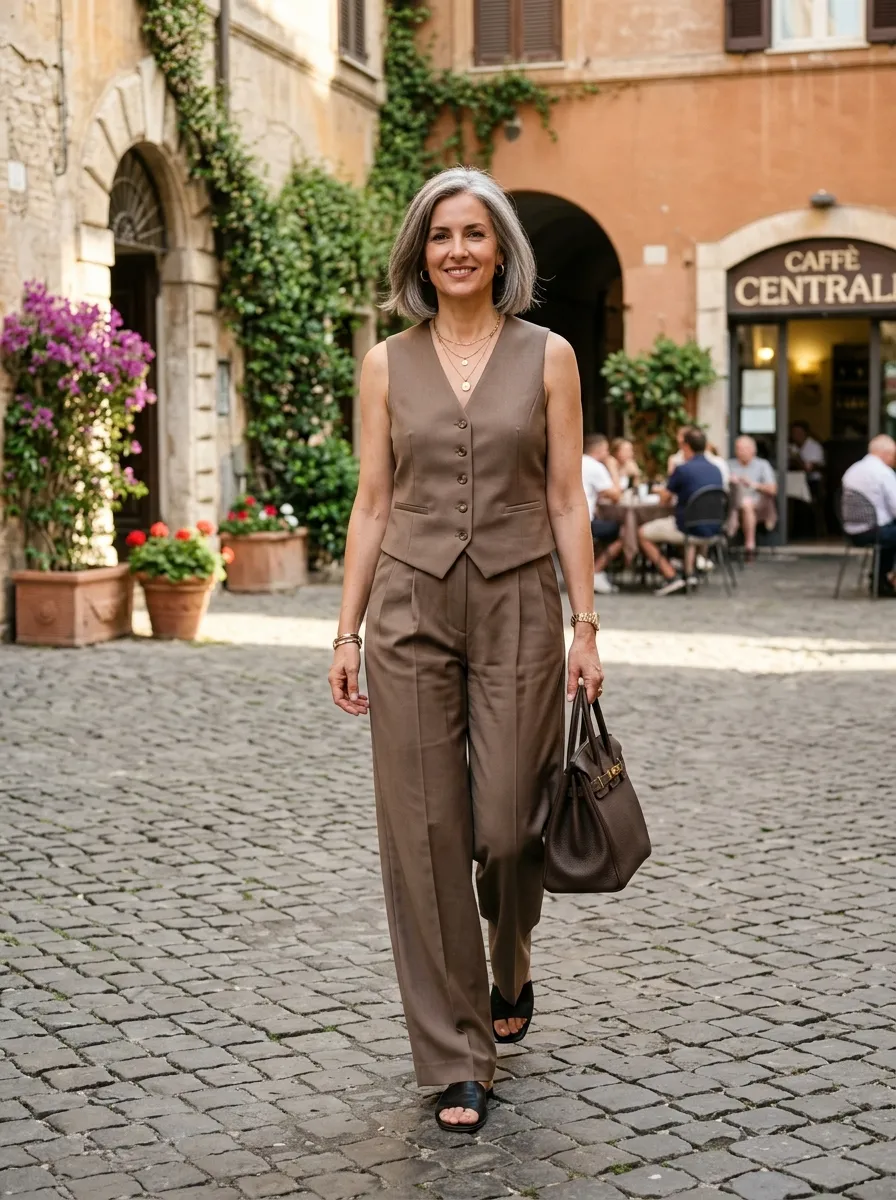
8. Tailored vest and pleated trousers matching set
A suit with the jacket taken away. Cooler than a dress, sharper than separates.
A matching waistcoat and wide-leg pleated trousers, the vest worn buttoned as a top in its own right, is my summer answer to tailoring — menswear lines, nothing constricting. The checks are all fit. The vest must close across the bust without pulling and the armholes must not gape; try it seated, arms forward, as if at a dinner table. I leave the lowest button open so the vest flares slightly over the hip when I walk. The trousers need deep pleats that lie flat standing and open only when you move. Fabric matters more than the label: mid-weight linen-viscose or tropical wool breathes; cheap suiting twill shines at the seat by August — I have the shiny trousers to prove it. Slide sandals or cognac mules, a fine gold chain in the V, structured top-handle bag. Skip it if you dislike showing your upper arms; a poplin shirt underneath changes the outfit entirely, and not for the better.
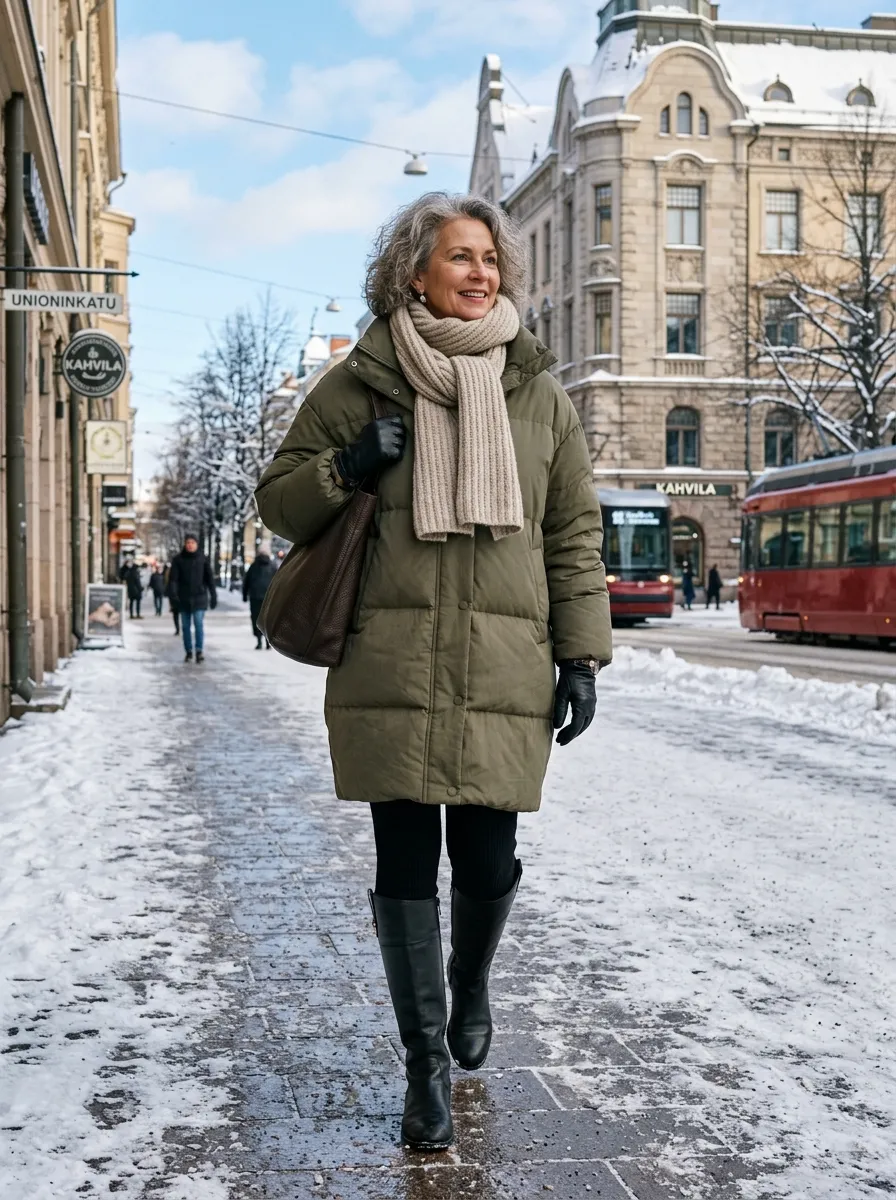
9. Oversized puffer jacket over sleek knit leggings
Minus eight and I still look dressed. The tall boots are doing quiet, essential work.
Real winter, handled honestly: a knee-length oversized puffer in matte black over a hip-length fine knit and thick ponte leggings, with tall flat leather boots pulled over the top. The slim base is not vanity — it is what stops a cocoon of down from making me look like bedding. The legging check is non-negotiable: bend over in the fitting room mirror. Proper high-density ponte stays opaque; the thin kind goes sheer at the seat, and I returned a pair after a friend kindly told me so. The puffer shell should be matte and water-repellent, collar high enough to skip a scarf on short trips. I loop a brushed alpaca scarf in oatmeal inside the collar on the coldest days, fringe tucked in. This is my school-run, dog-walk, train-platform outfit from December to February. Skip the oversized cut if you drive everywhere in a heated car — a sleeker quilted coat will serve you better.
10. Textured boucle coat over a silk slip and fine knit
Nubby coat, liquid skirt, flat knit between them. My evening formula all winter.
My evening outfit: a bias-cut silk slip skirt in champagne, a fine mock-neck knit tucked into it, and a heavy boucle coat worn open over the top so the nubby wool argues with the liquid silk. Texture is the entire decoration here, which is why the colours stay in one family. The skirt check is the bias test: hang it up and watch — a true bias cut settles and swings when you stop moving; a straight-cut imitation just clings. My first slip skirt was polyester satin and crackled with static all evening; silk or heavy satin only, learned once, remembered forever. The boucle coat is the investment — mine is mid-thigh, unlined-feeling but warm, and it has dressed up everything I own for five winters. Kitten-heel ankle boots in the skirt’s tone, one pair of silver drop earrings, small geometric pouch bag. Skip the slip skirt if you hate steaming. Silk keeps every crease it meets, including the car seat’s.
What I’d buy first — and what can wait
Put the money where the silhouette is decided: the coat and the boots. A good trench or wool overcoat and one pair of serious leather boots carry half these outfits, and cost per wear beats everything else I own. My trench and boucle coat were both second-hand finds — coats are where vintage shopping pays. Second, the wide-leg trousers that truly fit, with a small tailoring fund kept back for hems. What can wait: the matching vest set, the winter-white pieces, the silk slip. They are pleasures, not foundations. And the rule that governs every purchase now: nothing joins the rail unless it pairs with three things already hanging there.
Questions I get asked
Doesn’t oversized clothing just make you look bigger?
Only when there is no anchor. Volume needs one point of definition — a front tuck, a belt over the cardigan, a wrist showing, a slim trouser under a big coat. One gesture of intention and oversized reads as ease instead of hiding.
How do I keep cream and white clothes actually white?
Steam rather than hot-iron natural fibres, wash whites together and not often, and air knitwear outdoors on a breezy morning instead of washing it. My coats rest in breathable cotton bags with cedar blocks and lavender sachets, which handles moths and mustiness together.
Can I add colour without ruining the calm?
Small and removable: a cobalt beanie, a moss-green bag, butter-yellow socks above a loafer. One accent at a time, and the neutrals stay in charge. A whole new palette is how wardrobes fall apart.
How do I stop knit dresses and sweaters bagging out?
Never hang heavy knits — fold them flat. Rest a knit a full day between wears, run a fabric shaver over it at the start of the season, and buy dense yarn in the first place. Recovery is in the fibre, not the care routine.
I am on a budget. Where do I start?
The trench and the trousers, second-hand if you can. Base layers — poplin shirts, plain tees, straight denim — are fine from the organic-cotton ranges of ordinary shops. Spend on what frames you; save on what sits underneath.
That recital dress went to the charity shop years ago, and I do not miss it. These days my clothes fit the woman I am, and walking into a room feels considerably easier for it. Save this to your wardrobe board on Pinterest if you are building the same kind of confidence. — Elias