Last January, during the cold snap when the pipes froze in our street, I wore the same three outfits on rotation for nearly two weeks — a thick cashmere roll-neck, wool trousers, and a coat I have owned for nine winters. Not out of laziness. Out of honesty. When the temperature drops, I don’t want choices; I want warmth that doesn’t itch, waistbands that don’t argue, and sleeves I can move in. Everything scratchy, stiff or clever-for-its-own-sake stayed on the rail, ignored.
That fortnight taught me what a cozy capsule really is: not a Pinterest board of beige, but a small set of pieces in natural fibres and roomy cuts, in two or three colours that all agree. I am fifty-eight, my thermostat runs differently than it did at forty, and I dress for the life I actually live — market mornings, grandchildren, long lunches. These are my ten combinations, with the checks I do in the shop and the mistakes I have already paid for.
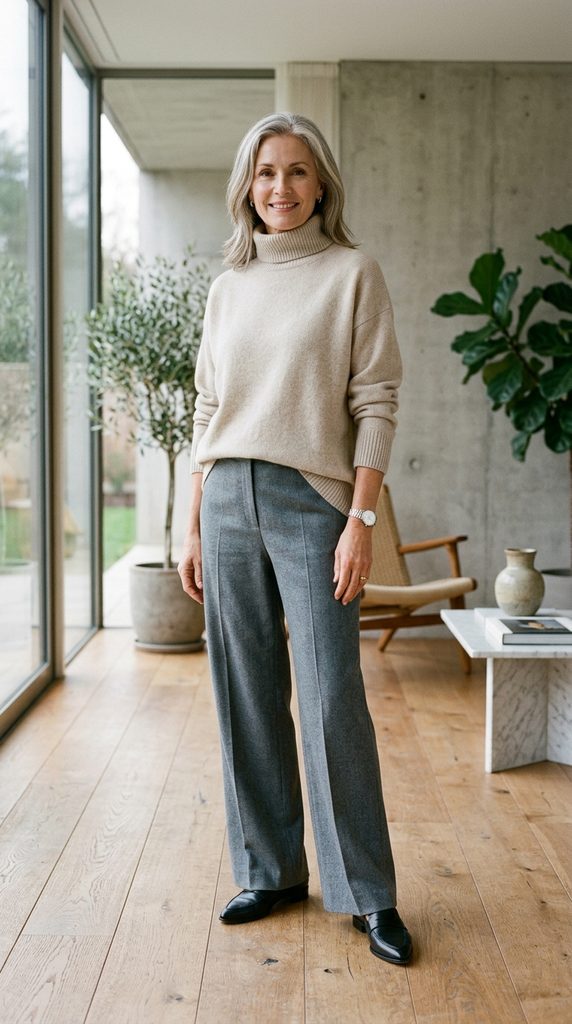
1. The cashmere turtleneck with tailored wool trousers
The uniform I reach for first when the frost is on the windows. Nothing itches, nothing digs in.
This is my cold-weather uniform: a two-ply cashmere roll-neck in oatmeal over wide-leg wool flannel trousers with a part-elastic waistband. The turtleneck keeps my neck warm indoors without a scarf, and the trousers fall in one clean line instead of clinging. My fitting-room checks are dull and they matter. Sit down in the trousers — if the waistband digs, they will annoy you by ten o’clock. Rub the cashmere between your fingers; real two-ply feels dense, almost spongy, never wispy. A thin silk camisole underneath means the sweater needs washing half as often. The sweater was the most expensive knit I have ever bought; per wearing, across six winters, it is now one of the cheapest things I own. Skip the turtleneck if you run hot — a mock neck gives the same line without the warmth.
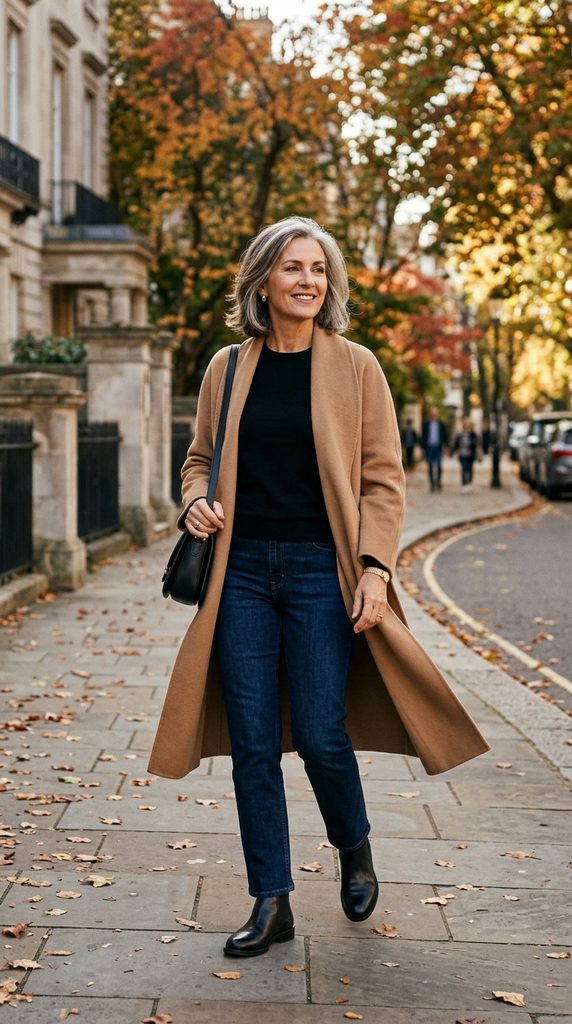
2. The double-face wool wrap coat over straight-leg denim
No lining, no stiffness, just two layers of wool doing the work. My market-morning coat.
A wrap coat in double-face wool is the hardest-working coat I own — unlined, so no stiff canvas fights your shoulders, and the woven layers trap surprising heat. I wear mine over a fine merino crewneck and dark straight-leg jeans, the sweater tone close to the denim so the underneath reads as one dark column. Lift your arms as if reaching a high shelf: the armholes must let a real knit pass without dragging. Check the jeans’ label: ninety-eight percent cotton, a whisper of elastane — more stretch and the knees bag by lunchtime. I knot the belt loosely off-centre rather than buckling it; it looks like I dressed, not like I was dressed. Mine came from a consignment shop, half price — coats are where second-hand hunting pays best.
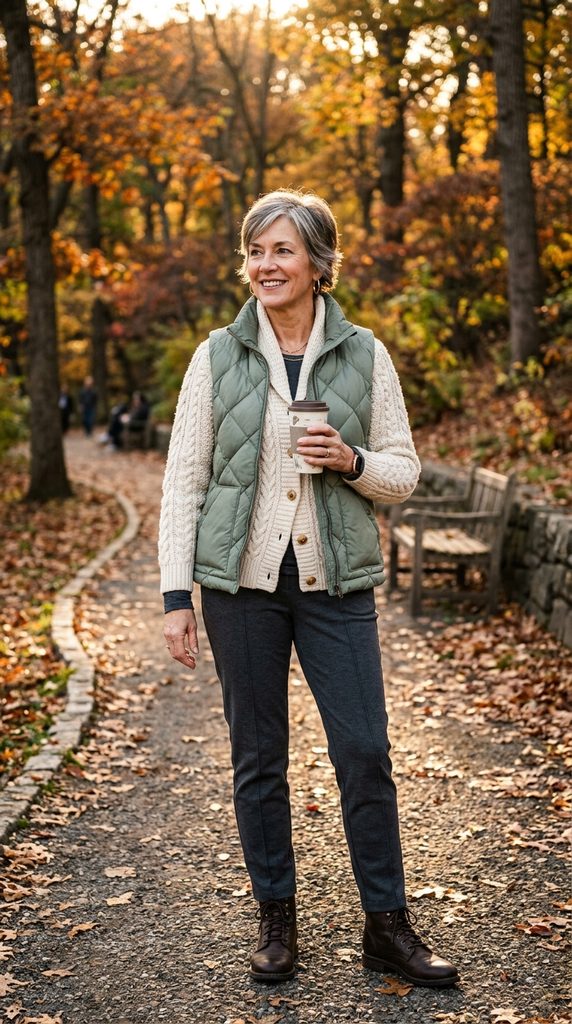
3. The quilted puffer vest over a cable-knit cardigan
Warm core, free arms. The combination that solved my too-hot-in-shops problem.
Full parkas make me overheat the minute I walk into a shop, so this is my compromise: a chunky cable-knit cardigan in a wool-cotton blend, with a light quilted down vest over the top. Core warm, arms free, and I can peel the vest off without the whole outfit falling apart. Check the vest’s armholes: high enough to stop draughts, never pinching the cardigan’s sleeves — swing your arms before you buy. Underneath, straight ponte trousers: thick enough to smooth over knees and thighs, and they recover their shape after a day of sitting, which cheap jersey does not. Leave the cardigan’s top two buttons open so it frames rather than swaddles. Keep everything in one quiet family — sage, bone, taupe — or all that texture tips into hiking gear. Skip it entirely if your winters are truly bitter; this is a minus-five outfit, not a minus-fifteen one.
4. The fine-gauge merino knit dress with knee boots
One garment, no decisions. My lunch dress, for when I want to look like I tried.
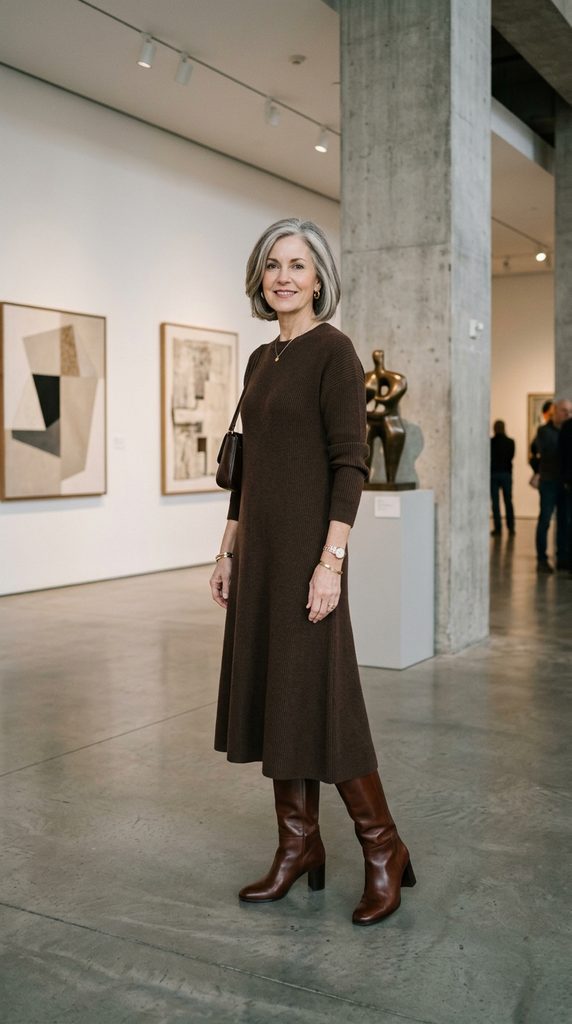
Some mornings I want exactly one decision, and this dress is it: a fine-gauge merino midi, straight through the body, worn with knee-high leather boots so the hem overlaps the boot tops — no band of cold leg in between. Merino is the fibre to insist on: it glides instead of clinging and regulates temperature when a lunch room turns warm. The dress must end a hand’s width below the knee, and the boots want a low block heel, an inch or two — anything higher and I count the hours until I can take them off. Sit down in it in the shop: fine knits ride up, and a hem that behaves standing may not seated. I wear seamless thermal tights underneath in deep winter. A knit dress shows every under-layer seam; smooth underwear is not vanity here, it is tailoring. Mine is burgundy, the one deep colour my neutrals all tolerate.
5. The brushed flannel shirt with wide-leg corduroy trousers
Weekend clothes with a backbone. The corduroy rustles when I walk, and I love it.
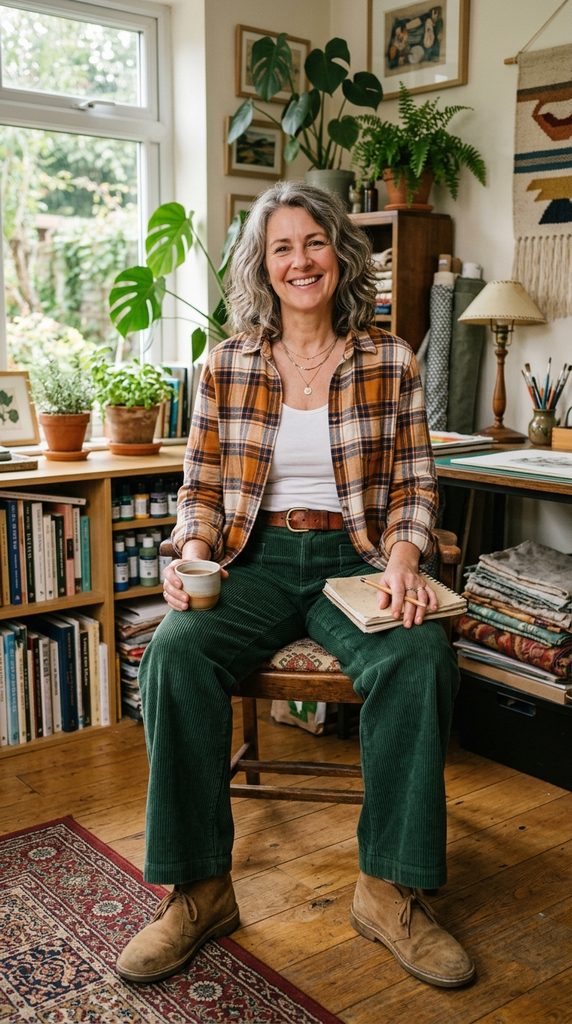
My weekend pairing: a brushed cotton flannel shirt worn open like a light jacket over a fitted tank, with high-rise wide-wale corduroy trousers. Corduroy is warmer than denim, softer than twill, and the wide ribs catch the light in a way flat fabrics never do. The trousers’ waistband should be contoured — curved at the back — or it gapes every time you bend. Test it in the shop, hands to shoes. And feel the flannel: properly brushed cotton feels almost suede-like on the inside. The papery kind pills by Christmas. I roll the cuffs twice so my wrists show — that stops all the soft fabric looking like pyjamas. Both pieces are cheap by capsule standards and wash without drama, which is why this outfit does the market, the garden centre and grandchildren’s football. Skip the wide leg if you are petite and won’t hem it — pooled corduroy looks tired.
6. The monochrome knit lounge set under a structured duster
Feels like staying in, looks like going out. The duster coat is doing all the public work.
I will defend the matching knit set to anyone: knit trousers and a mock-neck top in the same camel or soft grey, with a long wool duster coat over the top outdoors. One unbroken colour reads calm and deliberate; the coat’s lapels give the softness a backbone. The fabric check is the whole game. Pinch a stable interlock knit hard at the knee — if the bump stays when you let go, it will bag within a fortnight of sofa evenings. The waistband should be wide, fabric-covered elastic lying flat; a thin cord cuts in by four o’clock — I have the abandoned set to prove it. At home I wear it alone with thick socks. Out, the duster goes on, half a shade darker than the set, and plain leather trainers. Who should skip it: anyone who hates being asked if they are comfortable. You will be asked. You will be.
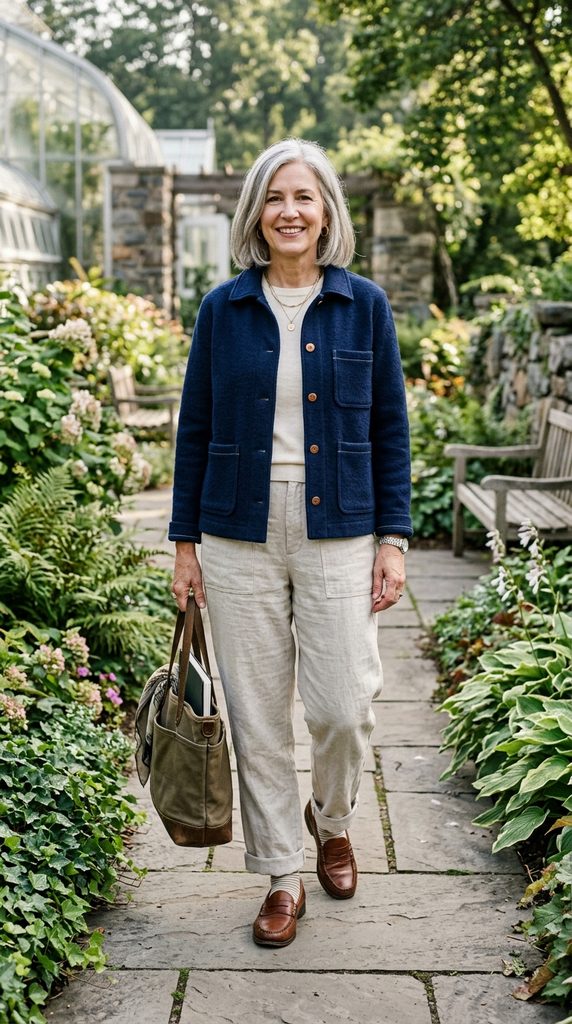
7. The boiled wool chore jacket with washed linen trousers
My gallery-and-errands jacket. Boiled wool never wrinkles, never frays, and the pockets are real.
For the in-between months I live in this: a boxy boiled wool chore jacket — four real pockets, horn buttons — over a fine ribbed tee and relaxed washed linen trousers. Wool above, linen below sounds like a contradiction, but that is how changeable weather works: linen keeps the legs cool, felted wool keeps wind off the core. Boiled wool never frays or wrinkles, which makes it the lowest-maintenance jacket I own. The collar must lie flat — a crooked one ruins the line — and I button only the middle two buttons, so the jacket moves at the hips when I sit. The linen needs weight — around two hundred and forty grams, the heavy kind that drapes rather than crumples into tissue. I roll the trouser cuffs once and wear penny loafers. My first version was a lightweight blended copy. It pilled in a month. Genuine boiled wool or nothing.
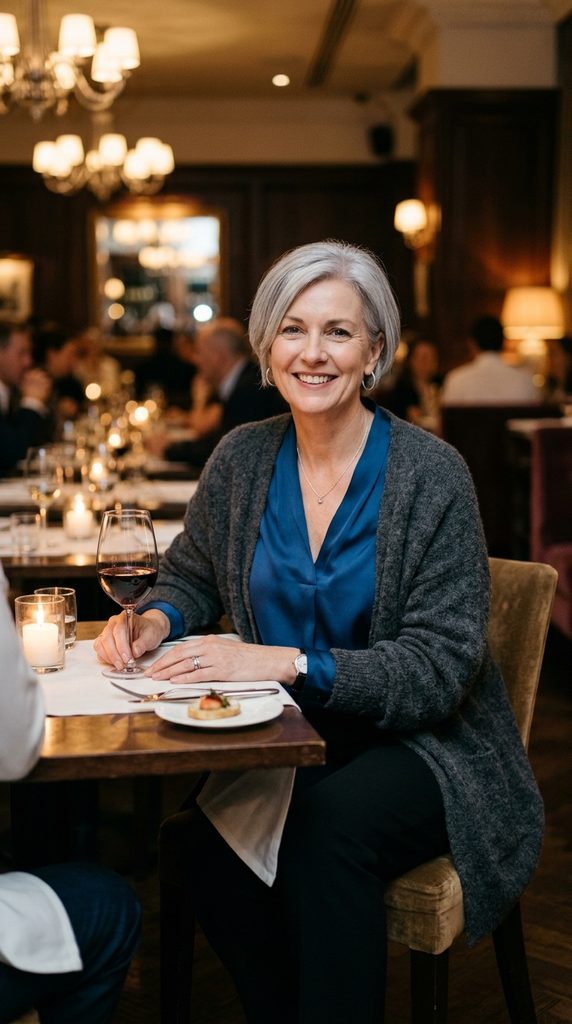
8. The silk twill blouse under an open cocoon cardigan
My evening answer: silk for polish, alpaca for warmth, no buttons near my stiff fingers.
Evenings are where this capsule earns its keep. A silk twill blouse — mine is deep emerald — under an open-front cocoon cardigan in charcoal alpaca, with straight crepe trousers. The silk does two jobs: it looks polished, and it stops the knit itching against dry skin — no small thing at my age. The cocoon shape matters too: no buttons, no tight armholes, never fighting my shoulders. The cardigan’s sleeves should end just short of the silk cuffs, so a sliver of blouse shows; and the silk should be twill, not charmeuse — sturdier, less shiny, forgiving of a long dinner. Let the cardigan be the generous piece and everything under it slim, or the cocoon swallows you. The blouse was a sale buy and still not cheap, but silk over fifty does something for the face no necklace manages. Skip it if you hate hand-washing; silk asks for ten gentle minutes, not the machine.
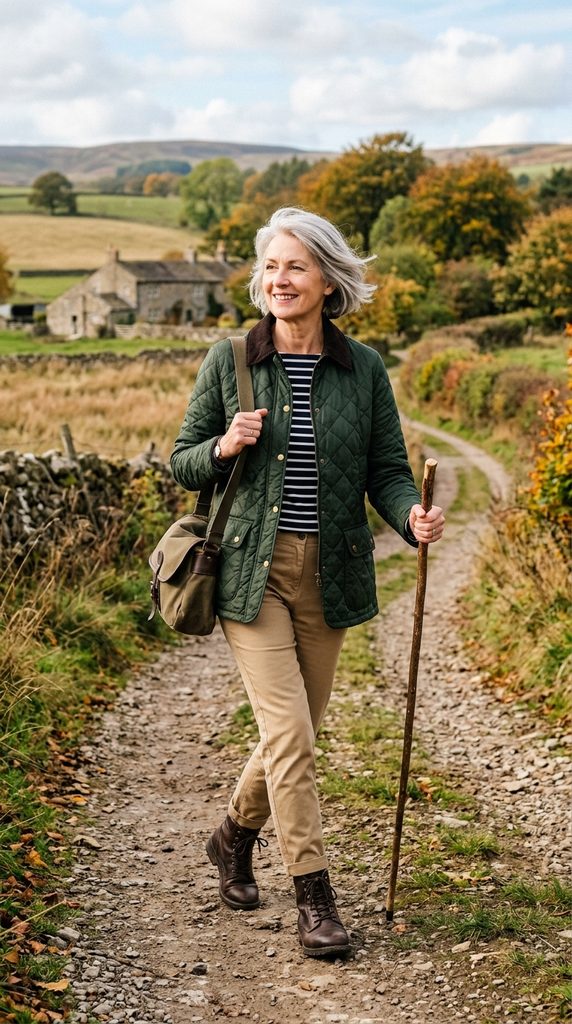
9. The quilted barn jacket with tapered chinos
Dog walks, garden centre, muddy lanes. The pockets mean I leave the handbag at home.
Not every day is a gallery day. For dog walks and wet lanes I wear a diamond-quilted barn jacket with a corduroy collar over a striped Breton top and tapered chinos. The pockets are the point — deep bellows pockets that swallow keys, phone, gloves and dog treats, so no bag swings off my shoulder. Before buying, reach both arms up as if lifting a box into a car; without underarm gussets the jacket rides up with you. Fasten the snaps, then open the lowest two at the side vents before sitting or driving, or the hem bunches into your lap — learned that one on a long drive to my sister’s. The chinos want a curved waistband and a little stretch; I turn the hems up once against wet grass. Cheapest outfit in my capsule, probably the most worn per week, never elegant — and not trying to be.
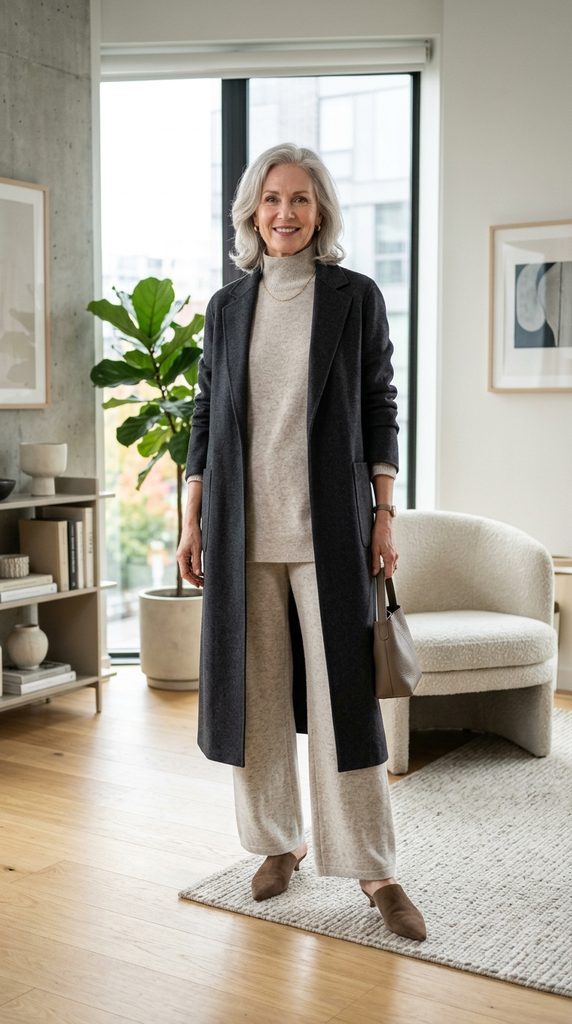
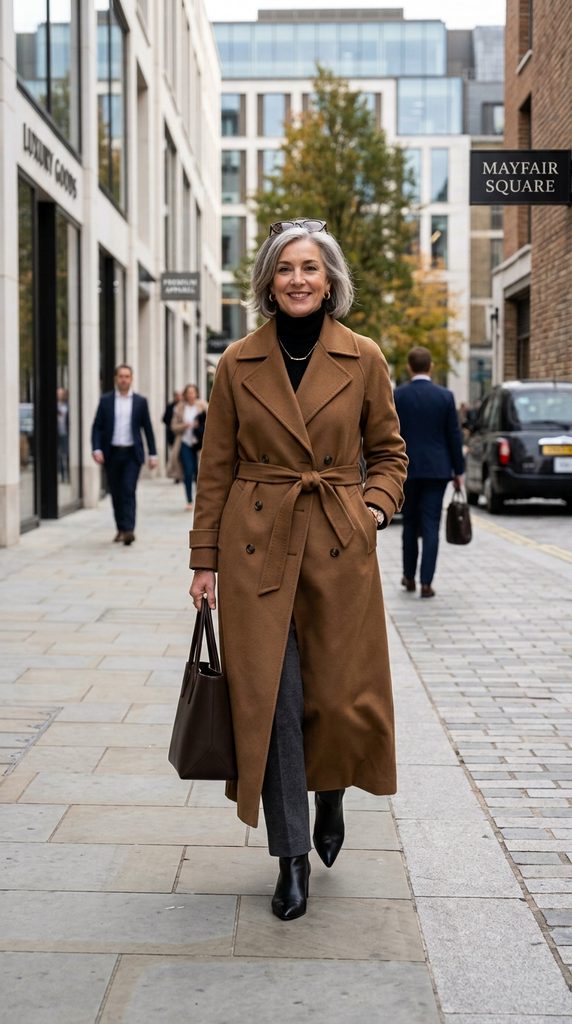
10. The longline wool trench with straight-leg knit trousers
The coat that makes knit trousers look like tailoring. It has carried me through many trips.
My last combination is the one I travel in: a longline wool trench below the calf, over a thin silk-cashmere turtleneck and straight-leg Milanese knit trousers — they feel like loungewear, look like suiting, and never bag. Walk the full length of the shop in it: the back vent must open for a real stride, and the belt should tie in a soft knot rather than through the buckle, which stiffens the silhouette. Keep every layer under the coat thin; bulk under a structured coat is what makes women look bundled rather than dressed. The coat was the priciest piece here after the cashmere; divided across winters, trips and one very wet week in Copenhagen, it has earned it. Skip the long length if you drive everywhere — below-calf coats and car pedals are not friends.
What I’d buy first — and what can wait
If I were starting from an ordinary wardrobe, my order would be: one honest knit (the cashmere or a good merino), trousers that truly fit, then one serious coat — the wrap or the trench. Roughly sixty percent of my money goes on those core pieces, because they are worn weekly; the rest can be plainer cotton tees and tanks. What can wait: the silk blouse, the barn jacket, anything bought to complete a set in one impatient afternoon. Build in phases — bottoms first, mid-layers next, outerwear last — and audit before you buy: a piece stays only if it pairs with at least three others.
Questions I get asked
Won’t a capsule this small get boring by February?
Some weeks, honestly, yes — and I would still choose it. The interest comes from texture: cable against smooth wool, silk under alpaca, corduroy next to flannel. When I am truly restless, one deep-coloured scarf over the neutrals fixes it.
How do I keep the knitwear looking new?
Wash less. Air sweaters on a hanger by an open window between wears, hand-wash cold with wool wash when you must, and press the water out with a towel instead of wringing. Fold knits flat, never hang them, and keep a fabric shaver for underarm pills. Two minutes a month.
What is the mistake you see most often?
Buying stiff, formal pieces for a life that isn’t formal. Blazers with tight armholes and trousers with no give look wonderful in the shop and live unworn. Choose part-elastic waistbands, dropped shoulders and a little elastane in the fabric.
Do I have to give up colour entirely?
No. My base is two neutrals — charcoal and oat — but burgundy and emerald live here happily, one deep colour at a time. What I avoid is five accents at once; that is how a capsule stops matching itself.
Is this expensive to set up?
Less than the alternative, done slowly. I spent my forties buying cheap knits that pilled by spring. Now I buy fewer pieces, in natural fibres, often second-hand for coats and cashmere — and my cost per wear is lower than ever.
That is my cozy ten, worn on rotation from first frost to last. If a smaller, warmer wardrobe sounds like relief, live from one rail for a fortnight before buying a thing — your closet will tell you what’s missing. Save this to your wardrobe board on Pinterest if it helps. — Elias