The week after I retired, I stood in front of my wardrobe in my dressing gown at half past nine — no train to catch, nowhere to be — and realised I owned forty years of clothes for a job I no longer had. Blazers with shoulders like armour. Heels I could not walk to the end of the street in. I cried a little, then I made tea, then I started pulling things off the rail.
What survived was smaller and softer than I expected: linen, cashmere, good cotton, colours that all speak to each other. I am sixty-three now, and I dress from ten small systems rather than one stuffed wardrobe. Each one is a mini-capsule built for the life I actually live — volunteering, grandchildren, lunches that turn into dinner. Here is what each one is, what to check before you spend a penny, and the mistakes I have already made for you.
1. Linen and cashmere in soft neutrals
The outfit I reach for on quiet mornings — nothing pinches, nothing shouts.
This is my home base: wide-leg linen trousers in unbleached flax, a fine cashmere crewneck in oatmeal, a white cotton poplin shirt for layering, and an unlined stone-coloured linen blazer over the top. Everything is one family — ivory, taupe, heather grey — so any top meets any bottom without a morning debate. The check that matters is the linen: hold a trouser leg to the light. Good flax is dense and a little crisp; thin linen goes transparent and creases into tissue by ten o’clock. The cashmere should be sized slightly loose so it slides over a collared shirt without gripping. My mistake was a padded, structured blazer that hung unworn for a year; the soft unlined replacement gets worn three days a week. Front-tuck the knit two inches, add loafers, done. Skip it if you hate ironing; linen demands a press.
2. Coastal navy and crisp white
Navy forgives everything. This is my market-day and train-journey set.
Navy is the kindest dark colour after sixty — it does the slimming work of black without draining your face. My set is straight-leg dark indigo jeans, navy cotton trousers, a heavyweight Breton stripe top, a white linen tunic shirt, a navy cable-knit cardigan with tortoiseshell buttons, and a khaki trench over everything. The fitting-room check: sit down in the jeans. A high rise that feels fine standing can cut cruelly at a café table, and retired life involves a great deal of sitting. The Breton should feel heavy in your hands; the flimsy souvenir kind bags at the neck within a month — I know, because mine now cleans windows. Everything here pairs with everything else, which is the whole point on travel days when the suitcase is small. Cost honesty: the trench was the expensive piece, bought in a January sale at half price — end-of-season sales are a retired woman’s best friend.
3. Olive and terracotta, the garden colours
Earth colours hide garden soil and grandchild handprints equally well.
This is the system I wear for volunteering at the community garden and walking club: olive cotton cargo trousers with pockets that actually hold things, a terracotta A-line lyocell skirt, a sage scoop-neck tee, an ivory slub-cotton top, and a long caramel merino duster that makes even the scruffiest combination look deliberate. Warm earth tones are kind to silver hair — they put colour back into your face without a scrap of makeup. Two practical checks. First, the cargo trousers: bend and kneel in the shop, because a waistband that rides down in the fitting room will spend all day doing it among the tomato plants. Second, hold the terracotta against your cheek in daylight; the wrong orange will make you look tired no matter how well you slept. The duster was my extravagance here, and it earns it — over the skirt and blouse it has carried me to evening dinners I was not expecting that morning.
4. Charcoal and dove grey, all one family
Grey on grey sounds dull until you see the textures doing the work.
People assume an all-grey wardrobe is dreary. It is the opposite — it is restful, and it makes dressing a two-minute job. Mine holds charcoal wool-blend trousers with a little stretch, a pull-on pleated knit skirt, a dove grey ribbed turtleneck, a heather boatneck top, a charcoal jersey dress, and a collarless boiled-wool jacket in silver grey. The secret is texture, not colour: ribbed against smooth, matte wool against a slight sheen. The check for the boiled-wool jacket is the shoulder — it should sit clean and architectural, not slumped, because the whole system depends on that one structured piece. I once bought a grey dress two shades too blue; it fought with everything until I dyed it darker. Test every grey against the pieces you already own, side by side, in daylight. This is my gallery-and-concert system: the dress under the jacket, silver cuff bracelet, and I look like a woman who planned it. I did, but only once.
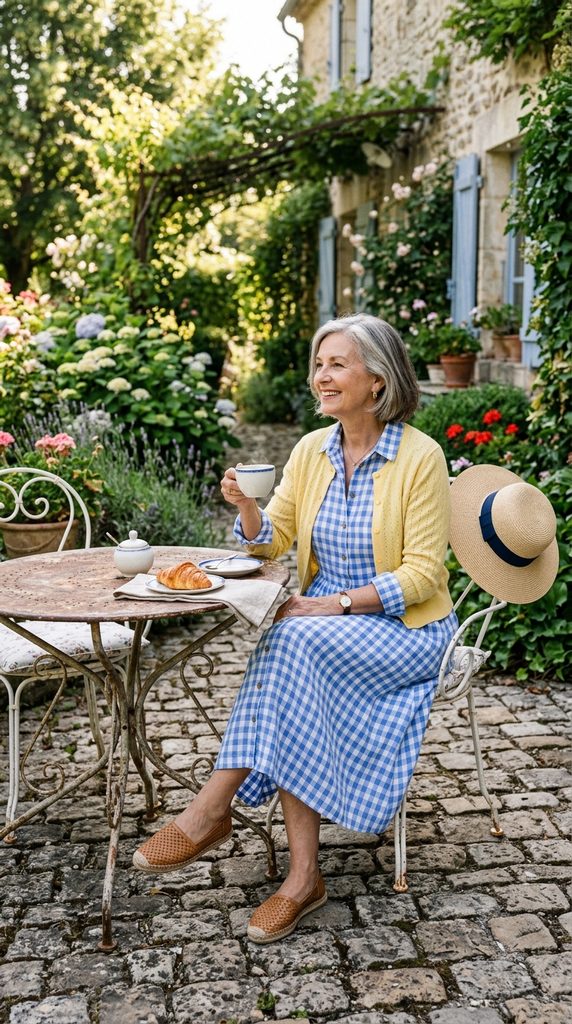
5. French country gingham and pastels
The gingham dress my granddaughter calls my picnic outfit. She is not wrong.
Every wardrobe needs one system that is pure pleasure, and this is mine: a cornflower gingham shirt-dress in a linen-cotton blend, white wide-leg linen culottes, a pale yellow peasant blouse, a white eyelet tunic, and a buttercup pointelle cardigan with mother-of-pearl buttons. It is my summer garden-party and grandchildren-on-the-lawn set. The honest checks: white culottes need an elastic back waistband and fabric you cannot see through — squat in front of the fitting-room mirror and check, because nobody at the barbecue will tell you. And gingham dates fast if the check is too small and twee; a medium check in a proper cotton reads classic, not costume. Buy the dress and culottes first, pastels last — I bought the cardigan first and it sat unworn for a season with nothing to go under it. Skip it if your summers are short; it earns its space only in real heat.
6. Camel and black for the city
Theatre nights and city trips. Ponte trousers feel like leggings and behave like tailoring.
For theatre trips and city weekends I keep a sharper little system: black ponte-knit trousers, wide-leg camel trousers, a fine black turtleneck, a camel silk-crepe blouse, and a long open camel cardigan coat, with a cropped black blazer for evenings. Ponte is the fabric nobody believes in until they wear it — knit comfort, tailored face. The check is weight: pick the trousers up. Good ponte is surprisingly heavy and springs back when you stretch the knee; the light stuff bags by lunchtime and shines at the seat by the end of the month. The turtleneck should be fine-gauge so it layers under the blazer without a fight. Money talk: the camel coat-cardigan cost more than everything else in this system combined, and I use it constantly — it turns the plain black base into an outfit people photograph. All of it packs flat into a carry-on, and I no longer travel with anything that needs an iron at the other end.
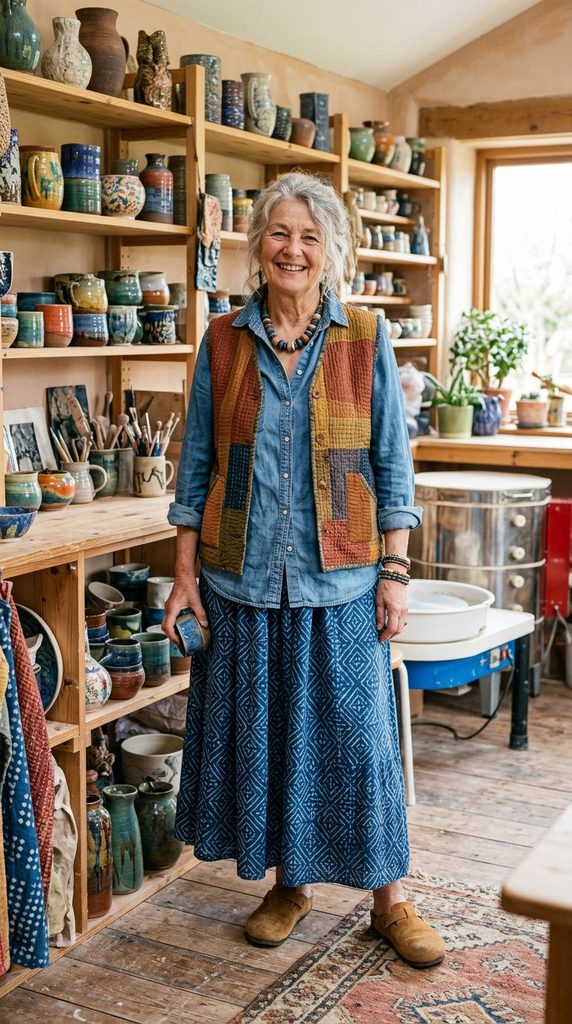
7. Indigo and block prints, the maker’s set
Prints forgive paint splashes, coffee spots and clay dust. My studio uniform.
On pottery mornings and craft-fair days I wear the system that forgives everything: relaxed medium-wash jeans, a tiered indigo block-print maxi skirt, a faded chambray shirt, a white slub henley, a block-print tunic in cream and terracotta, and a reversible quilted cotton jacket made from old kantha cloth. Prints are camouflage — clay dust, coffee, a splash of glaze all disappear into them, which no plain fabric can promise. The check that matters is the cotton: handloom cloth should feel soft and slightly irregular, and it gets better with washing. If a “block print” is stiff and plasticky to the touch, it is a screen print on polyester and it will pill and trap heat; put it back. My quilted jacket was the find of a decade — reversible, so it is two jackets in one suitcase space. Honest warning: wear every print at once and it tips into costume. One printed piece per outfit, plains around it, and you look like an artist, not a market stall.
8. Silk and gauze, the travel capsule
Ten pieces, one carry-on, no iron. This little set has seen three coastlines.
This is the system I pack, and it has genuinely changed how I travel: ivory sand-washed silk trousers, pale aqua double-gauze trousers, a white linen tunic, an aqua gauze shirt, a coral silk tank, an ivory modal tee, a sand-coloured gauze shirt-dress that doubles as an open duster, and a featherweight cashmere wrap for cold aeroplanes. Double gauze is the traveller’s friend — it is supposed to look crinkled, so it comes out of a suitcase ready to wear. Two checks before you commit. Washable silk only: run a thumb over it and look for a soft, sanded surface rather than a shine, and never buy a travel piece that demands dry cleaning. And test the gauze trousers sitting down; gauze relaxes as it warms, and a waistband that starts loose ends around your hips. Ten pieces, one carry-on, and I have done a fortnight on it. At sixty-three, travelling light is not a hobby. It is self-preservation.
9. Tweed and quilting for the countryside
Country weekends and cold church halls. The quilted vest is warmer than it has any right to be.
For country weekends, antique fairs and long autumn walks: chocolate stretch-corduroy trousers, forest green riding-style trousers, a white oxford shirt, a cream merino turtleneck, an oatmeal crewneck, a mahogany diamond-quilted vest with brass snaps, and a brown-and-green houndstooth tweed hacking jacket. This is the warmest system I own and the one with the longest memory — tweed simply does not date. The checks: corduroy should be a fine wale, which wears smooth and quiet, not the wide-ribbed kind that swishes when you walk and rubs thin at the thigh. The hacking jacket needs a shoulder that sits like it means it; a slumped tweed makes you look like you borrowed it from the gamekeeper. The vest was second-hand, a third of the new price, and it is the layer I use most — over the sweater for the walk, off in the pub. Skip it if your retirement is urban; it is gloriously unnecessary anywhere with central heating.
10. Blush and rose, worn all together
The pink set I swore I was too old for. It puts more colour in my face than blusher ever did.
I resisted pink for years — too girlish, I thought. Then a friend held a dusty rose cardigan against my face in daylight and my skin simply looked better, warmer, less tired. That is what soft rose does after sixty: it reflects a little warmth back at you. My set is dusty rose boiled-wool pull-on trousers, beige ankle pants, a blush modal tee, an ivory-and-rose striped knit, a mauve crewneck, a rose silk blouse, an oversized blush cashmere wrap cardigan, and a taupe-rose suede jacket. The rule is muted, always muted — dusty, heathered, greyed-down pinks. The check is to hold each piece against your face by a window; the right rose lights you up, the wrong sugary one makes you look like a birthday cake. The suede jacket was my extravagance and I protect it like a pet — never in rain, brushed after wearing. This is my book-group and family-lunch system, and honestly, the one I get complimented on most.
What I’d buy first — and what can wait
Start with the audit, not the shops: everything out, three piles — loved and worn, seasonal storage, donate. Do not keep the boardroom clothes out of guilt about cost; a charity dressing women for interviews will use them better than you will. Buy in this order: one system that matches your real week (for me, the neutrals, then navy), trousers tailored so the hem grazes your walking shoes, comfortable shoes you can stand in all day, and only then the pretty systems. Spread it over two or three seasons. A fabric shaver, slim velvet hangers and a small tailoring budget will make mid-priced clothes look expensive. What can wait: suede, silk, the second coat. What cannot: fit and fabric.
Questions I get asked
How many pieces do I actually need?
Fewer than you fear. Four bottoms, six tops, three layers and two dresses will combine into weeks of outfits. I own more than that across my ten systems, but each system on its own is small — the discipline is that nothing enters unless it matches three things already hanging there.
What do I do with my old work clothes?
Keep one good blazer and one pair of trousers for formal occasions, and donate the rest to a charity that outfits women returning to work. Keeping a rail of suits “just in case” only makes you feel guilty every morning. I kept the navy blazer. I have worn it twice in three years, and that is fine.
Isn’t cashmere too expensive on a pension?
Bought new at full price, it can be. Bought in the January sales, second-hand, or one piece a year, it is the cheapest thing I own per wearing — my oatmeal crewneck is six years old and counting. Two honest cashmere pieces beat six acrylic ones that pill by Christmas.
How do I stop it all looking like loungewear?
One structured piece per outfit — the blazer, the tweed jacket, the boiled-wool coat — and the front tuck: two inches of hem tucked at the front waistband defines your waist and lengthens your legs without squeezing anything. Comfort and polish are not enemies. Unstructured everything is the enemy.
Can I mix the systems together?
Constantly — that is the joy of keeping the palettes friendly. The navy trench goes over the pink knit, the tweed jacket works with the grey trousers. Seasonal scarves are my cheap trick: sage and daffodil in spring, rust and cranberry in autumn, and the clothes feel new.
That wardrobe clear-out was the first useful thing I did with my retirement, and every calm morning since has paid me back. Start with one system, wear it for a month, and let the rest follow. Save this to your wardrobe board on Pinterest if a clear-out is on your list. — Elias