Teen rooms are hard to get right, and I’ll be honest — the first one I helped with was a small disaster. We painted everything one strong color, bought a desk that was too big, and within a month the floor had become the wardrobe. The teen in question was polite about it. Teenagers usually are, right up until they stop inviting friends over.
What I’ve learned since is that a teen room isn’t one room. It’s four small ones squeezed together: somewhere to sleep, somewhere to study, somewhere to keep an unreasonable amount of stuff, and somewhere to just be left alone. The ten ideas below are the ones that actually work in real bedrooms, including the small, awkward-shaped ones. Pick two or three. That’s plenty.
1. A floating desk that doesn’t eat the floor
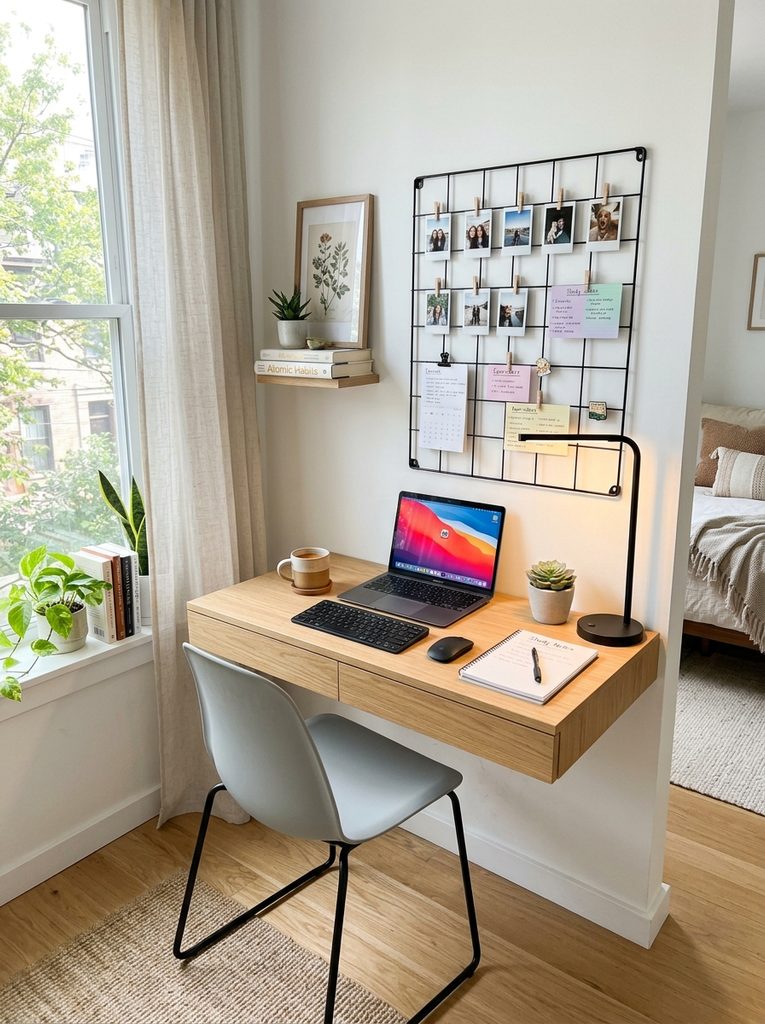
My favorite small-room trick — the floor stays visible, so the room feels bigger than it is.
The idea is simple: a desktop fixed to the wall on two sturdy brackets, no legs, nothing touching the floor. It works because a small bedroom reads as bigger when you can see the floor running underneath the furniture — a lesson I learned from years of laying out pages, honestly. Find two studs, screw in heavy brackets at desk height, and lay a cut-to-size board on top. Forty-eight inches wide is enough for a laptop, a lamp, and the inevitable mug.
Hang a wire grid above it for timetables, photos, and the notes that would otherwise end up taped to the wall (and they will end up on the wall otherwise). My tip: sit in the chair before you drill anything and check the height against actual elbows. I skipped that step once. We re-drilled. The wall forgave us, but only just.
2. A daybed that earns its keep twice
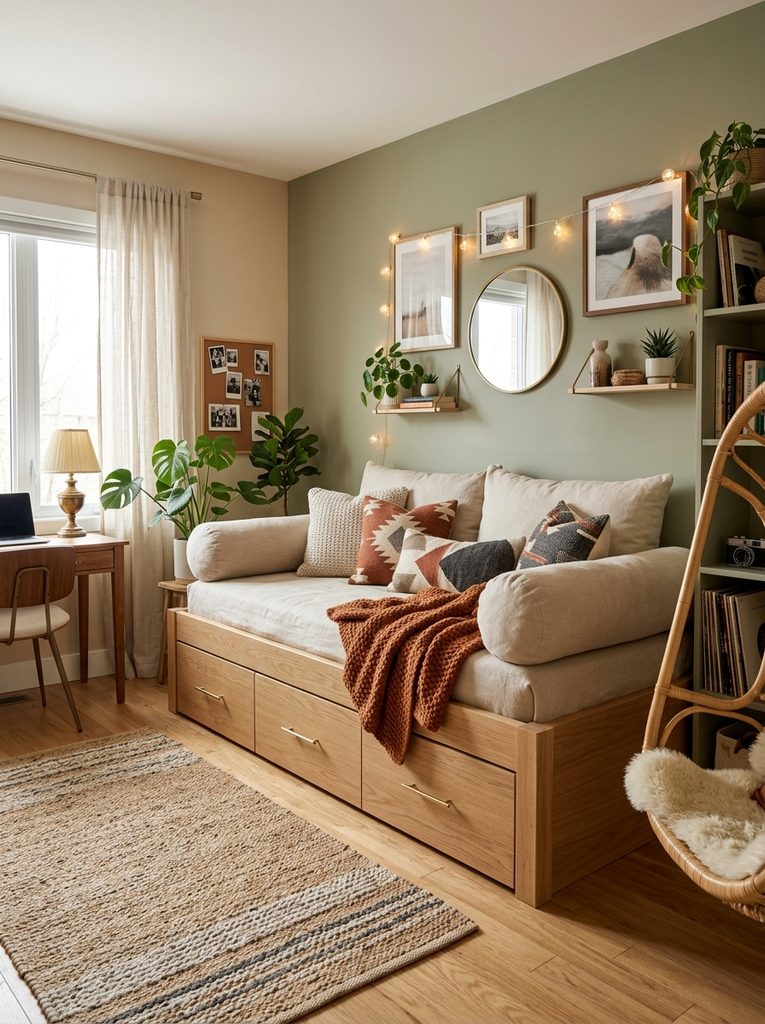
Sofa by day, bed by night, and the winter jumpers disappear into those drawers.
In a narrow room, the bed is the biggest object by far, so it may as well do two jobs. A low platform bed with deep drawers underneath, pushed against the long wall, reads as a sofa during the day — especially with a row of firm cushions along the wall as a backrest. Friends sit there. Books get read there. And the drawers swallow the bulky stuff: spare bedding, out-of-season clothes, the hoodie collection.
You can build the base from modular drawer units screwed together, topped with a sheet of plywood and the mattress. It took me an afternoon, and most of that was arguing with one drawer that refused to sit level. Practical note: leave the drawers on smooth runners, not fixed glides. Teenagers open drawers with their feet. Plan for it.
3. One whole wall of pegboard, floor to ceiling
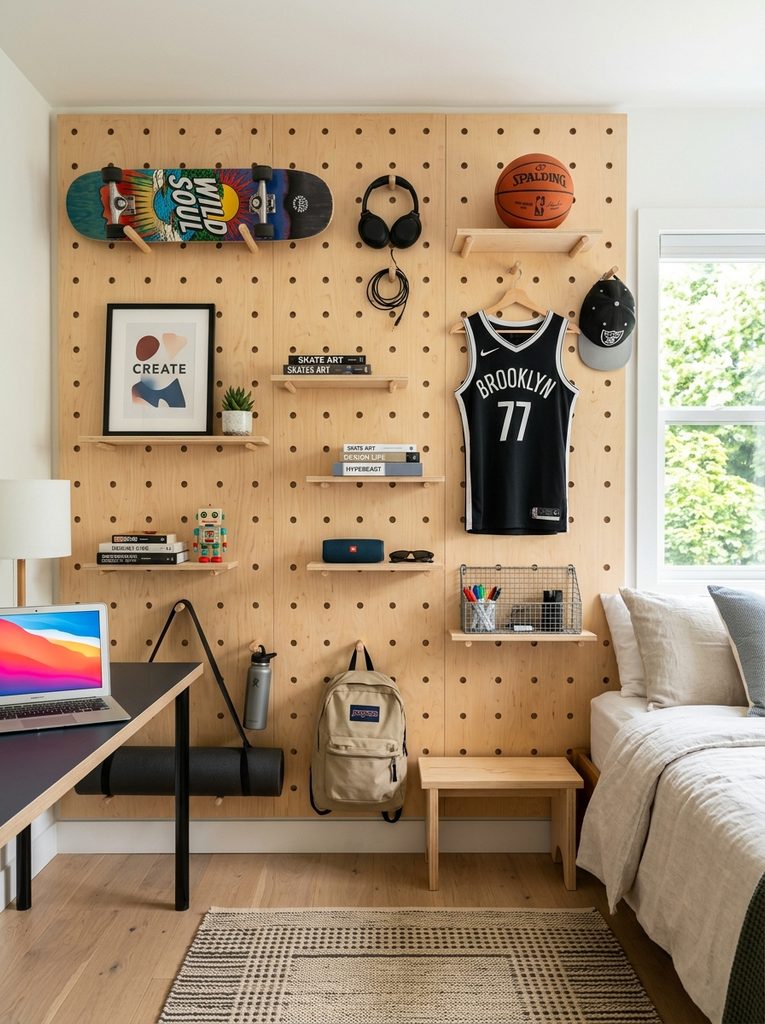
Skateboard, headphones, cap collection — all off the floor and, dare I say it, looking intentional.
If there’s one idea I’d push on every family, it’s this: give the hobbies a wall. A pegboard — birch plywood with a grid of holes for wooden dowels — turns storage into display. Skateboard, tennis racket, headphones, art supplies, the bag that’s always on the floor: everything gets a peg, and the pegs move as interests change. This year it’s climbing gear. Next year, who knows.
Mount the panels on thin battens fixed into the studs, so there’s space behind the holes for the dowels to sit. Sand the edges properly; raw plywood splinters are nobody’s friend. Cost note: two sheets of birch ply and a bag of dowels came to less than one “storage system” from a catalogue, and it looks ten times better. Start with one panel if floor-to-ceiling feels like a lot. It rarely stays one panel.
4. A hanging chair in the dead corner
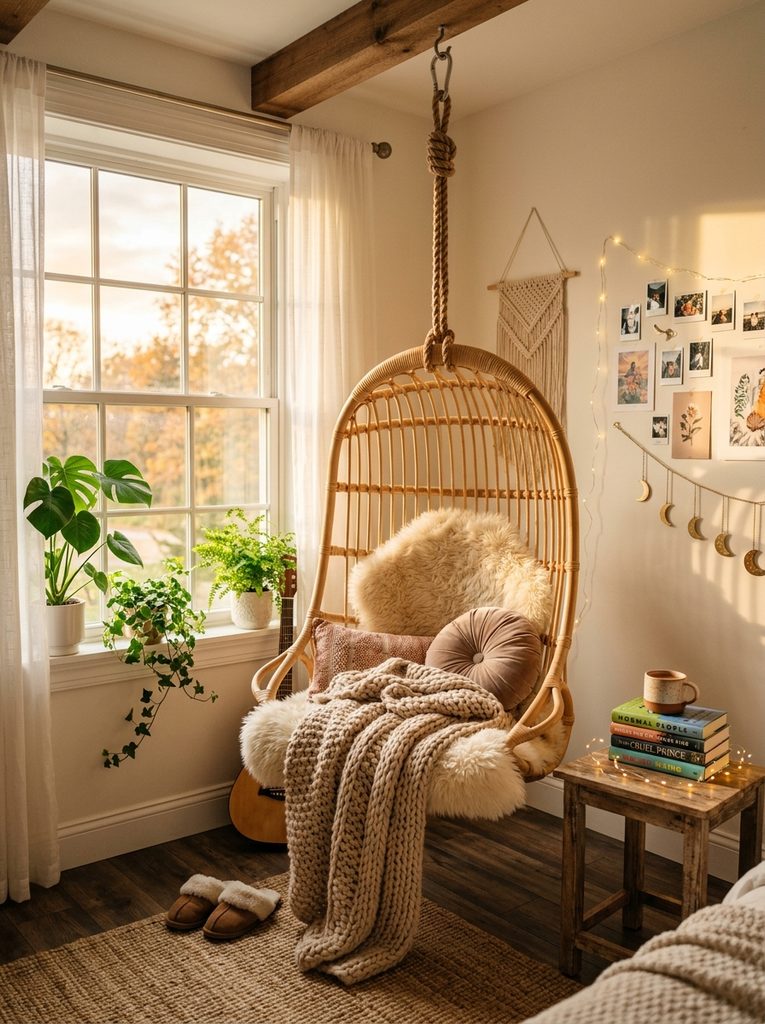
Every room has that one useless corner. This is what it’s for.
Every bedroom has a corner that fits nothing — too tight for a desk, too visible to ignore. A hanging rattan chair turns it into the most fought-over seat in the house. There’s something about a chair that swings slightly that makes reading happen, and screens get put down without an argument. I can’t fully explain it. I’ve just watched it work.
The serious part: it must hang from a ceiling joist, found properly with a stud finder, with a heavy-duty eye screw driven into the center of the timber. No joist, no hanging — use a stand instead, no debate. Set the seat about twenty inches off the floor, add a cushion and a throw, and put a small table beside it for the book and the tea. Mine creaked for a week until I added a swivel hook. Add the swivel hook first.
5. Paint one bold shape, then let it hold the pictures
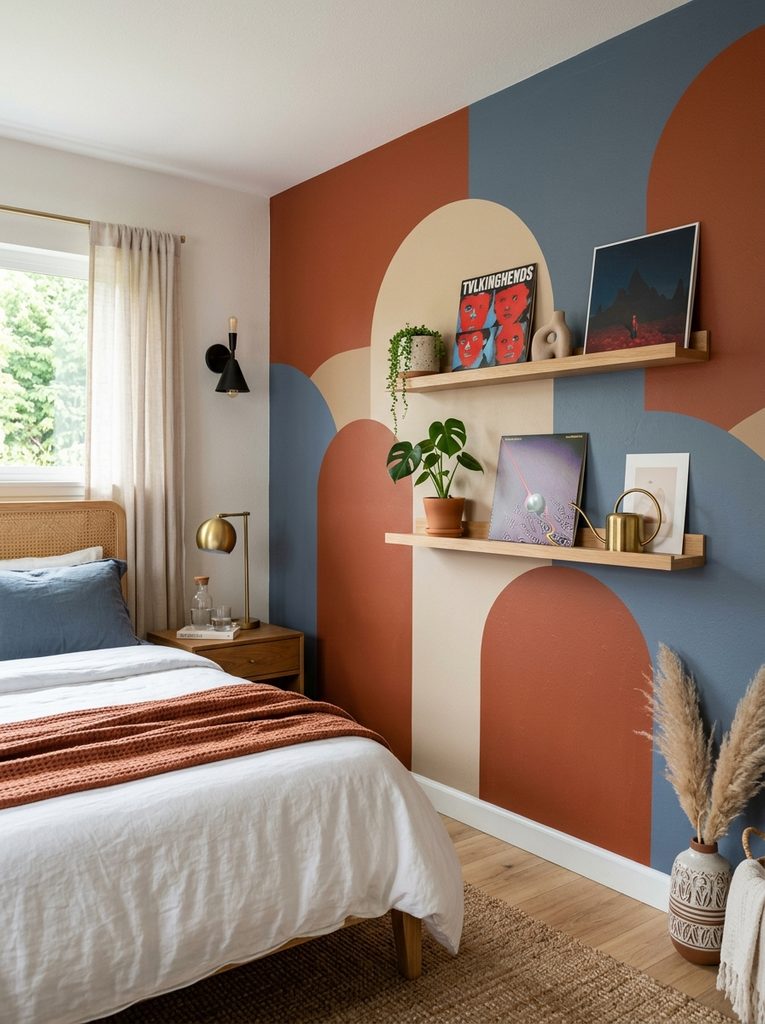
Two ledges across the painted shape — the art can change every month without a single new hole.
Teenagers change their minds about who they are roughly every school term, so the smart move is a room that can change with them. A color-blocked wall — one big arch or diagonal in a warm terracotta or soft slate against a quiet neutral — gives the room its personality in paint, which is the cheapest personality there is. Then mount two shallow picture ledges across it.
The ledges are the real trick. Album covers, prints, photos, and small objects sit on them and can be swapped in minutes, no new holes, no blu-tack stains. Tape your shapes carefully and peel the tape while the last coat is still slightly tacky for a clean edge — I learned that the messy way, with a touch-up brush and some regret. Two colors is plenty. Three starts to argue with itself.
6. Open wardrobe rails with a small vanity beside them
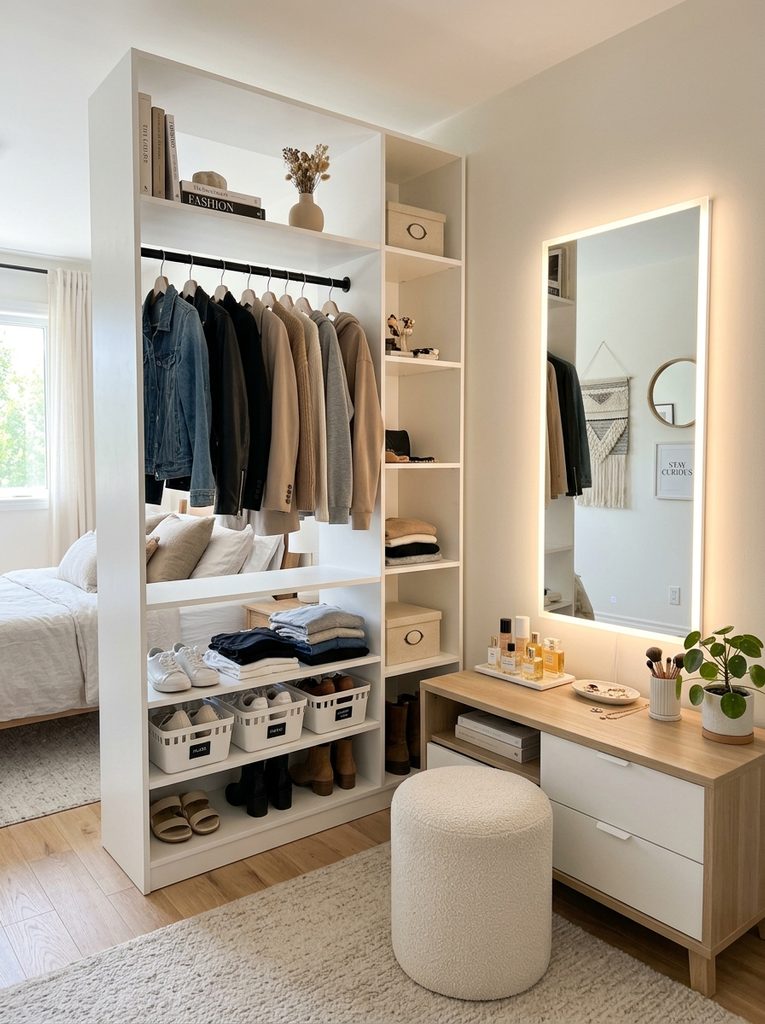
Clothes you can see are clothes that get worn. The rest goes in bins, honestly labeled.
Closed wardrobes in teen rooms tend to become archaeology — layers of clothes nobody remembers owning. Open rails on wall tracks work better for most teens: the everyday things hang where they can be seen, shelves above take folded knits and baskets, and a narrow vanity table with a mirror tucks in beside it for the morning routine. Getting ready stops being a dig.
My honest advice: keep the rails short and edited. A rail that holds fifteen things works; a rail that holds sixty collapses into the same mess, just vertical. Put labeled canvas bins on the lower shelves for the rest. And put the mirror where the daylight actually falls, not where it looks symmetrical in a photo. I made that mistake in a north-facing room and the vanity was basically decorative until we moved it.
7. Wood slats and soft light for the desk wall
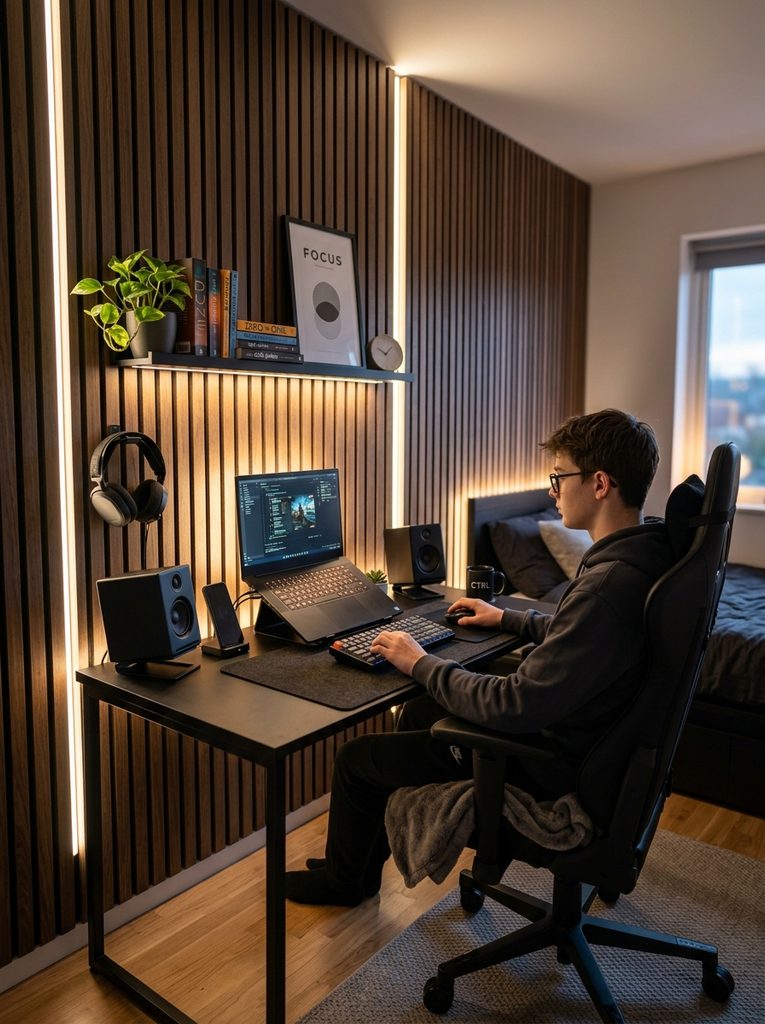
The gamer-and-study wall. It looks grown-up, and it genuinely takes the echo out of calls.
This one looks expensive and isn’t, particularly. Acoustic slat panels — thin wood strips on a felt backing — screw straight onto the wall behind a desk, and they do two jobs: they look like something from a design studio, and they soak up the echo that makes online classes and gaming chat sound like a stairwell. Slip slim LED channels between a few of the slats and the light comes out soft and indirect, which is far kinder at 11pm than a ceiling light.
Practical notes from doing it: cut the panels with a fine blade or you’ll chip the veneer, and put the lights on a warm setting, not the rainbow cycle — the rainbow cycle gets old in about four days. This is the idea older teens ask for by name. It’s also the one I’d skip if the desk faces a window anyway and the light is already good.
8. Turn the window wall into a reading bench
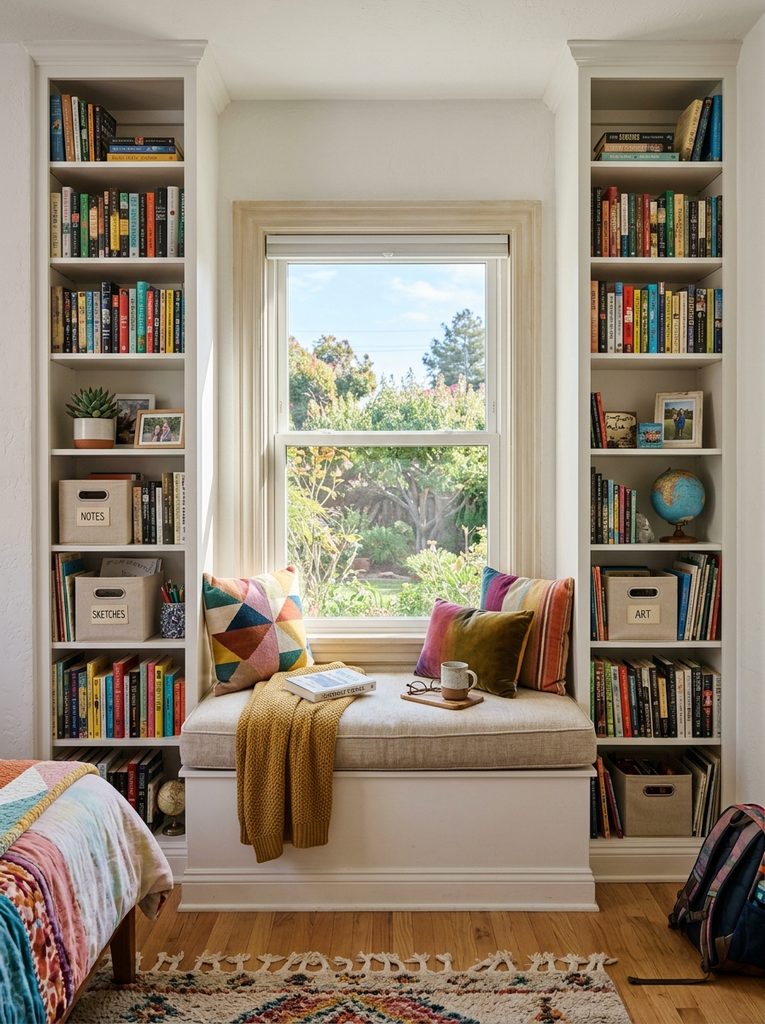
Daylight, a cushion, and books within arm’s reach. Nobody has ever complained about this seat.
Windows in bedrooms are usually wasted — a radiator underneath, maybe a plant dying slowly on the sill. Build a low bench across the window instead, with a bookcase standing on either side, and you’ve made the seat everyone migrates to. The light is the best in the room, and teenagers, whatever they claim, still read more in good light near a window than anywhere else.
The cheat version works fine: two flat-pack bookcases fixed to the wall studs, a simple framed bench between them, a foam pad wrapped in washable linen. I built one where the bench lid lifts for blanket storage, which I’d recommend — it took twenty extra minutes and gets used daily. One warning from experience: measure the cushion foam after the frame is built, not from the plan. My first one was two inches short and annoyed me for a year.
9. The loft look: dark walls and pipe shelves
For the teenager who has declared, formally, that they are not a child anymore.
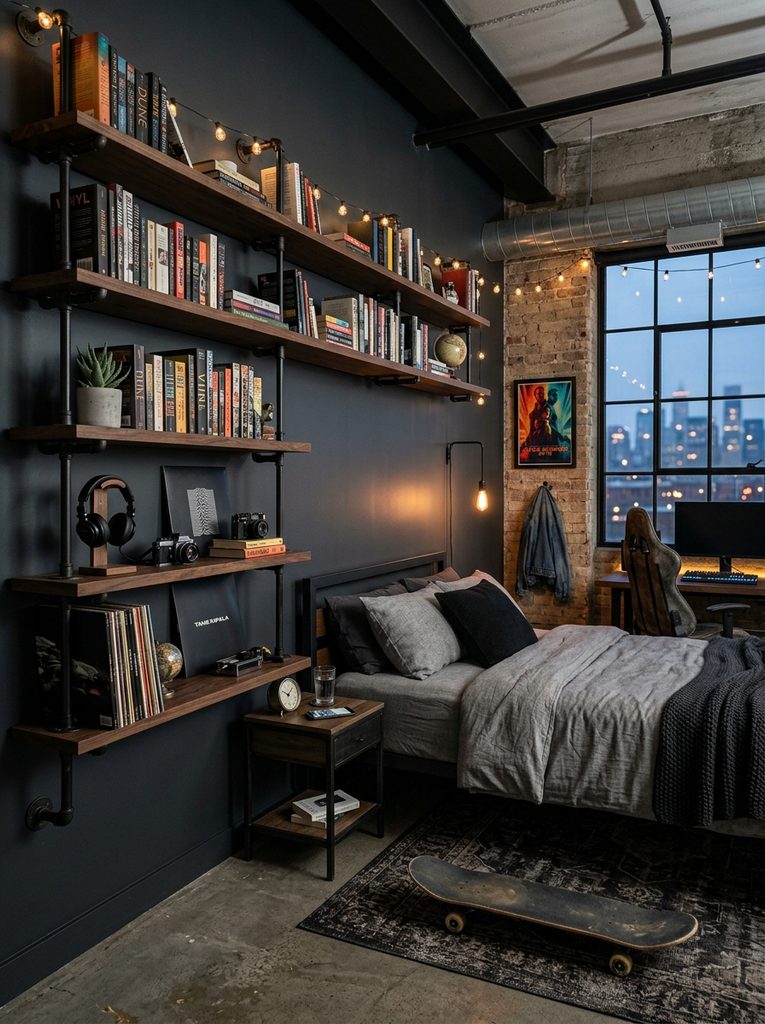
Some teens want soft and calm. Others want a room that looks like a city studio apartment and will accept nothing else. For them: charcoal walls, black iron pipe shelving with dark-stained boards, grey and black textiles, nothing cute anywhere. It’s a forgiving scheme, too — dark colors hide scuffs, and pipe shelving is close to indestructible.
The shelves are just plumbing parts: flanges, elbows, and threaded pipe, cleaned well and screwed into studs, with boards slid across. They’ll hold real weight — textbooks, speakers, a small amp. Two honest cautions. First, iron pipe from the hardware store is coated in oil; wipe it down properly or everything it touches gets marked. Second, charcoal walls in a small north-facing room can turn cave-like. If the light is poor, do one dark wall and keep the rest pale. Balance, as always.
10. Plants everywhere, hanging from the ceiling
Pothos is nearly unkillable, which is exactly the energy a first plant collection needs.
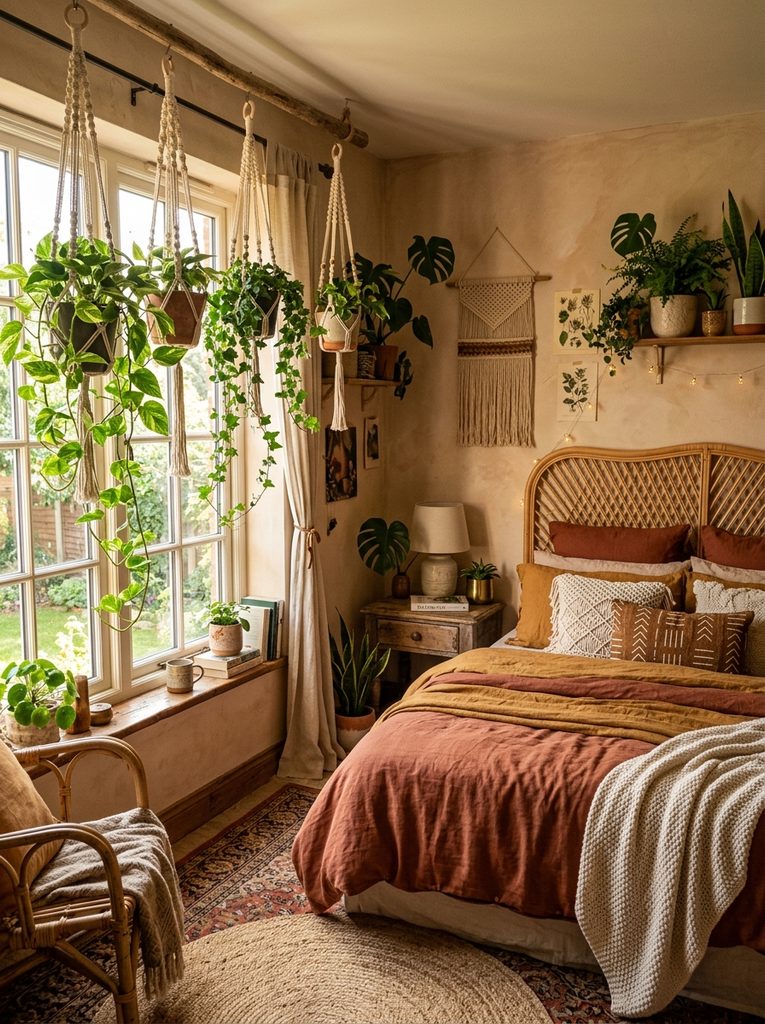
The boho room is the gentlest of the ten: cream walls, washed linen bedding, rattan and wood, and as many plants as the window light can support. Hang the trailing ones — pothos, ivy — in macramé hangers from ceiling hooks at different heights, put the bigger pots in seagrass baskets on the floor, and the whole room softens. It smells better, too. Nobody mentions that, but it’s true.
Keep it honest about maintenance, though. A teenager who forgets homework will forget watering, so start with the plants that forgive: pothos, snake plants, ZZ plants. Three, not thirteen. I once helped fill a room with a dozen plants as a surprise; by half-term we were running a small botanical hospital. Add more only when the first ones are thriving. The macramé hangers, by the way, make a lovely weekend project — first one wonky, second one good.
Where I’d actually start (and what I’d skip)
If I were redoing a teen room this weekend with a sensible budget, I’d start with the pegboard wall and the color-blocked paint. Both are cheap, both can be done in a day, and together they change how the room works and how it feels. The daybed base comes next when storage is the bigger problem. Save the slat wall and the window bench for when you know the room’s layout is settled — they’re the most permanent things here.
And the mistakes to dodge: don’t buy a themed set of anything, don’t skip cable management at the desk (the tangle always wins), and don’t choose flimsy plastic drawers that bow under books by October. Neutral bones, personal layers on top. That’s the whole secret, such as it is.
Questions I get asked
What’s the cheapest idea here that still makes a real difference?
The color-blocked wall, no contest. Two tins of paint and a roll of good tape. The picture ledges can wait a month if the budget’s tight — the paint alone changes the room.
How do I make a small room fit study, sleep, and storage?
Think in zones and think vertically. Floating desk for study, daybed with drawers for sleep and storage, pegboard for everything else. The floor is not a storage surface — that’s the rule that makes small rooms work.
My teen’s taste changes every few months. How do I keep up?
You don’t chase it. Keep walls, bed, and desk neutral and let the changeable things carry the personality: prints on the ledges, cushion covers, what’s pinned to the grid. Swapping those costs almost nothing.
Is a hanging chair actually safe?
Yes — if it’s into a ceiling joist with proper hardware, or on a rated stand. What isn’t safe is screwing into plasterboard and hoping. If you can’t find a joist where you want it, move the corner or buy the stand.
How many of these ideas should one room have?
Two or three, honestly. A room with all ten would feel like a showroom, and not in a good way. Pick the ones that solve your teen’s actual problems.
That’s the list. If one of these ends up in your house, I’d love to hear which — and if you try the pegboard wall, save this on Pinterest first so you can find your way back when you’re standing in the hardware aisle, which is where all good plans get tested. — Elias