Two winters ago I stood at a bus stop on Jagtvej in sideways sleet, wearing a good wool coat and freezing anyway, because the wind went straight up my sleeves. Next to me, a woman about my age wore a stone-coloured puffer vest over a thick fisherman knit, hands in her pockets, completely unbothered. I bought my first vest that same week, second-hand, and I have worn one most days from October to April ever since.
What I have learned since is mostly about restraint. I buy matte shells, never shiny ones, and I keep to one quiet palette — chalk, oat, slate, olive, espresso — so every vest works over everything I already own. The ten combinations below are the ones I actually rotate, with the mistakes left in, because the mistakes are where the useful rules came from.
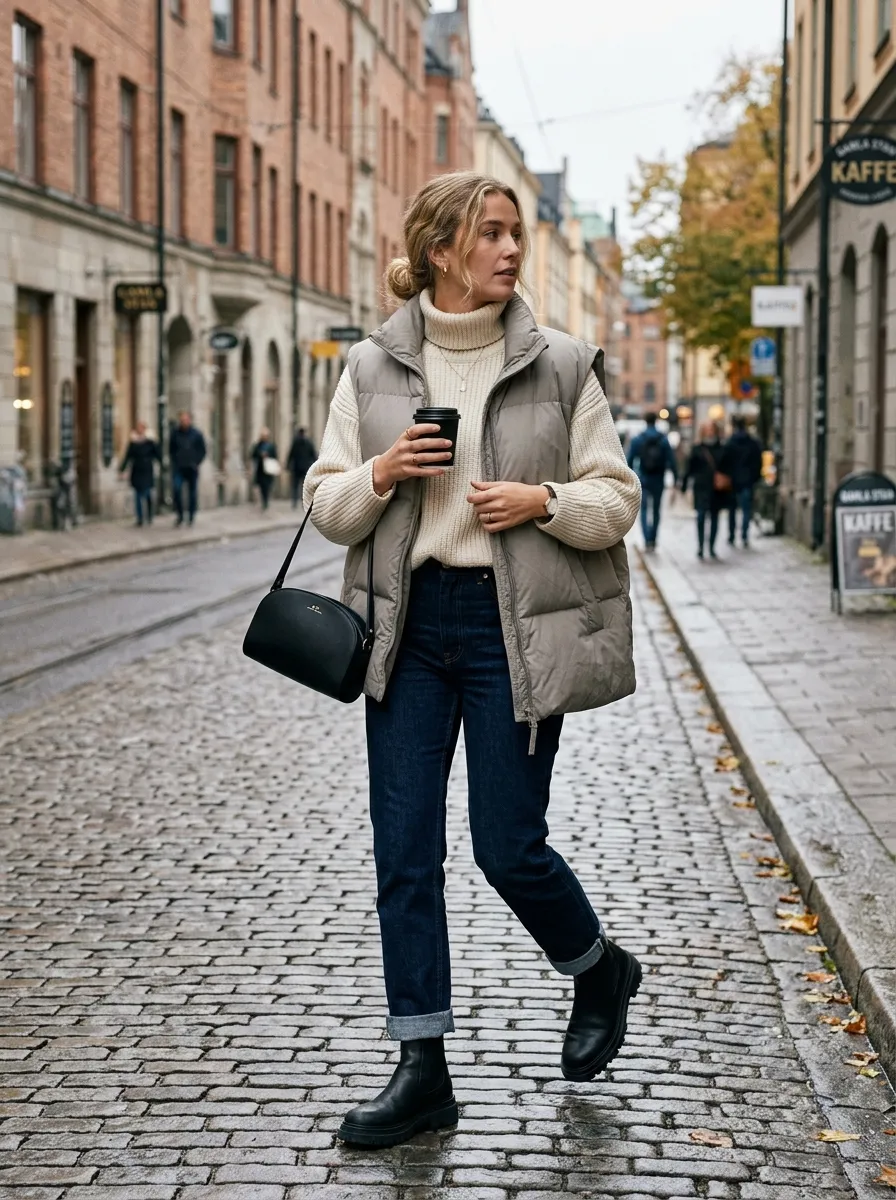
1. Oversized Boxy Vest Over Ribbed Fisherman Knitwear
My market-morning uniform — the sweater hem peeks out below the vest, and that is deliberate.
This is the outfit that started it all: a boxy matte stone vest over a cream fisherman rib turtleneck, worn over a thin thermal tee, with straight raw indigo jeans cuffed once and lug-soled Chelsea boots. I leave the sweater hem untucked so it drops a few inches below the vest, and I push the ribbed sleeves up my forearms a little. One test matters when you buy the vest: lift both arms as if you were hanging washing. Deep, dropped armholes let the knit move underneath; neat little armholes pinch all day. My first vest failed exactly that test and I spent a winter tugging it straight. The turtleneck collar stands above the vest collar, so I rarely bother with a scarf. The jeans cost me more than the vest did, but heavy denim and good down are the two things I never economise on.
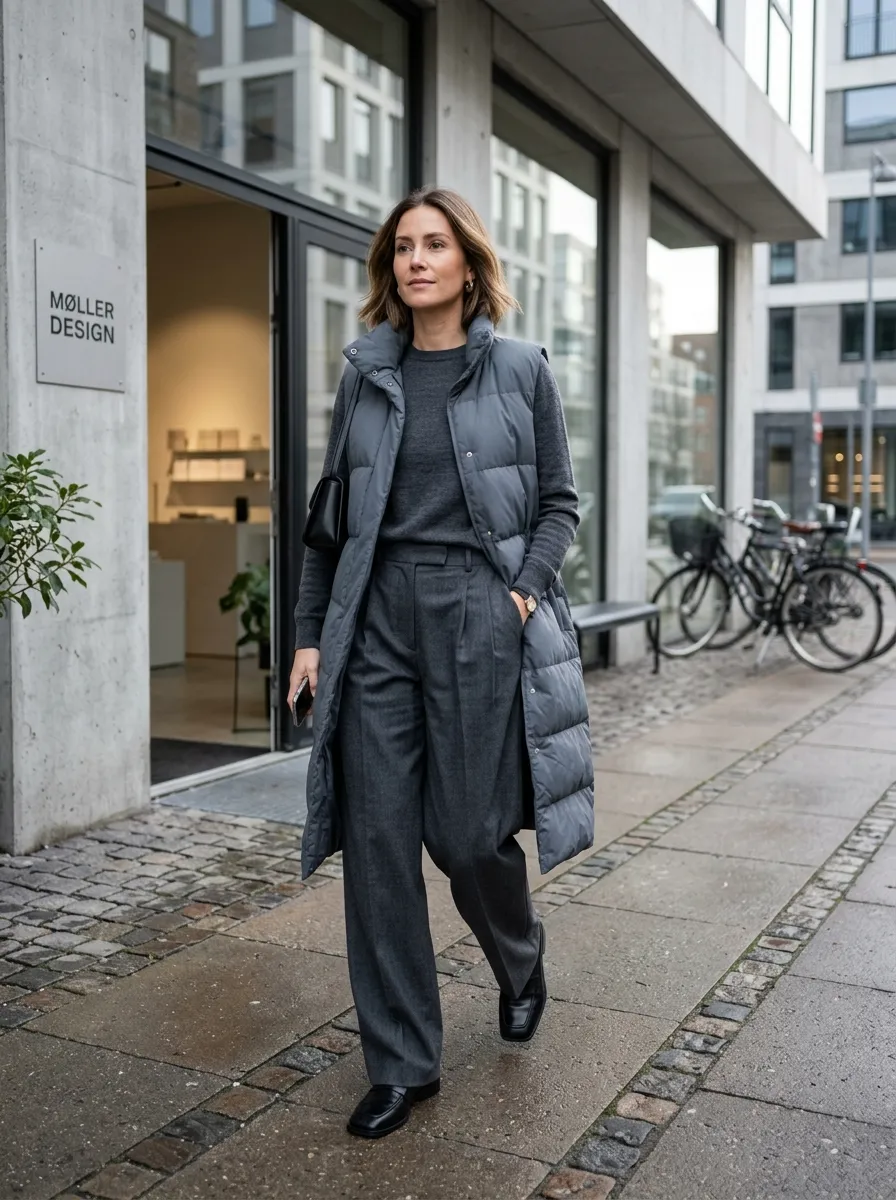
2. Monochromatic Slate Vest With Tailored Wide-Leg Trousers
The vest I wear to studio meetings — one colour from neck to shoe, so nobody reads it as sportswear.
When I need a vest to behave like tailoring, I wear everything in one grey family: a long matte slate vest over a fine heather merino crewneck tucked into charcoal pleated wide-leg trousers, with a narrow black belt and square-toe loafers. I fasten only the middle snap of the vest, which lets it fall in a clean A-line over the pleats. The pleats need five minutes with a steamer the night before — that is the whole secret, honestly. My slate vest came from a second-hand designer shop at half its original price, worn twice by someone who presumably stayed indoors. In the studio nobody has ever commented on the vest itself, which is exactly the point: it reads as a long, deliberate layer. A plain silver watch is the only jewellery I add; anything dangling fights with the clean lines.
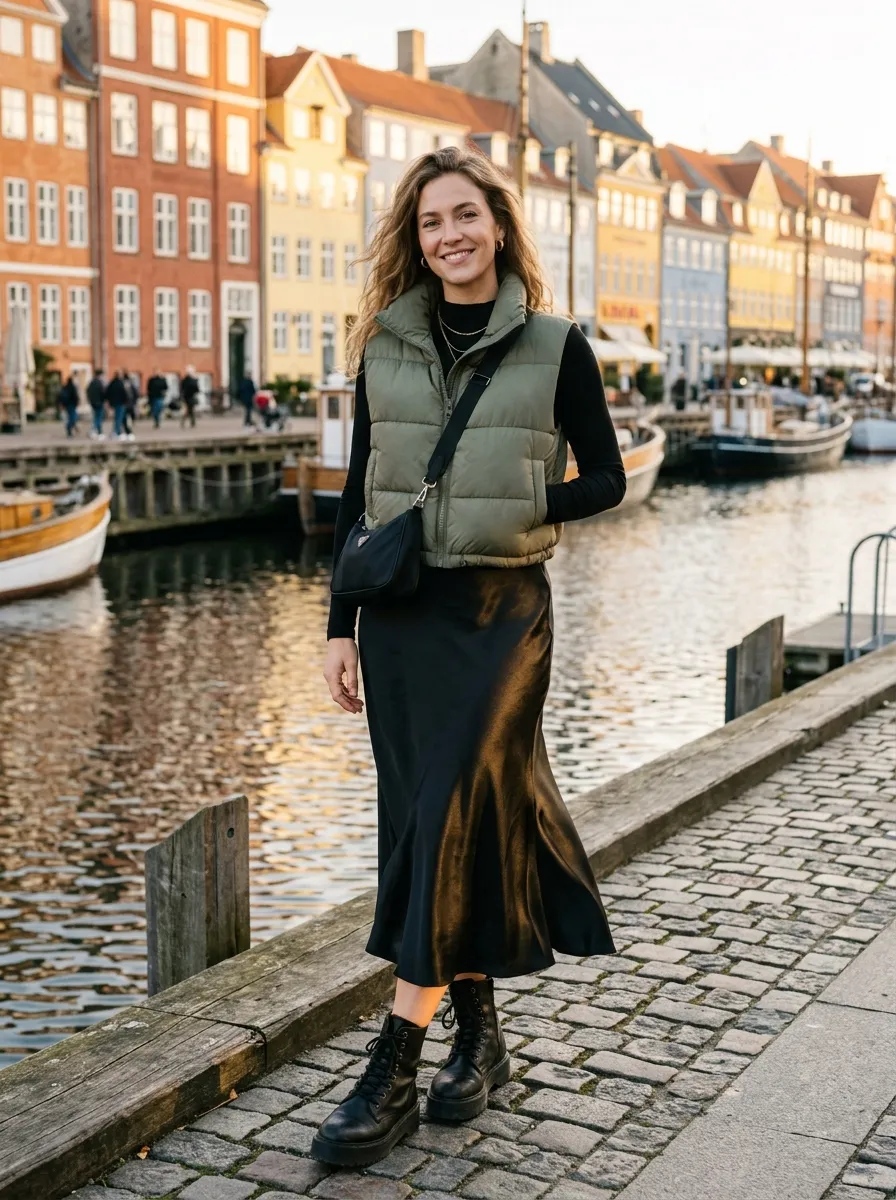
3. Cropped Olive Puffer Vest With Fluid Satin Midi Skirt
Gallery evenings and mild Saturdays — rugged on top, fluid below, boots to keep it grounded.
This one pairs a cropped olive ripstop vest, hem pulled in snug with its toggle cords, over a fitted black mock-neck top and a bias-cut black satin midi skirt, with heavy lace-up boots to stop the skirt floating the whole look away. Before you commit to a bias skirt, sit down in it at home: satin twists as you move, and you want to know in the shop, not at a dinner table. Full honesty, though — a cropped vest is a mild-weather piece. It defines your waist beautifully in October and April, but below five degrees my kidneys have opinions, and I reach for a longline vest instead. Skip this combination in deep winter. I keep the small crossbody bag under the vest, close to the body, so the cropped line stays clean and uninterrupted.
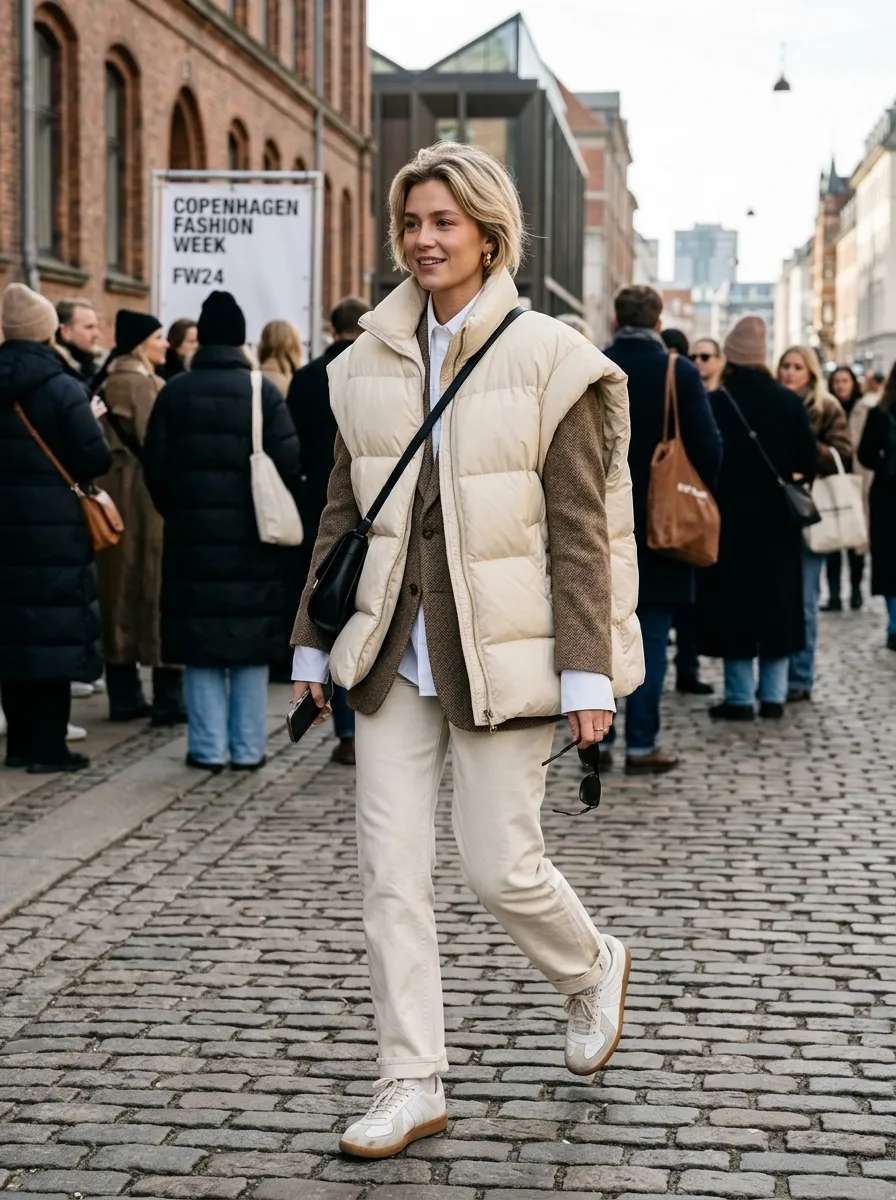
4. Cream Technical Vest Layered Over a Menswear Wool Blazer
The blazer lapels come out over the vest collar — two collars, one frame for the face.
Yes, a vest over a blazer. My cream technical vest goes over a brown herringbone tweed blazer and a white poplin shirt, with ecru straight denim and retro white sneakers below. I pull the blazer lapels forward over the vest collar so the tailoring stays visible, and the vest keeps drizzle off the wool on walking meetings across town. The fitting rule is strict: try the vest on over the actual blazer, never over a T-shirt. My first attempt looked fine in the changing room over a tee and then bunched at the shoulders all day, because the armholes were too small for padded sleeves. Bought right, this is the warmest city combination I own. On truly bitter days a thin merino crewneck replaces the shirt underneath, and the blazer still keeps the whole thing looking like a decision rather than an accident.
5. Sleek Black Puffer Vest Over a Heavyweight Gray Sweat Set
Sunday, five minutes after waking up — the hood draped over the vest collar does half the styling.
This is my weekend-morning uniform: a matching heather-grey sweat set under a dense black down vest, zipped halfway, the hood pulled out and laid flat over the vest collar. White crew socks go over the jogger cuffs, then chunky runners and a plain cap. Everything depends on fabric weight. I buy the heaviest French terry I can find, around four hundred grams, because thin fleece under a vest reads as pyjamas no matter what you do. Heavy terry holds its shape, the vest gives it structure, and somehow the whole thing looks intentional. From bed to bakery takes me five minutes, and I have stopped apologising for that. It is a designed outfit; it just happens to feel like a duvet. The cap matters more than it should, by the way: soft shapes need one hard edge, and that is its job.
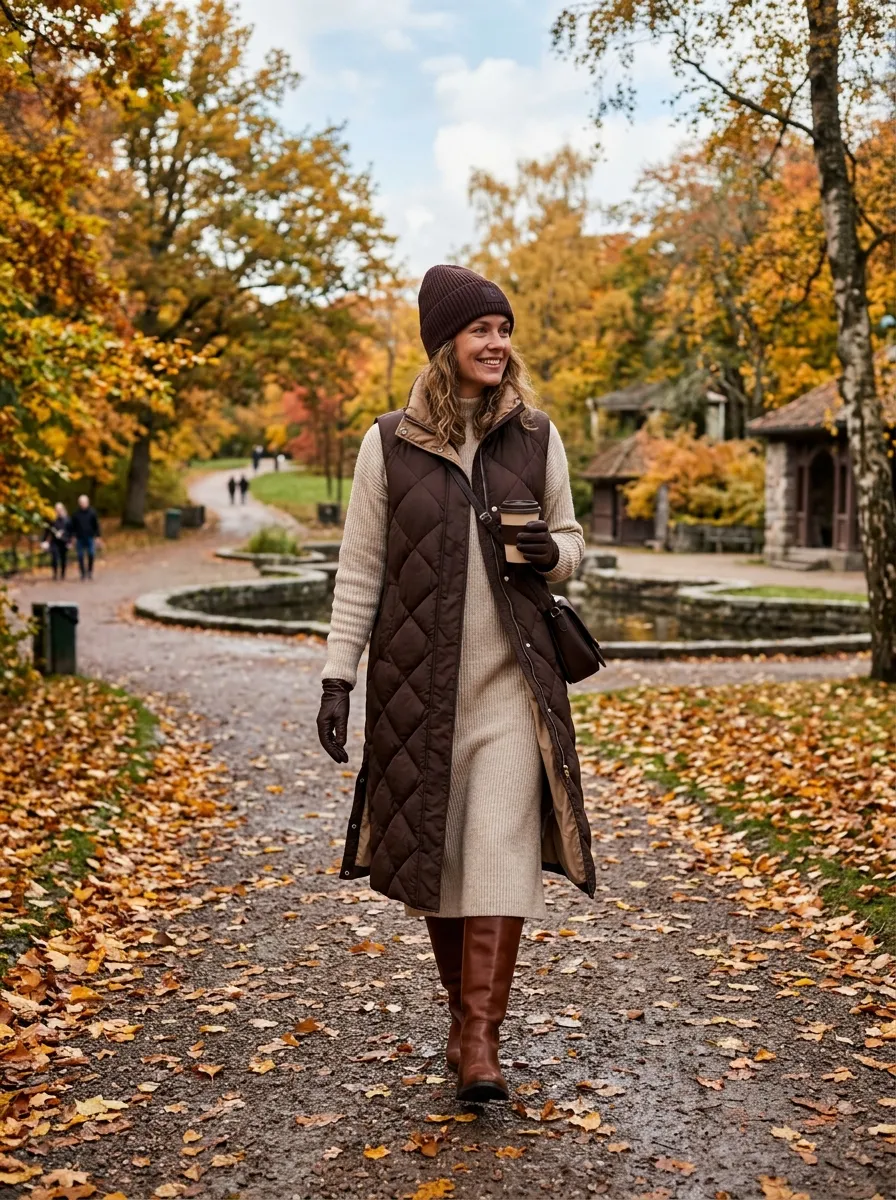
6. Longline Quilted Puffer Vest Over a Chunky Knit Midi Dress
School-run warmth with my hands in the fleece-lined pockets — the dress sleeves do the talking below.
For cold days that still involve a lot of walking, I wear a knee-length quilted vest in dark espresso over a ribbed oatmeal knit midi dress. I leave the front zip undone so the two panels swing as I walk, and I open the side snaps to mid-thigh — a closed longline vest turns every stride into a shuffle, which I learned on a long station platform. Cognac knee-high boots disappear under the dress hem and keep the drafts out. The dress’s own chunky sleeves stay visible below the vest, and that contrast between wool and smooth nylon is the whole look. It works like a sleeveless coat: proper warmth, free arms, and pockets deep enough for gloves, keys and a phone. A ribbed beanie in the same espresso brown finishes it on the coldest mornings.
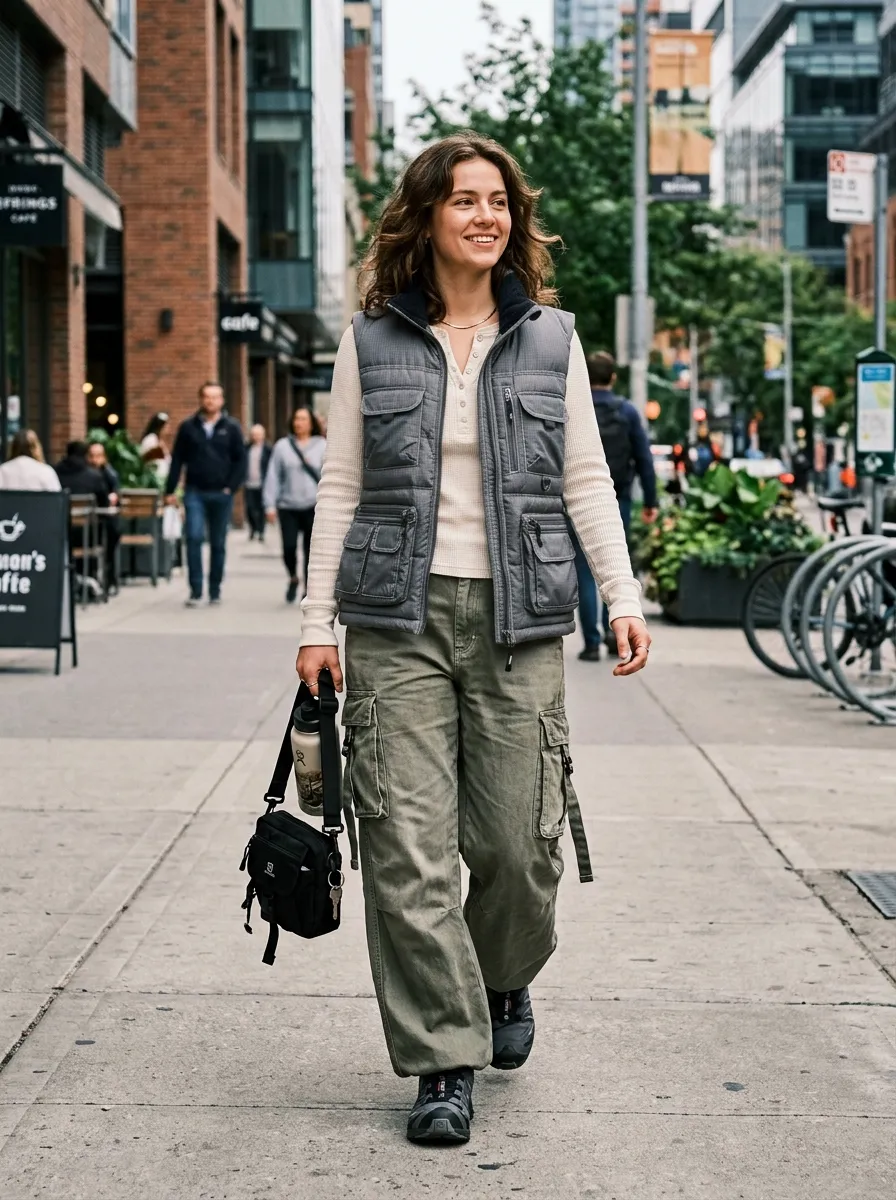
7. Contrast-Stitched Technical Vest With Relaxed Cargo Trousers
Market day, no bag — the chest pockets carry the phone, the list and the dog treats.
This storm-grey vest, with its contrast stitching and patch pockets, goes over a cream waffle-knit henley tucked into washed olive cargo trousers, finished with trail shoes and a simple webbing belt. The pockets are not decoration on mine: phone in one chest pocket, keys in another, dog treats and a folded market list below. One practical habit — pull the ankle drawstrings on the cargos so the hems sit on top of your shoes. I skipped that once and trailed both hems through every puddle at the flea market; they took two days to dry. This is the least polished outfit here and probably the most worn. Everything on it earns its place. The chunky trail shoes look heavy on purpose — slim trainers would leave all that utility floating.
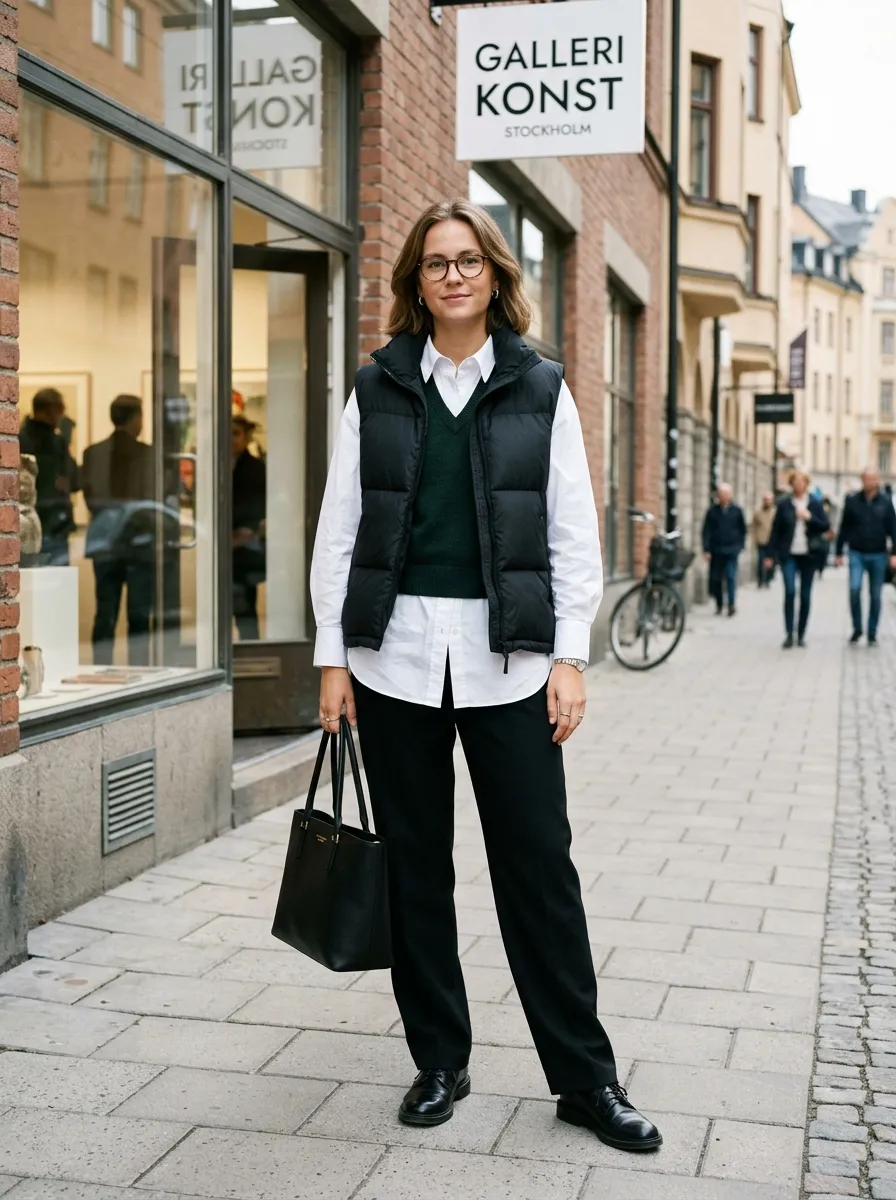
8. High-Neck Minimalist Vest Over Crisp Poplin Shirt and Knit Vest
Two vests, three collars — the layering trick I use between the cold street and a warm studio.
Two vests sound like a gimmick until the temperature drops between the street and the studio. The base is an oversized white poplin shirt, pressed properly at the collar, cuffs and placket. Over it goes a bottle-green lambswool knit vest — it was my father’s, and I think of him every time — and over that, a high-neck matte black puffer vest fastened only at the lowest snap, so the green and white show through. Black tailored trousers and derby shoes keep it grounded. Each layer comes off separately as the day warms, which is the real luxury here. Keep the shirt collar points sitting neatly over the V of the knit vest; that small orderliness is what makes people read it as dressed, not bundled. Wire-rimmed glasses and a structured leather tote are my usual finish, both borrowed from my weekday uniform.
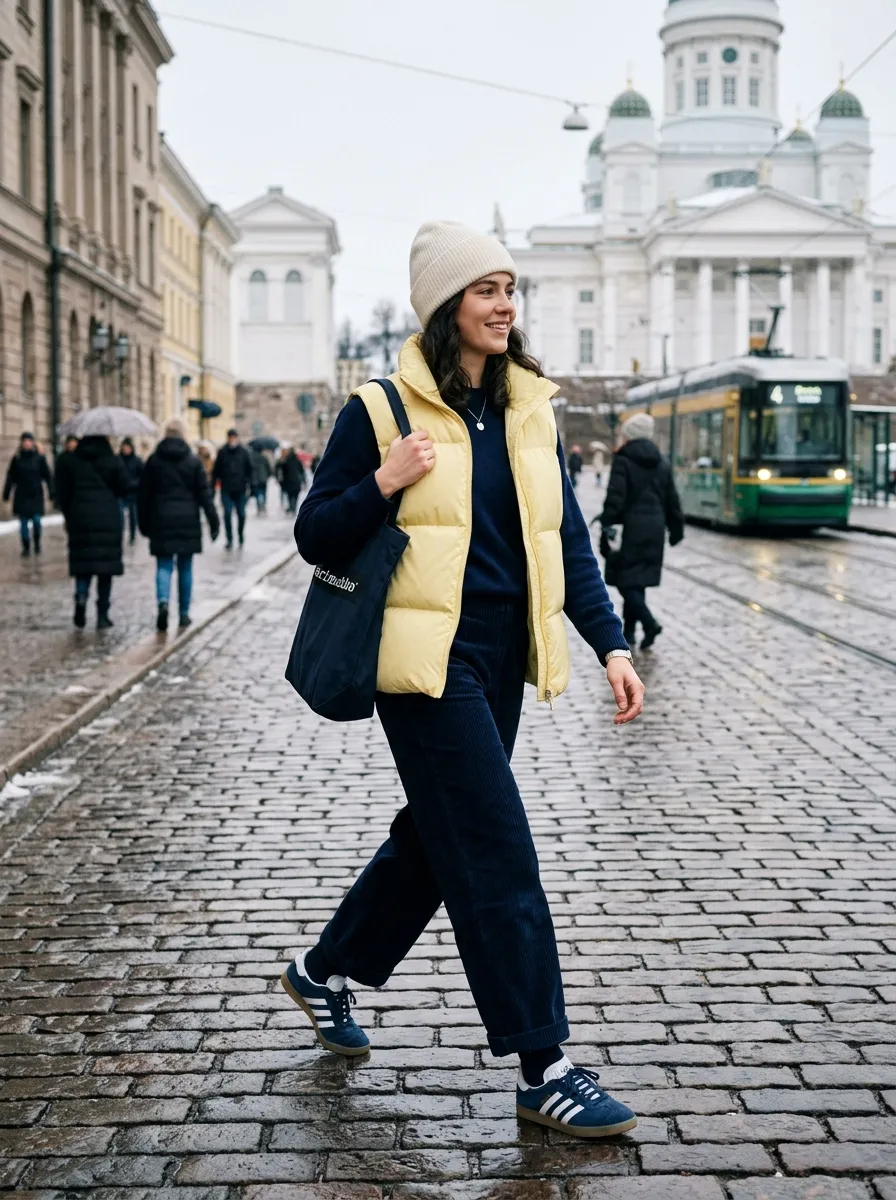
9. Pastel Butter-Yellow Puffer Vest Over Deep Navy Separates
Bought on the greyest day of February — the colour does the cheering up so I do not have to.
Once a season I allow myself one cheerful piece, and this matte butter-yellow vest is it. Everything underneath stays deep navy: a lambswool crewneck, wide-wale corduroy trousers, navy deck shoes, plus a cream beanie and a plain canvas tote. The rule that makes it work is silence everywhere else — no other colour, no pattern, nothing competing. I bought this vest on the greyest February afternoon, half out of defiance, and it has earned its keep in mood alone. One honest warning: people will comment. Strangers say kind things at bus stops and bakery queues, which is lovely, but if you prefer to pass unnoticed through winter, stay with slate and stone. The beanie is cream rather than navy for a reason: in February, your face needs the light up there.
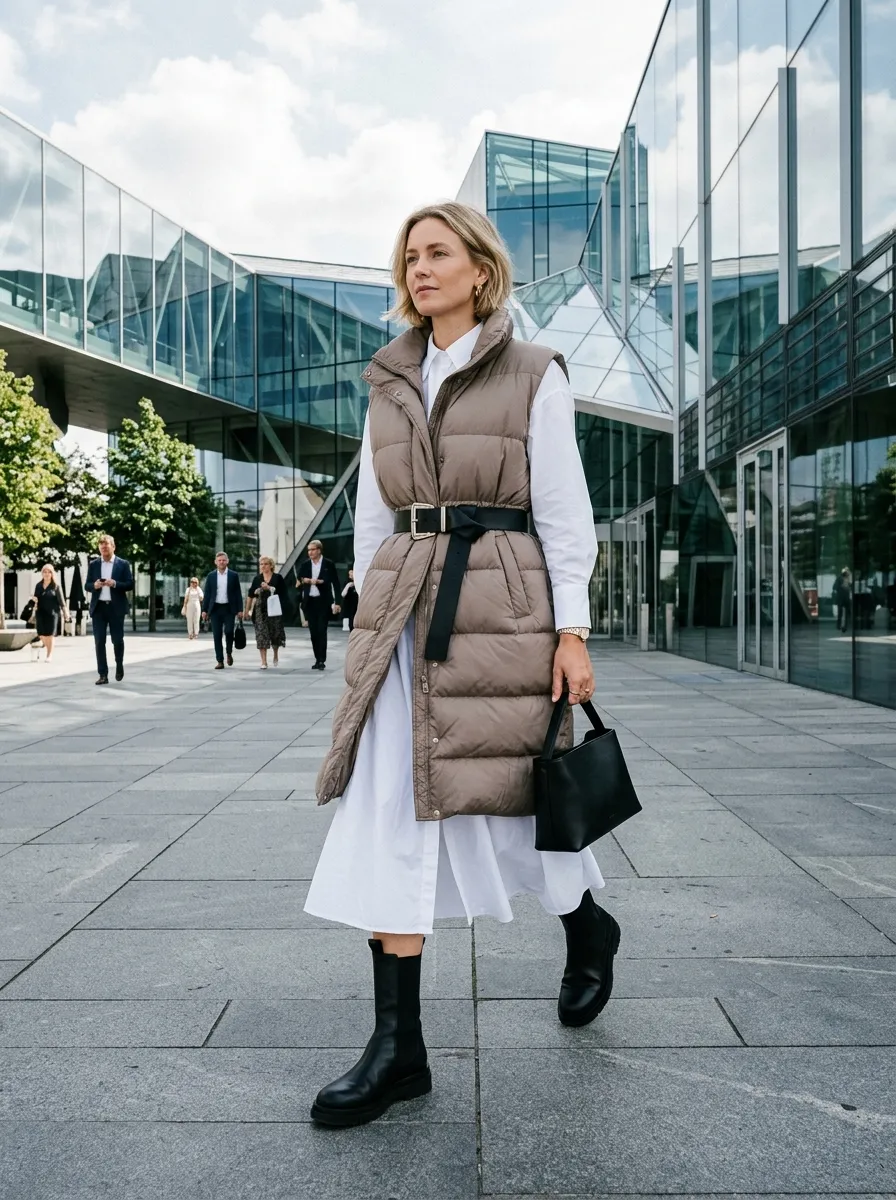
10. Belted Technical Puffer Vest Over An A-Line Shirtdress
The belt goes over the vest, not under it — two minutes of adjusting buys a whole silhouette.
My most dressed-up vest outfit starts with a stone poplin shirtdress, buttoned to near the throat, and a longline taupe vest over the top. Then a wide black leather belt goes around the outside of the vest at my natural waist. The technique matters: smooth the baffles flat first, buckle firmly, then use your palms to spread the gathered fabric evenly above and below the belt. Skip that last step and the padding bulges on one side like a lumpy cushion — I have the conference photograph to prove it. Done properly it gives a real hourglass line over the flared skirt, and it moves freely. Mid-calf Chelsea boots finish it, and I carry a small structured bag. It travels well, too: the vest folds down small in a suitcase and the poplin dress shakes out almost crease-free.
What I’d buy first — and what can wait
Buy one good matte down vest first, in black, stone or olive, with the best fill your budget stretches to — or buy it second-hand. Premium down vests turn up barely worn in vintage shops and on resale platforms for a third of the shop price; my slate and black ones are both pre-owned and indistinguishable from new. After the vest, lug-soled boots, because every outfit here stands on them. Base layers — poplin shirts, henleys, heavy sweatshirts — can come from good high-street basics without any guilt.
What can wait: the pastel vest, the longline belted shape, a second colour of anything. I add one or two honest pieces a year and steam the week’s rotation for fifteen minutes on a Sunday evening, outfits paired in advance. It sounds fussy. It saves every single morning.
Questions I get asked
Why does my puffer vest look cheap?
Almost always the shell. Shiny nylon reflects light harshly and reads as sale-rail sportswear. Look for matte ripstop, brushed cotton or soft-touch technical finishes that absorb light, and check that the baffle stitching runs straight — crooked quilting shows from across the street.
What should I wear underneath so nothing bunches up?
Layers with some body: ribbed merino, heavy cotton, structured poplin. Thin, flimsy tops ride up and wrinkle under a heavy down vest. And over thick knitwear, choose a vest with deep, dropped armholes, or the shoulders will pinch by midday.
How do I stop a big vest making me look top-heavy?
Match volume with volume below it — wide-leg trousers, straight denim or chunky lug-soled boots. Skinny leggings and flimsy trainers underneath are the classic mistake. A small trick: zip the vest fully, then pull the bottom zip slider up a few inches to flash the waistband and lengthen your legs.
How do I wash and store a down vest?
Wash it rarely and gently, then tumble dry on low with wool dryer balls to bring the loft back. Hang it on a wide, contoured wooden hanger so the fill does not shift, and store folded knitwear in breathable bins rather than sealed plastic.
Can a puffer vest ever look smart enough for work?
Yes — the slate monochrome outfit and the cream vest over a tweed blazer both do it regularly for me. Keep everything in one colour family, steam the structured pieces, and let the tailoring show. It reads as deliberate layering, not as outdoor gear that wandered indoors.
That is my vest rail, honestly worn and honestly rated. If one of these combinations joins your own rotation, save it to your Pinterest board for the next cold snap. — Elias